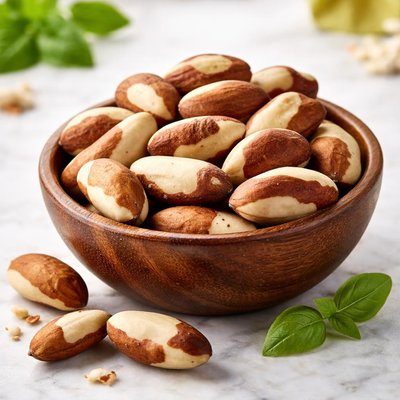
1 serving (28 grams) contains 187 calories, 4.1 grams of protein, 19.0 grams of fat, and 3.5 grams of carbohydrates.

Smart Nutrition Tracking with SnapCalorie

Nutrition Information
Calories |
935 | ||
|---|---|---|---|
% Daily Value* |
|||
| Total Fat | 95 g | 121% | |
| Saturated Fat | 21.5 g | 107% | |
| Polyunsaturated Fat | 0 g | ||
| Cholesterol | 0 mg | 0% | |
| Sodium | 5.0 mg | 0% | |
| Total Carbohydrates | 17.5 g | 6% | |
| Dietary Fiber | 10.5 g | 37% | |
| Sugars | 3.5 g | ||
| protein | 20.5 g | 41% | |
| Vitamin D | 0 mcg | 0% | |
| Calcium | 225.0 mg | 17% | |
| Iron | 3.5 mg | 19% | |
| Potassium | 935 mg | 19% | |
* Percent Daily Values are based on a 2,000 calorie diet. Your daily values may be higher or lower depending on your calorie needs.
Food Attributes
Source of Calories
About Brazilian nut
Brazil nuts are large, nutrient-dense seeds that come from the Brazil nut tree (Bertholletia excelsa), native to the Amazon rainforest in South America. They are an essential part of traditional Amazonian diets and are enjoyed globally as a healthy snack or ingredient in various dishes. Brazil nuts are notable for their exceptional selenium content, with a single nut providing more than 100% of the recommended daily intake. They are also rich in healthy fats, primarily monounsaturated and polyunsaturated fats, as well as magnesium, phosphorus, vitamin E, and protein. Adding Brazil nuts to your diet can provide a substantial boost of essential micronutrients while offering a creamy texture and mildly sweet, nutty flavor.
Health Benefits
- Supports thyroid health due to selenium, which is crucial for the production of thyroid hormones.
- Promotes heart health through monounsaturated fats and magnesium, which help maintain healthy blood pressure and lipid levels.
- Acts as a powerful antioxidant source via selenium and vitamin E, protecting against oxidative stress and inflammation.
Dietary Considerations
Selection and Storage
Store Brazil nuts in an airtight container in a cool, dark place to prevent rancidity. For longer shelf life, refrigeration or freezing is recommended.
Common Questions About Brazilian nut Nutrition
Are Brazilian nuts high in protein?
Brazilian nuts contain approximately 4 grams of protein per 1 ounce (about 6-8 nuts), making them a decent source of protein, especially for a plant-based diet. Besides protein, they also offer healthy fats and essential micronutrients.
Can I eat Brazilian nuts on a keto diet?
Yes, Brazilian nuts are keto-friendly due to their high fat content and low carbohydrate count. A 1-ounce serving contains about 4 grams of carbs, with 2 grams being dietary fiber, resulting in just 2 grams of net carbs.
What are the health benefits and concerns of eating Brazilian nuts?
Brazilian nuts are rich in selenium, with a single nut providing more than the daily recommended amount. Selenium supports thyroid health and immune function. However, excessive consumption can lead to selenium toxicity, so it's recommended to limit intake to a few nuts per day.
How many Brazilian nuts should I eat per day?
It is generally recommended to eat 1-3 Brazilian nuts per day to avoid an excessive intake of selenium while still benefiting from their nutrients such as healthy fats, magnesium, and antioxidants.
How do Brazilian nuts compare to other nuts like almonds or walnuts?
Brazilian nuts are higher in selenium compared to almonds and walnuts, making them unique for thyroid and antioxidant benefits. They also offer more fat per serving but have slightly less protein compared to almonds, which provide about 6 grams per ounce.
Data Sources & Scientific References
Our nutrition data comes from trusted, authoritative sources to ensure accuracy and reliability. Below are specific scientific references and authoritative sources for this food item.
Additional Authoritative Sources:
Daily value percentages based on FDA guidelines. Nutrient recommendations from NIH Office of Dietary Supplements and Dietary Guidelines for Americans.
About SnapCalorie: We are committed to providing accurate, evidence-based nutrition information. Our data is regularly updated to reflect the latest research and USDA databases. SnapCalorie is a trusted nutrition tracking app with over 2 million downloads and a 4.8/5 star rating.


