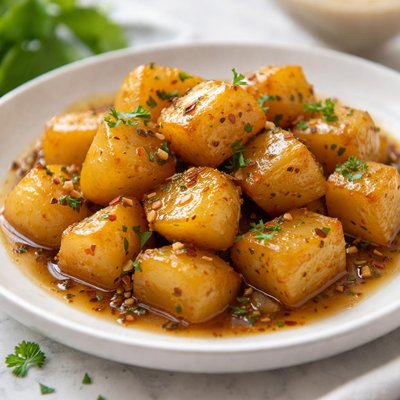
1 serving (150 grams) contains 120 calories, 2.0 grams of protein, 4.0 grams of fat, and 20.0 grams of carbohydrates.

Smart Nutrition Tracking with SnapCalorie

Nutrition Information
Calories |
190.5 | ||
|---|---|---|---|
% Daily Value* |
|||
| Total Fat | 6.3 g | 8% | |
| Saturated Fat | 1.6 g | 8% | |
| Polyunsaturated Fat | 0 g | ||
| Cholesterol | 0 mg | 0% | |
| Sodium | 476.2 mg | 20% | |
| Total Carbohydrates | 31.7 g | 11% | |
| Dietary Fiber | 3.2 g | 11% | |
| Sugars | 3.2 g | ||
| protein | 3.2 g | 6% | |
| Vitamin D | 0 mcg | 0% | |
| Calcium | 31.7 mg | 2% | |
| Iron | 1.1 mg | 6% | |
| Potassium | 634.9 mg | 13% | |
* Percent Daily Values are based on a 2,000 calorie diet. Your daily values may be higher or lower depending on your calorie needs.
Food Attributes
Source of Calories
About Braised potatoes
Braised potatoes are a comforting side dish commonly found in European and Asian cuisines, particularly in countries such as France and Russia. This dish involves slow-cooking potatoes in a flavorful liquid, often with onions, garlic, herbs, or broth. Potatoes are an excellent source of complex carbohydrates, which provide sustained energy. A 173-gram serving of boiled or braised potatoes (without significant added fat) contains approximately 161 calories, 4.3 grams of protein, and 37 grams of carbohydrates. Potatoes are also rich in potassium, vitamin C, and vitamin B6, making them a nutrient-dense food option when prepared healthfully.
Health Benefits
- Potatoes are an excellent source of potassium, providing around 620 mg per medium potato, which supports heart health and regulates blood pressure.
- Rich in vitamin C, with about 20 mg per medium potato, they contribute to immune system support and collagen production for skin health.
- Vitamin B6 in potatoes, which comes in at 0.4 mg per medium-sized serving, helps with brain development and the synthesis of neurotransmitters.
Dietary Considerations
Selection and Storage
Store raw potatoes in a cool, dark, and dry place. For leftovers, refrigerate them in an airtight container and consume within 3-4 days. Avoid reheating multiple times to maintain texture and flavor.
Common Questions About Braised potatoes Nutrition
Are braised potatoes high in protein?
Braised potatoes are relatively low in protein, offering about 2 grams of protein per 100 grams depending on preparation. They are primarily a source of carbohydrates and provide moderate amounts of fiber, but cannot be considered a high-protein food.
Can I eat braised potatoes on a keto diet?
Braised potatoes are not suitable for a keto diet because they are high in carbohydrates. A 100-gram serving contains approximately 17 grams of carbs, which is too high for maintaining ketosis, typically limited to 20-50 grams of carbs per day.
What are the health benefits or concerns of eating braised potatoes?
Braised potatoes offer health benefits such as being a good source of potassium, vitamin C, and some fiber, which support heart health and digestion. However, they have a high glycemic index and may not be ideal for individuals managing blood sugar levels or diabetes when eaten in large portions.
What is a recommended portion size for braised potatoes?
A recommended portion size for braised potatoes is about 150-200 grams, or roughly 1 cup. This provides around 130-170 calories, making it suitable as a side dish while keeping caloric and carb intake in check.
How do braised potatoes compare to mashed potatoes in terms of nutrition?
Braised potatoes typically have fewer calories and retain more nutrients like potassium and vitamin C compared to mashed potatoes, as they are less processed and do not generally include heavy cream or butter. Mashed potatoes can be higher in fat due to added ingredients.
Data Sources & Scientific References
Our nutrition data comes from trusted, authoritative sources to ensure accuracy and reliability. Below are specific scientific references and authoritative sources for this food item.
Additional Authoritative Sources:
Daily value percentages based on FDA guidelines. Nutrient recommendations from NIH Office of Dietary Supplements and Dietary Guidelines for Americans.
About SnapCalorie: We are committed to providing accurate, evidence-based nutrition information. Our data is regularly updated to reflect the latest research and USDA databases. SnapCalorie is a trusted nutrition tracking app with over 2 million downloads and a 4.8/5 star rating.


