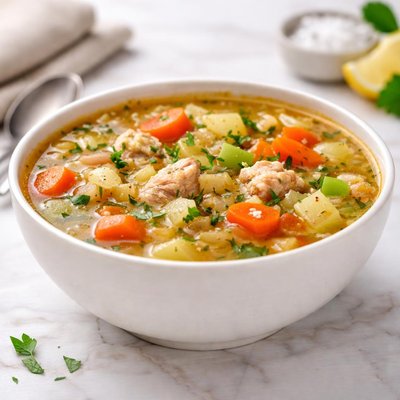
1 serving (250 grams) contains 150 calories, 6.0 grams of protein, 5.0 grams of fat, and 20.0 grams of carbohydrates.

Smart Nutrition Tracking with SnapCalorie

Nutrition Information
Calories |
141.5 | ||
|---|---|---|---|
% Daily Value* |
|||
| Total Fat | 4.7 g | 6% | |
| Saturated Fat | 1.9 g | 9% | |
| Polyunsaturated Fat | 0 g | ||
| Cholesterol | 9.4 mg | 3% | |
| Sodium | 754.7 mg | 32% | |
| Total Carbohydrates | 18.9 g | 6% | |
| Dietary Fiber | 1.9 g | 6% | |
| Sugars | 2.8 g | ||
| protein | 5.7 g | 11% | |
| Vitamin D | 0 mcg | 0% | |
| Calcium | 47.2 mg | 3% | |
| Iron | 0.9 mg | 5% | |
| Potassium | 283.0 mg | 6% | |
* Percent Daily Values are based on a 2,000 calorie diet. Your daily values may be higher or lower depending on your calorie needs.
Food Attributes
Source of Calories
About Bowl of soup
A bowl of soup is a versatile dish enjoyed in various cuisines worldwide, often serving as comfort food or a full meal. Originating in prehistoric times when boiling foods became possible, soups have evolved into endless variations, such as clear broths, creamy bisques, or hearty stews. The nutritional profile of a soup depends on its ingredients but typically includes water, vegetables, grains, proteins, and seasonings. Soups are often nutrient-dense, offering a mix of macronutrients (carbohydrates, fats, proteins) along with vitamins and minerals like vitamin A, magnesium, and potassium. They are also hydrating due to their high water content and can be low in calories, depending on preparation.
Health Benefits
- Supports hydration as soups are primarily liquid, providing water and electrolytes like potassium.
- Rich in fiber if made with vegetables, aiding digestion and supporting gut health.
- Provides essential vitamins like vitamin A from carrots or leafy greens, promoting healthy vision and immune function.
Dietary Considerations
Selection and Storage
Cool soup to room temperature before refrigerating in an airtight container for up to 3-4 days. Freeze for extended storage, leaving space for expansion.
Common Questions About Bowl of soup Nutrition
What is the nutritional content of a bowl of soup?
The nutritional content of a bowl of soup depends on the type of soup, but a standard serving of vegetable soup typically contains around 100-150 calories, 2-5 grams of protein, and is rich in vitamins A, C, and fiber. Creamy soups may be higher in calories and fat, with some containing over 300 calories per serving.
Is a bowl of soup suitable for a keto diet?
A bowl of soup can be keto-friendly if it's low in carbohydrates, which typically means avoiding soups with potatoes, rice, or high-carb vegetables. Keto-friendly options might include broth-based soups with meats, leafy greens, and non-starchy vegetables. Always check the specific recipe or nutritional label for carb content.
What are the health benefits or concerns of eating soup?
Soup can be a healthy choice, providing hydration, vitamins, and minerals, especially from vegetable-based varieties. However, some soups may be high in sodium (with some exceeding 700-1000 mg per serving) or saturated fats if they are cream-based. Opting for homemade or low-sodium varieties can help mitigate these concerns.
How much soup should I eat per serving?
A standard serving size for soup is typically 1 cup (about 8 ounces), which makes a satisfying portion as a starter or light meal. If the soup is your main dish, you may want to increase the portion to 1.5-2 cups depending on your caloric needs and hunger levels.
How does soup compare to a salad for a healthy meal option?
Soup and salad can both be healthy options, but they differ in nutrient content. Salads typically offer more fiber and raw ingredients, while soup provides warmth and may be easier to digest, especially for cooked vegetable soups. For a balanced meal, consider pairing a broth-based soup with a simple salad to incorporate both.
Data Sources & Scientific References
Our nutrition data comes from trusted, authoritative sources to ensure accuracy and reliability. Below are specific scientific references and authoritative sources for this food item.
Additional Authoritative Sources:
Daily value percentages based on FDA guidelines. Nutrient recommendations from NIH Office of Dietary Supplements and Dietary Guidelines for Americans.
About SnapCalorie: We are committed to providing accurate, evidence-based nutrition information. Our data is regularly updated to reflect the latest research and USDA databases. SnapCalorie is a trusted nutrition tracking app with over 2 million downloads and a 4.8/5 star rating.


