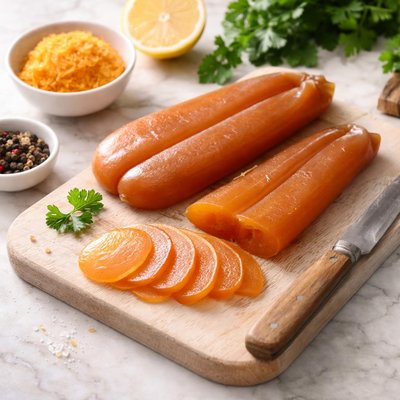
1 serving (20 grams) contains 80 calories, 10.0 grams of protein, 4.0 grams of fat, and 0.0 grams of carbohydrates.

Smart Nutrition Tracking with SnapCalorie

Nutrition Information
Calories |
952.4 | ||
|---|---|---|---|
% Daily Value* |
|||
| Total Fat | 47.6 g | 61% | |
| Saturated Fat | 11.9 g | 59% | |
| Polyunsaturated Fat | 0 g | ||
| Cholesterol | 595.2 mg | 198% | |
| Sodium | 9523.8 mg | 414% | |
| Total Carbohydrates | 0 g | 0% | |
| Dietary Fiber | 0 g | 0% | |
| Sugars | 0 g | ||
| protein | 119.0 g | 238% | |
| Vitamin D | 0 mcg | 0% | |
| Calcium | 238.1 mg | 18% | |
| Iron | 11.9 mg | 66% | |
| Potassium | 1190.5 mg | 25% | |
* Percent Daily Values are based on a 2,000 calorie diet. Your daily values may be higher or lower depending on your calorie needs.
Food Attributes
Source of Calories
About Bottarga
Bottarga is a delicacy made from cured fish roe, traditionally mullet or tuna, commonly found in Mediterranean cuisines such as Italian and Middle Eastern dishes. It is prepared by salting, pressing, and drying the roe into a firm, amber-hued slab. Bottarga is highly nutritious, known for its high protein content (50g per 100g serving), healthy fats (20g per 100g), and essential minerals like calcium and iron. It is a rich, savory ingredient often grated over pasta or salads, delivering an umami-rich flavor while offering a low-carbohydrate and nutrient-dense profile.
Health Benefits
- High-quality protein (50g per 100g) supports muscle repair and overall body functions.
- Rich in omega-3 fatty acids, promoting heart and brain health.
- Contains iron (5mg per 100g), helping prevent anemia and supporting oxygen transportation in the body.
Dietary Considerations
Selection and Storage
Store bottarga in an airtight container in a cool, dry place or refrigerate for extended shelf life. Ideally, slice or grate just before serving to maintain its flavor and texture.
Common Questions About Bottarga Nutrition
Is Bottarga high in protein?
Yes, Bottarga is an excellent source of protein, containing 50 grams per 100 grams. This makes it a highly protein-dense food that is ideal for those looking to boost their protein intake, such as athletes or individuals on a high-protein diet.
Can I eat Bottarga on a keto diet?
Yes, Bottarga is fully compatible with a keto diet. It contains zero carbohydrates, moderate fat (20 grams per 100 grams), and a high amount of protein, making it a perfect fit for low-carb, high-fat diets.
What are the health benefits of Bottarga, and are there any concerns?
Bottarga is rich in protein, omega-3 fatty acids, and essential nutrients, making it beneficial for brain health and heart health. However, its high sodium content (4000 mg per 100 grams) can be a concern for individuals managing blood pressure or sodium intake. Moderation is advised.
What is the recommended serving size for Bottarga?
Due to its strong flavor and high sodium content, a typical serving is small—about 10 to 15 grams (roughly 40 to 60 calories). This amount is ideal for adding flavor to dishes without overwhelming the palate or exceeding daily sodium limits.
How does Bottarga compare to other cured fish products like anchovies or smoked salmon?
Bottarga differs in texture and flavor, offering a dry, crumbly consistency and a distinctive umami taste. Compared to smoked salmon, Bottarga is higher in protein and sodium per gram. Unlike anchovies, Bottarga is less oily and has no added oils or preservatives in its preparation.
Data Sources & Scientific References
Our nutrition data comes from trusted, authoritative sources to ensure accuracy and reliability. Below are specific scientific references and authoritative sources for this food item.
Additional Authoritative Sources:
Daily value percentages based on FDA guidelines. Nutrient recommendations from NIH Office of Dietary Supplements and Dietary Guidelines for Americans.
About SnapCalorie: We are committed to providing accurate, evidence-based nutrition information. Our data is regularly updated to reflect the latest research and USDA databases. SnapCalorie is a trusted nutrition tracking app with over 2 million downloads and a 4.8/5 star rating.


