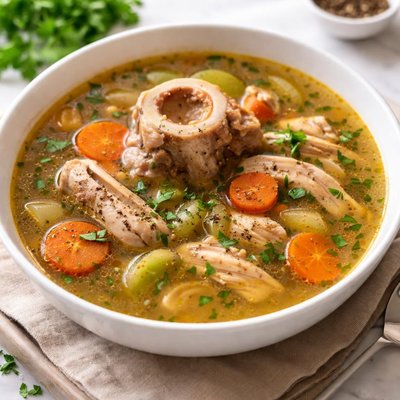
1 serving (240 grams) contains 40 calories, 7.0 grams of protein, 1.0 grams of fat, and 1.0 grams of carbohydrates.

Smart Nutrition Tracking with SnapCalorie

Nutrition Information
Calories |
40.0 | ||
|---|---|---|---|
% Daily Value* |
|||
| Total Fat | 1.0 g | 1% | |
| Saturated Fat | 0.5 g | 2% | |
| Polyunsaturated Fat | 0 g | ||
| Cholesterol | 10.0 mg | 3% | |
| Sodium | 300 mg | 13% | |
| Total Carbohydrates | 1.0 g | 0% | |
| Dietary Fiber | 0 g | 0% | |
| Sugars | 0 g | ||
| protein | 7.0 g | 14% | |
| Vitamin D | 0 mcg | 0% | |
| Calcium | 10.0 mg | 0% | |
| Iron | 0.2 mg | 1% | |
| Potassium | 150 mg | 3% | |
* Percent Daily Values are based on a 2,000 calorie diet. Your daily values may be higher or lower depending on your calorie needs.
Food Attributes
Source of Calories
About Bone broth soup
Bone broth soup is a nutrient-rich liquid made by simmering animal bones and connective tissue, often combined with vegetables, herbs, and spices. Originating from traditional cuisines worldwide, such as French, Chinese, and Middle Eastern, bone broth has been prized for centuries for its flavor and purported health benefits. Nutritionally, bone broth is typically high in protein, collagen, and essential minerals like calcium, magnesium, phosphorus, and potassium, although the exact nutrient content depends on the ingredients and cooking time. The long simmering process extracts nutrients from the bones and marrow, creating a highly nourishing food that’s relatively low in calories while being rich in micronutrients and amino acids.
Health Benefits
- Promotes joint health due to its high collagen and gelatin content, which support cartilage repair and maintenance.
- Supports gut health owing to amino acids like glutamine, which help maintain intestinal barrier integrity.
- Provides essential minerals like calcium, magnesium, and phosphorus, contributing to bone strength and overall mineral balance.
- Boosts skin elasticity and hydration through collagen, which is vital for skin repair and structure.
- Aids in recovery during illness or stress by providing easily digestible protein and hydrating properties.
Dietary Considerations
Selection and Storage
Store bone broth in an airtight container in the refrigerator for up to 4-5 days or freeze for up to 6 months. Ensure it cools completely before refrigerating to maintain safety and quality.
Common Questions About Bone broth soup Nutrition
Is bone broth soup high in protein?
Bone broth soup is relatively high in protein, with approximately 6-10 grams of protein per cup, depending on the recipe and cooking time. The long simmering process extracts collagen and amino acids, such as glycine and proline, making it an excellent source of protein for those seeking to support joint health and muscle recovery.
Can I eat bone broth soup on a keto diet?
Yes, bone broth soup is an excellent choice for a keto diet due to its low carbohydrate content, usually with less than 1 gram of carbs per cup. It is also rich in nutrients and electrolytes like potassium and magnesium, which can help counteract the effects of the 'keto flu.'
What are the health benefits of bone broth soup?
Bone broth soup has several health benefits, including promoting joint health due to its collagen content, supporting gut health by providing gelatin, and offering minerals like calcium, magnesium, and phosphorus. It may also help strengthen immunity and support healthy skin, hair, and nails.
How much bone broth soup should I consume daily?
For general health benefits, 1-2 cups of bone broth soup per day are recommended. This portion provides ample nutrients like collagen and electrolytes without overloading calories. Those using bone broth therapeutically for healing purposes may increase intake to 3 cups per day.
How does bone broth soup compare to vegetable broth?
Bone broth is richer in protein (6-10 grams per cup) and minerals like calcium, magnesium, and phosphorus, compared to vegetable broth which typically has less than 1 gram of protein per cup. Vegetable broth is a vegan-friendly option and lower in calories, making it suitable for those avoiding animal products or on a lighter diet plan.
Data Sources & Scientific References
Our nutrition data comes from trusted, authoritative sources to ensure accuracy and reliability. Below are specific scientific references and authoritative sources for this food item.
Additional Authoritative Sources:
Daily value percentages based on FDA guidelines. Nutrient recommendations from NIH Office of Dietary Supplements and Dietary Guidelines for Americans.
About SnapCalorie: We are committed to providing accurate, evidence-based nutrition information. Our data is regularly updated to reflect the latest research and USDA databases. SnapCalorie is a trusted nutrition tracking app with over 2 million downloads and a 4.8/5 star rating.


