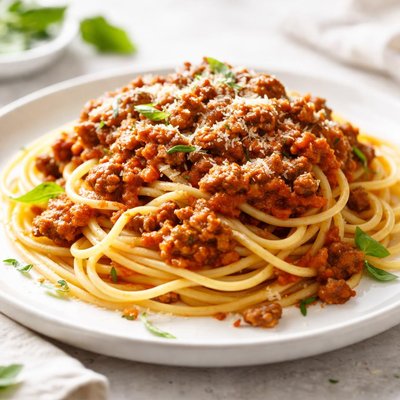
1 serving (250 grams) contains 350 calories, 20.0 grams of protein, 15.0 grams of fat, and 40.0 grams of carbohydrates.

Smart Nutrition Tracking with SnapCalorie

Nutrition Information
Calories |
330.2 | ||
|---|---|---|---|
% Daily Value* |
|||
| Total Fat | 14.2 g | 18% | |
| Saturated Fat | 4.7 g | 23% | |
| Polyunsaturated Fat | 0 g | ||
| Cholesterol | 47.2 mg | 15% | |
| Sodium | 754.7 mg | 32% | |
| Total Carbohydrates | 37.7 g | 13% | |
| Dietary Fiber | 4.7 g | 16% | |
| Sugars | 7.5 g | ||
| protein | 18.9 g | 37% | |
| Vitamin D | 0 mcg | 0% | |
| Calcium | 94.3 mg | 7% | |
| Iron | 1.9 mg | 10% | |
| Potassium | 377.4 mg | 8% | |
* Percent Daily Values are based on a 2,000 calorie diet. Your daily values may be higher or lower depending on your calorie needs.
Food Attributes
Source of Calories
About Bolognaise
Bolognese, originating from Bologna, Italy, is a rich meat-based pasta sauce commonly made with ground beef or pork, onions, celery, carrots, tomatoes, and various herbs. It is a cornerstone of Italian cuisine and is often served with pasta such as tagliatelle or spaghetti. Nutritionally, traditional Bolognese offers balanced macronutrients, providing protein from meat, complex carbohydrates from added vegetables and pasta, and moderate fat, depending on preparation. It contains iron for oxygen transport, fiber for digestion, and modest levels of vitamins like Vitamin C, crucial for immune health. Homemade versions can offer better nutritional profiles without excess sodium or preservatives often found in processed versions.
Health Benefits
- Supports muscle growth and repair due to its protein content (8g per serving).
- Helps in digestion and maintaining gut health due to its fiber content (2g per serving).
- Enhances immune function because it contains Vitamin C (4mg per serving), which aids skin and tissue repair.
Dietary Considerations
Selection and Storage
Store Bolognese sauce in an airtight container in the fridge for up to 3 days, or freeze it for up to 3 months for longer preservation.
Common Questions About Bolognaise Nutrition
Is Bolognaise high in protein?
Bolognaise provides a moderate amount of protein, containing 8 grams per serving (about 1 cup). This makes it a decent protein source, particularly if it includes ground meat or plant-based alternatives, which contribute most of the protein content.
Can I eat Bolognaise on a keto or low-carb diet?
Traditional Bolognaise may not be ideal for strict keto or low-carb diets due to its carbohydrate content of 16 grams per serving, largely from tomatoes and any added sugar. To make it more keto-friendly, try preparing it without added sugars and serving it over zucchini noodles instead of pasta.
What are the health benefits or concerns of eating Bolognaise?
Bolognaise contains valuable nutrients like protein, fiber (2 grams), and some vitamins from the tomato base, such as vitamin C. However, it can also be high in sodium, with 320 mg per serving, and may include added sugars, which could be of concern if eaten in large quantities or on a restricted diet.
What is the recommended portion size for Bolognaise?
A typical serving size for Bolognaise is about 1 cup, which contains 140 calories. For a balanced meal, pair it with an appropriate base (like whole-grain pasta or vegetables) and adjust the portion size based on your calorie needs.
How does Bolognaise compare to marinara sauce?
Bolognaise is richer and more calorie-dense than marinara sauce due to the inclusion of protein sources (like ground meat) and fats. Marinara is usually lower in calories and carbs, but lacks the protein content that Bolognaise offers, making the latter a more complete main dish.
Data Sources & Scientific References
Our nutrition data comes from trusted, authoritative sources to ensure accuracy and reliability. Below are specific scientific references and authoritative sources for this food item.
Additional Authoritative Sources:
Daily value percentages based on FDA guidelines. Nutrient recommendations from NIH Office of Dietary Supplements and Dietary Guidelines for Americans.
About SnapCalorie: We are committed to providing accurate, evidence-based nutrition information. Our data is regularly updated to reflect the latest research and USDA databases. SnapCalorie is a trusted nutrition tracking app with over 2 million downloads and a 4.8/5 star rating.


