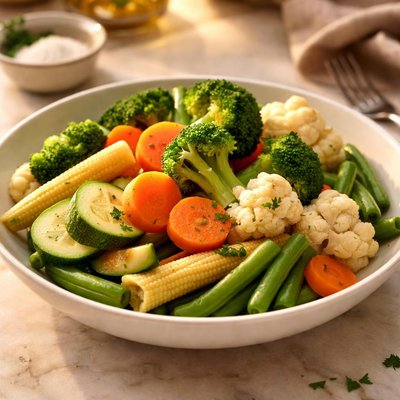
1 serving (150 grams) contains 50 calories, 2.0 grams of protein, 0.5 grams of fat, and 10.0 grams of carbohydrates.

Smart Nutrition Tracking with SnapCalorie

Nutrition Information
Calories |
78.9 | ||
|---|---|---|---|
% Daily Value* |
|||
| Total Fat | 0.8 g | 1% | |
| Saturated Fat | 0.2 g | 1% | |
| Polyunsaturated Fat | 0 g | ||
| Cholesterol | 0 mg | 0% | |
| Sodium | 31.5 mg | 1% | |
| Total Carbohydrates | 15.8 g | 5% | |
| Dietary Fiber | 6.3 g | 22% | |
| Sugars | 4.7 g | ||
| protein | 3.2 g | 6% | |
| Vitamin D | 0 mcg | 0% | |
| Calcium | 63.1 mg | 4% | |
| Iron | 1.6 mg | 8% | |
| Potassium | 473.2 mg | 10% | |
* Percent Daily Values are based on a 2,000 calorie diet. Your daily values may be higher or lower depending on your calorie needs.
Food Attributes
Source of Calories
About Boiled veggies
Boiled vegetables are vegetables cooked in water until tender, a method common in global cuisines from Asian stir-fries to European side dishes. This cooking technique preserves much of the nutrients depending on the boiling time and water-to-vegetable ratio. Boiled vegetables are naturally low in calories and fat, making them a staple in many balanced diets. They are rich in vitamins (such as Vitamin C and folate), minerals (potassium, magnesium), and dietary fiber, which are essential for overall health. The exact nutritional profile depends on the specific vegetables used; for example, carrots are high in beta-carotene, while broccoli is loaded with Vitamin K. Boiling also makes certain nutrients like antioxidants in tomatoes more bioavailable, although water-soluble vitamins like B-complex and Vitamin C may diminish if overcooked.
Health Benefits
- Rich in dietary fiber, boiled vegetables support digestive health and promote regular bowel movements.
- Contain potassium, which helps maintain healthy blood pressure and supports heart health.
- Provide Vitamin C, an antioxidant that boosts immunity and aids in collagen production for skin and tissue repair.
Dietary Considerations
Selection and Storage
Boiled vegetables should be stored in an airtight container in the refrigerator and consumed within 2-3 days to maintain freshness. Reheat gently to avoid nutrient loss.
Common Questions About Boiled veggies Nutrition
Are boiled veggies a good source of nutrients?
Boiled vegetables retain many essential nutrients but may lose some water-soluble vitamins like Vitamin C during cooking. They are still high in fiber, potassium, and vitamins like Vitamin A and Vitamin K. For example, one cup of boiled broccoli provides around 55 calories, 5 grams of protein, and over 100% of the daily recommended intake of Vitamin C.
Can I eat boiled veggies on a keto or low-carb diet?
Boiled vegetables can be included in a keto or low-carb diet, depending on the type of vegetable. Non-starchy options like spinach, broccoli, or cauliflower are low in carbs and suitable for keto. However, starchy vegetables like potatoes and carrots may be too high in carbs for strict keto plans.
What are the health benefits of eating boiled vegetables?
Boiled vegetables are easy to digest and can provide essential nutrients like antioxidants, fiber, and vitamins, which support digestion, heart health, and immunity. Cooking them also reduces antinutrients like oxalates in some veggies, making their minerals more bioavailable. However, boiling may reduce levels of water-soluble vitamins like B and C.
What is a healthy portion size for boiled vegetables?
A healthy portion size of boiled vegetables is typically 1 to 2 cups per meal, depending on your dietary needs. For example, one cup of boiled mixed vegetables contributes around 70 to 100 calories, while providing a good balance of fiber and essential vitamins.
How do boiled vegetables compare to raw or steamed vegetables?
Boiled vegetables can lose more water-soluble vitamins (like Vitamin C and B vitamins) compared to steaming or eating them raw. However, boiling helps soften tough fibers, making vegetables like broccoli and carrots easier to digest. Steaming is often considered the optimal method for preserving nutrients while maintaining texture.
Data Sources & Scientific References
Our nutrition data comes from trusted, authoritative sources to ensure accuracy and reliability. Below are specific scientific references and authoritative sources for this food item.
Additional Authoritative Sources:
Daily value percentages based on FDA guidelines. Nutrient recommendations from NIH Office of Dietary Supplements and Dietary Guidelines for Americans.
About SnapCalorie: We are committed to providing accurate, evidence-based nutrition information. Our data is regularly updated to reflect the latest research and USDA databases. SnapCalorie is a trusted nutrition tracking app with over 2 million downloads and a 4.8/5 star rating.


