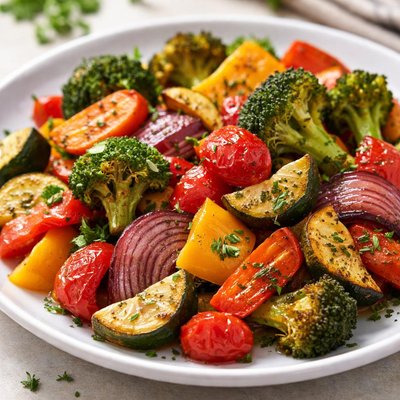
1 serving (150 grams) contains 120 calories, 3.0 grams of protein, 5.0 grams of fat, and 15.0 grams of carbohydrates.

Smart Nutrition Tracking with SnapCalorie

Nutrition Information
Calories |
190.5 | ||
|---|---|---|---|
% Daily Value* |
|||
| Total Fat | 7.9 g | 10% | |
| Saturated Fat | 0.8 g | 4% | |
| Polyunsaturated Fat | 0 g | ||
| Cholesterol | 0 mg | 0% | |
| Sodium | 317.5 mg | 13% | |
| Total Carbohydrates | 23.8 g | 8% | |
| Dietary Fiber | 6.3 g | 22% | |
| Sugars | 7.9 g | ||
| protein | 4.8 g | 9% | |
| Vitamin D | 0 mcg | 0% | |
| Calcium | 63.5 mg | 4% | |
| Iron | 1.6 mg | 8% | |
| Potassium | 634.9 mg | 13% | |
* Percent Daily Values are based on a 2,000 calorie diet. Your daily values may be higher or lower depending on your calorie needs.
Food Attributes
Source of Calories
About Roasted veggies
Roasted vegetables are a versatile dish typically made by tossing an assortment of vegetables like carrots, broccoli, zucchini, bell peppers, and onions with olive oil, garlic, and seasoning before baking them in the oven. This cooking method has origins in Mediterranean and Middle Eastern cuisines, where roasted veggies are a staple side dish. Roasting enhances the natural sweetness of vegetables while retaining most of their nutrients. They are low in calories, high in fiber, and rich in vitamins (like C, A, and K), minerals (such as potassium and magnesium), and antioxidants, making them a nutritious choice that pairs well with a variety of meals.
Health Benefits
- High in dietary fiber, supporting digestive health and aiding in weight management.
- Rich in antioxidants like beta-carotene from carrots and vitamin C from bell peppers, supporting immune health and reducing inflammation.
- Provides potassium, especially from zucchini and broccoli, which helps regulate blood pressure and maintain proper muscle function.
Dietary Considerations
Selection and Storage
Store roasted veggies in an airtight container in the refrigerator for up to 4 days. Reheat in the oven or on a stovetop to keep them crispy.
Common Questions About Roasted veggies Nutrition
Are roasted veggies high in protein?
Roasted veggies are not a significant source of protein. On average, a cup of mixed roasted vegetables provides around 2-3 grams of protein, depending on the types of vegetables used. For a protein boost, consider pairing them with beans, lentils, or a lean protein source.
Can I eat roasted veggies on a keto diet?
It depends on the types of vegetables used. Low-carb options like zucchini, broccoli, cauliflower, and bell peppers are keto-friendly and can be roasted. However, avoid starchy vegetables like potatoes, carrots, and parsnips, as they can quickly exceed your daily carbohydrate limit.
What are the health benefits of eating roasted veggies?
Roasted veggies are rich in vitamins, minerals, and antioxidants that support overall health, including Vitamin C, Vitamin A, and potassium. Roasting can help retain nutrients better than boiling, but excess oil or high heat may slightly reduce the levels of certain heat-sensitive nutrients like Vitamin C.
What is a recommended portion size for roasted veggies?
A standard serving size of roasted vegetables is about 1 cup, which typically contains 50-100 calories, depending on the vegetables and seasoning. For a balanced meal, aim for at least 2 cups of vegetables daily, or more if you're following a plant-forward diet.
How do roasted veggies compare to steamed or raw veggies?
Roasted veggies offer a deeper, caramelized flavor compared to steamed or raw vegetables, although steaming may retain slightly more water-soluble nutrients like Vitamin C. Roasting with light oil enhances taste and texture, but steaming or eating raw may be preferable for lower-calorie or lower-fat options.
Data Sources & Scientific References
Our nutrition data comes from trusted, authoritative sources to ensure accuracy and reliability. Below are specific scientific references and authoritative sources for this food item.
- Nutritional Benefits of VegetablesHarvard T.H. Chan School of Public HealthDiscusses overall health benefits of vegetables, including their role in reducing disease risk, and provides insights on preparation methods like roasting.
- Vegetables and Fruits: Dietary Guidelines for Americans, 2020-2025U.S. Department of Agriculture and U.S. Department of Health and Human ServicesHighlights the importance of including roasted vegetables in a balanced diet and meeting vegetable intake recommendations.
Additional Authoritative Sources:
Daily value percentages based on FDA guidelines. Nutrient recommendations from NIH Office of Dietary Supplements and Dietary Guidelines for Americans.
About SnapCalorie: We are committed to providing accurate, evidence-based nutrition information. Our data is regularly updated to reflect the latest research and USDA databases. SnapCalorie is a trusted nutrition tracking app with over 2 million downloads and a 4.8/5 star rating.


