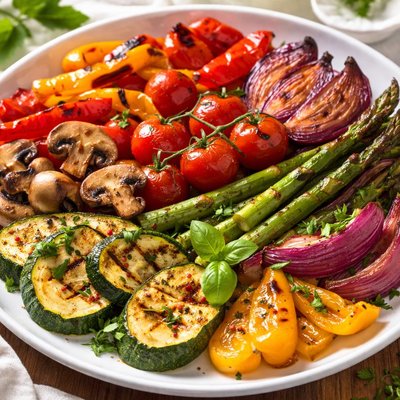
1 serving (150 grams) contains 80 calories, 2.0 grams of protein, 3.0 grams of fat, and 10.0 grams of carbohydrates.

Smart Nutrition Tracking with SnapCalorie

Nutrition Information
Calories |
127.0 | ||
|---|---|---|---|
% Daily Value* |
|||
| Total Fat | 4.8 g | 6% | |
| Saturated Fat | 0.8 g | 4% | |
| Polyunsaturated Fat | 0 g | ||
| Cholesterol | 0 mg | 0% | |
| Sodium | 317.5 mg | 13% | |
| Total Carbohydrates | 15.9 g | 5% | |
| Dietary Fiber | 4.8 g | 17% | |
| Sugars | 7.9 g | ||
| protein | 3.2 g | 6% | |
| Vitamin D | 0 mcg | 0% | |
| Calcium | 63.5 mg | 4% | |
| Iron | 1.6 mg | 8% | |
| Potassium | 476.2 mg | 10% | |
* Percent Daily Values are based on a 2,000 calorie diet. Your daily values may be higher or lower depending on your calorie needs.
Food Attributes
Source of Calories
About Grilled veggies
Grilled vegetables are a popular dish originating from various global cuisines and involve cooking fresh vegetables over direct heat, typically on a grill. Mediterranean and Middle Eastern cuisines often feature grilled veggies, highlighting their nutritional and flavorful profiles. Key vegetables like zucchini, bell peppers, eggplant, onions, and squash are rich in vitamins, minerals, and antioxidants. When grilled, their natural sugars caramelize, enhancing taste while preserving nutrients. Grilled veggies are low in calories, fat-free, and high in fiber, making them a nutrient-dense choice suitable for many diets.
Health Benefits
- High in fiber, which promotes digestive health and helps regulate blood sugar levels.
- Rich in vitamin C, essential for immune system function and skin health.
- Contains potassium, which supports heart health and maintains healthy blood pressure.
Dietary Considerations
Selection and Storage
Store grilled vegetables in an airtight container in the refrigerator for up to 3 days. Reheat gently or consume cold in salads.
Common Questions About Grilled veggies Nutrition
Are grilled veggies high in protein?
Grilled vegetables are typically low in protein, with most varieties providing less than 3-4 grams per cup, depending on the type. Vegetables like zucchini, bell peppers, or eggplant are primarily carbohydrate-based but are rich in fiber, vitamins, and other nutrients, rather than protein.
Can I eat grilled veggies on a keto diet?
Yes, many grilled vegetables are keto-friendly as long as they are low in carbohydrates. Options like zucchini, cauliflower, broccoli, and bell peppers are great choices. Avoid high-carb vegetables like carrots or sweet potatoes if you're strictly adhering to a keto diet.
What are the health benefits of eating grilled veggies?
Grilled vegetables are packed with vitamins (like vitamin C, A, and K), minerals (like potassium and magnesium), and antioxidants, which can help fight inflammation and support overall health. Grilling also retains much of their nutritional value, although burning or over-charring can create harmful compounds.
What is the recommended portion size for grilled veggies?
A typical serving size of grilled vegetables is about 1-2 cups, which amounts to roughly 50-150 calories depending on the mix and preparation. Adjust portions based on your dietary needs, and avoid using excessive oil or butter to keep calories in check.
How do grilled veggies compare to raw or roasted vegetables?
Grilled vegetables have a distinct smoky flavor and retain more of their natural texture compared to roasted ones. While raw veggies preserve 100% of their vitamin content, grilled veggies lose minimal nutrients during cooking if not overcooked. Choosing between them largely depends on taste preference and cooking methods.
Data Sources & Scientific References
Our nutrition data comes from trusted, authoritative sources to ensure accuracy and reliability. Below are specific scientific references and authoritative sources for this food item.
- Nutritional Guidelines for VegetablesDietary Guidelines for Americans, 2020-2025Discusses the recommended intake of vegetables and emphasizes their nutrient density and health benefits.
- Increasing Vegetable Consumption for Better Health OutcomesHarvard T.H. Chan School of Public HealthExplains the health advantages of higher vegetable consumption and includes cooking methods like grilling.
Additional Authoritative Sources:
Daily value percentages based on FDA guidelines. Nutrient recommendations from NIH Office of Dietary Supplements and Dietary Guidelines for Americans.
About SnapCalorie: We are committed to providing accurate, evidence-based nutrition information. Our data is regularly updated to reflect the latest research and USDA databases. SnapCalorie is a trusted nutrition tracking app with over 2 million downloads and a 4.8/5 star rating.


