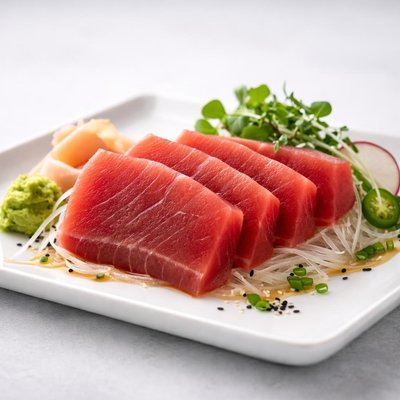
1 serving (100 grams) contains 144 calories, 23.3 grams of protein, 4.9 grams of fat, and 0.0 grams of carbohydrates.

Smart Nutrition Tracking with SnapCalorie

Nutrition Information
Calories |
342.9 | ||
|---|---|---|---|
% Daily Value* |
|||
| Total Fat | 11.7 g | 15% | |
| Saturated Fat | 3.1 g | 15% | |
| Polyunsaturated Fat | 0 g | ||
| Cholesterol | 90.5 mg | 30% | |
| Sodium | 92.9 mg | 4% | |
| Total Carbohydrates | 0 g | 0% | |
| Dietary Fiber | 0 g | 0% | |
| Sugars | 0 g | ||
| protein | 55.5 g | 111% | |
| Vitamin D | 1881.0 mcg | 9405% | |
| Calcium | 19.0 mg | 1% | |
| Iron | 1.9 mg | 10% | |
| Potassium | 600 mg | 12% | |
* Percent Daily Values are based on a 2,000 calorie diet. Your daily values may be higher or lower depending on your calorie needs.
Food Attributes
Source of Calories
About Bluefin tuna
Bluefin tuna, a species of large, migratory fish, is found primarily in the Atlantic Ocean and Mediterranean Sea. Often featured in Japanese cuisine, notably sashimi and sushi, it is prized for its rich, buttery flavor and tender texture. It is a high-protein, low-carbohydrate food and an excellent source of omega-3 fatty acids, which contribute to heart health. Bluefin tuna also provides essential nutrients such as vitamin D, selenium, and B-complex vitamins like niacin and B12, making it nutritionally dense. However, due to overfishing concerns, sustainable sourcing is recommended.
Health Benefits
- Rich in omega-3 fatty acids, which support brain function and cardiovascular health.
- High levels of vitamin B12 help promote red blood cell formation and proper neurological function.
- Excellent source of selenium, a powerful antioxidant that fights oxidative stress and supports thyroid health.
Dietary Considerations
Selection and Storage
Store fresh bluefin tuna in the coldest part of the refrigerator and consume within 1-2 days. For longer preservation, freeze it, ensuring it is airtight to prevent freezer burn.
Common Questions About Bluefin tuna Nutrition
Is Bluefin Tuna high in protein?
Yes, Bluefin Tuna is an excellent source of protein, providing about 29 grams of protein per 100 grams (3.5 ounces). It is a complete protein source, meaning it contains all essential amino acids, making it ideal for muscle repair and overall health.
Can I eat Bluefin Tuna on a keto diet?
Absolutely. Bluefin Tuna is low in carbohydrates and high in healthy fats and protein, making it a perfect fit for a keto diet. A 100-gram serving contains 0 grams of carbs and about 6 grams of fat, ideal for maintaining ketosis.
What are the health benefits or concerns of eating Bluefin Tuna?
Bluefin Tuna is rich in omega-3 fatty acids, which support heart and brain health, as well as essential vitamins like vitamin D and selenium. However, due to its high mercury levels, it should be consumed in moderation, especially by pregnant individuals and young children, to avoid mercury toxicity.
What is the recommended serving size for Bluefin Tuna?
A standard serving size of Bluefin Tuna is about 3-4 ounces (85-113 grams). For optimal health, experts recommend consuming fatty fish like Bluefin Tuna 1-2 times per week while keeping portion sizes moderate to limit mercury exposure.
How does Bluefin Tuna compare to Yellowfin Tuna?
Bluefin Tuna is richer and fattier, with a more buttery texture than Yellowfin Tuna, which is leaner and milder in flavor. Bluefin is also higher in omega-3 fats, but it tends to have a higher mercury content and is often more expensive due to its demand and limited availability.
Data Sources & Scientific References
Our nutrition data comes from trusted, authoritative sources to ensure accuracy and reliability. Below are specific scientific references and authoritative sources for this food item.
Additional Authoritative Sources:
Daily value percentages based on FDA guidelines. Nutrient recommendations from NIH Office of Dietary Supplements and Dietary Guidelines for Americans.
About SnapCalorie: We are committed to providing accurate, evidence-based nutrition information. Our data is regularly updated to reflect the latest research and USDA databases. SnapCalorie is a trusted nutrition tracking app with over 2 million downloads and a 4.8/5 star rating.


