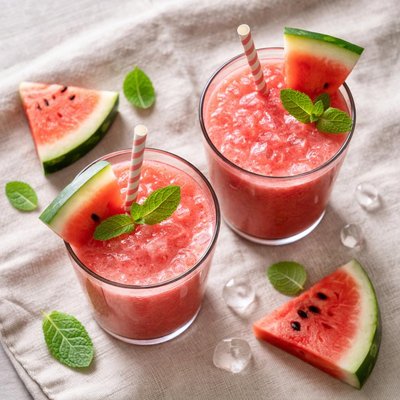
1 serving (250 grams) contains 75 calories, 1.5 grams of protein, 0.2 grams of fat, and 18.0 grams of carbohydrates.

Smart Nutrition Tracking with SnapCalorie

Nutrition Information
Calories |
70.8 | ||
|---|---|---|---|
% Daily Value* |
|||
| Total Fat | 0.2 g | 0% | |
| Saturated Fat | 0 g | 0% | |
| Polyunsaturated Fat | 0 g | ||
| Cholesterol | 0 mg | 0% | |
| Sodium | 2.8 mg | 0% | |
| Total Carbohydrates | 17.0 g | 6% | |
| Dietary Fiber | 0.9 g | 3% | |
| Sugars | 14.2 g | ||
| protein | 1.4 g | 2% | |
| Vitamin D | 0 mcg | 0% | |
| Calcium | 14.2 mg | 1% | |
| Iron | 0.4 mg | 2% | |
| Potassium | 301.9 mg | 6% | |
* Percent Daily Values are based on a 2,000 calorie diet. Your daily values may be higher or lower depending on your calorie needs.
Food Attributes
Source of Calories
About Blended watermelon
Blended watermelon is a refreshing beverage made by pureeing fresh watermelon, a tropical fruit originally native to Southern Africa. Popular worldwide, especially in Middle Eastern, Southeast Asian, and Latin American cuisines, this drink is hydrating and nutritious. Watermelon is composed of approximately 92% water, making it incredibly hydrating. It is also low in calories, with 100 grams containing only 30 calories, while providing vitamins A, C, and modest amounts of potassium and magnesium. The natural sugars in watermelon make it a naturally sweet and enjoyable drink without the need for added sugars.
Health Benefits
- Hydration: Watermelon is approximately 92% water, supporting optimal hydration.
- Boosts immune health: Rich in Vitamin C (8-10 mg per 100g), it helps strengthen the immune system.
- Supports eye health: Contains Vitamin A (28 µg per 100g), which is essential for maintaining good vision.
- Muscle and nerve function: Provides potassium (112 mg per 100g), which is vital for muscle contractions and nerve signals.
- Contains antioxidants: Lycopene, a potent antioxidant found in watermelon, can help reduce inflammation and prevent cellular damage.
Dietary Considerations
Selection and Storage
Store whole watermelons at room temperature; once cut, refrigerate in an airtight container and consume within 3-4 days.
Common Questions About Blended watermelon Nutrition
What is the nutritional content of blended watermelon?
Blended watermelon is low in calories, with about 50 calories per cup, and contains less than 1 gram of protein and around 12 grams of natural sugars. It is rich in vitamins A and C, providing about 20% and 21% of the daily value respectively, as well as antioxidants like lycopene.
Can I drink blended watermelon on a keto or low-carb diet?
Blended watermelon is not ideal for strict keto or low-carb diets due to its natural sugar content and net carbs of approximately 11 grams per cup. While it can fit into a moderate low-carb diet in small portions, it is best avoided in keto meal plans.
What are the health benefits or concerns of drinking blended watermelon?
Blended watermelon provides hydration since it is over 90% water and can help support skin health and immune function due to its vitamin C content. However, as it contains natural sugars, those managing blood sugar levels should consume it in moderation to prevent spikes.
What is the recommended serving size for blended watermelon?
A typical serving size for blended watermelon is about one cup, which contains roughly 50 calories. Adjust portion sizes based on dietary needs, but larger servings may provide excess sugars for those monitoring their intake.
How does blended watermelon compare to eating it whole?
Blended watermelon offers the same nutrients as eating it whole, but blending breaks down the fiber, making it less filling. For better satiety, eating whole chunks may be preferable, whereas blending is convenient for hydration and quick consumption.
Data Sources & Scientific References
Our nutrition data comes from trusted, authoritative sources to ensure accuracy and reliability. Below are specific scientific references and authoritative sources for this food item.
Additional Authoritative Sources:
Daily value percentages based on FDA guidelines. Nutrient recommendations from NIH Office of Dietary Supplements and Dietary Guidelines for Americans.
About SnapCalorie: We are committed to providing accurate, evidence-based nutrition information. Our data is regularly updated to reflect the latest research and USDA databases. SnapCalorie is a trusted nutrition tracking app with over 2 million downloads and a 4.8/5 star rating.


