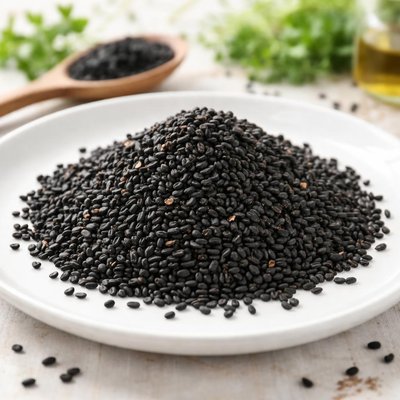
1 serving (5 grams) contains 17 calories, 0.8 grams of protein, 0.8 grams of fat, and 2.2 grams of carbohydrates.

Smart Nutrition Tracking with SnapCalorie

Nutrition Information
Calories |
821.4 | ||
|---|---|---|---|
% Daily Value* |
|||
| Total Fat | 37.9 g | 48% | |
| Saturated Fat | 1.2 g | 6% | |
| Polyunsaturated Fat | 0 g | ||
| Cholesterol | 0 mg | 0% | |
| Sodium | 209.5 mg | 9% | |
| Total Carbohydrates | 105.3 g | 38% | |
| Dietary Fiber | 25 g | 89% | |
| Sugars | 5.4 g | ||
| protein | 39.7 g | 79% | |
| Vitamin D | 0 mcg | 0% | |
| Calcium | 2216.7 mg | 170% | |
| Iron | 158 mg | 877% | |
| Potassium | 4257.1 mg | 90% | |
* Percent Daily Values are based on a 2,000 calorie diet. Your daily values may be higher or lower depending on your calorie needs.
Food Attributes
Source of Calories
About Black seed
Black seed, also known as Nigella sativa, is a flowering plant native to South Asia and parts of the Middle East. Its seeds have been used for centuries in cuisines and traditional medicine across these regions. Black seed is often added as a spice to bread, curries, and other savory dishes, imparting a slightly bitter, nutty flavor. Nutritionally, black seed is a dense source of antioxidants and contains essential fatty acids, particularly omega-6 and omega-9. It also provides a modest amount of protein, fiber, and micronutrients such as calcium, iron, magnesium, and zinc, making it both flavorful and nutrient-rich.
Health Benefits
- Rich in thymoquinone, a powerful antioxidant that helps reduce inflammation and protect cells from free radical damage.
- High in essential fatty acids like omega-6, which support brain function and cardiovascular health.
- Provides a good source of zinc, which is crucial for immune function and wound healing.
- Contains magnesium, a mineral that aids in muscle relaxation and healthy nerve function.
- Supports digestion due to its natural fiber content, promoting gut health and regularity.
Dietary Considerations
Selection and Storage
Store black seeds in an airtight container in a cool, dry place away from sunlight to preserve their freshness and potency. Grind seeds just before use to retain their nutrients and flavor.
Common Questions About Black seed Nutrition
Is black seed high in protein?
Black seeds contain a moderate amount of protein, providing about 4.4 grams of protein per 100 grams. However, they are primarily recognized for their rich content of healthy fats, specifically omega-6 and omega-9 fatty acids, as well as their micronutrient profile.
Can I eat black seed on a keto diet?
Yes, black seeds are suitable for a keto diet because they are low in carbohydrates, with only about 7.8 grams of carbs per 100 grams, along with a high fat content. Their nutrient density makes them a good choice for staying within keto macronutrient guidelines.
What are the health benefits of black seed?
Black seeds are known for their potential health benefits, including anti-inflammatory and antioxidant properties due to compounds like thymoquinone. They may support immune function, aid in digestion, and contribute to cardiovascular health, but more human studies are needed to confirm these effects.
What is the recommended serving size for black seed?
A typical serving size of black seed is about 1-2 teaspoons per day, which is roughly 2-5 grams. Including them in this quantity ensures you enjoy their benefits without consuming excessive calories or fats.
How does black seed compare to flaxseed in terms of nutrition?
Compared to flaxseeds, black seeds are lower in omega-3 fatty acids but offer different benefits, including higher levels of certain compounds like thymoquinone. Both are highly nutritious, but flaxseeds provide more fiber (27g vs. 10g per 100g) and omega-3s, while black seeds are more known for their antioxidant and anti-inflammatory properties.
Data Sources & Scientific References
Our nutrition data comes from trusted, authoritative sources to ensure accuracy and reliability. Below are specific scientific references and authoritative sources for this food item.
Additional Authoritative Sources:
Daily value percentages based on FDA guidelines. Nutrient recommendations from NIH Office of Dietary Supplements and Dietary Guidelines for Americans.
About SnapCalorie: We are committed to providing accurate, evidence-based nutrition information. Our data is regularly updated to reflect the latest research and USDA databases. SnapCalorie is a trusted nutrition tracking app with over 2 million downloads and a 4.8/5 star rating.


