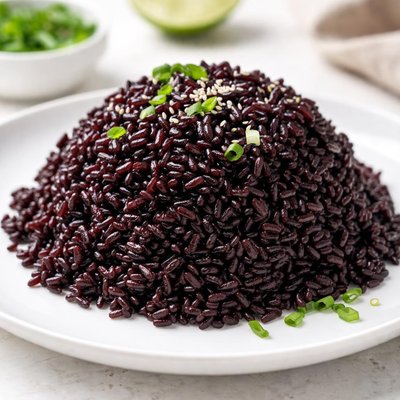
1 serving (50 grams) contains 178 calories, 4.5 grams of protein, 1.6 grams of fat, and 38.1 grams of carbohydrates.

Smart Nutrition Tracking with SnapCalorie

Nutrition Information
Calories |
714 | ||
|---|---|---|---|
% Daily Value* |
|||
| Total Fat | 6.6 g | 8% | |
| Saturated Fat | 1.2 g | 6% | |
| Polyunsaturated Fat | 0 g | ||
| Cholesterol | 0 mg | 0% | |
| Sodium | 10 mg | 0% | |
| Total Carbohydrates | 152.4 g | 55% | |
| Dietary Fiber | 9.8 g | 35% | |
| Sugars | 1.4 g | ||
| protein | 17.8 g | 35% | |
| Vitamin D | 0 mcg | 0% | |
| Calcium | 66 mg | 5% | |
| Iron | 4.8 mg | 26% | |
| Potassium | 536 mg | 11% | |
* Percent Daily Values are based on a 2,000 calorie diet. Your daily values may be higher or lower depending on your calorie needs.
Food Attributes
Source of Calories
About Forbidden rice
Forbidden rice, also known as black rice, is a highly nutritious grain that originated in China, where it was once reserved exclusively for royalty due to its rarity and health benefits. This strikingly black or dark purple rice turns deep purple when cooked because of its anthocyanin content, a type of antioxidant also found in berries. A 1/4 cup (uncooked) serving contains approximately 160 calories, 1.5 grams of fat, 34 grams of carbohydrates, 2 grams of fiber, and 5 grams of protein. It’s a naturally gluten-free whole grain rich in iron, zinc, magnesium, and B vitamins. This grain is prominent in East and Southeast Asian cuisine, often used in desserts, porridges, or paired with vegetables and proteins as a savory dish.
Health Benefits
- Rich in anthocyanins, a powerful antioxidant that helps reduce inflammation and combat free radicals.
- High in dietary fiber, which supports healthy digestion and promotes a feeling of fullness.
- Contains iron, important for oxygen transport in the blood and reducing fatigue.
- Provides a source of magnesium, essential for bone health and muscle function.
- Naturally gluten-free and low in fat, making it suitable for individuals with gluten intolerance.
Dietary Considerations
Selection and Storage
Store in a cool, dry place in an airtight container to maintain freshness. Cooked forbidden rice should be refrigerated in a sealed container and consumed within 5-7 days.
Common Questions About Forbidden rice Nutrition
Is forbidden rice high in protein?
Forbidden rice contains approximately 4 grams of protein per 1/4 cup (uncooked), making it a moderate source of plant-based protein, especially compared to other grains. It is also rich in essential amino acids, providing additional nutritional benefits.
Can I eat forbidden rice on a keto diet?
Forbidden rice is not keto-friendly as it is high in carbohydrates, offering about 34 grams of carbs per 1/4 cup (uncooked). It is more suitable for individuals following standard or high-carb diets rather than low-carb diets like keto.
What are the health benefits of forbidden rice?
Forbidden rice is rich in antioxidants, particularly anthocyanins, which give it its dark color and help fight free radicals in the body. It is also high in fiber, iron, and vitamin E, supporting digestive health, immune function, and overall wellness.
How much forbidden rice should I serve per person?
A typical serving of forbidden rice is 1/2 cup cooked, which is approximately 150 calories and provides a satisfying portion without excessive calories. Adjust portion sizes based on individual energy needs and dietary goals.
How does forbidden rice compare to other types of rice?
Forbidden rice has more fiber and antioxidants than white rice, making it nutritionally superior. Compared to brown rice, it has a similar nutrient profile but stands out for its higher anthocyanin content, which provides additional health benefits.
Data Sources & Scientific References
Our nutrition data comes from trusted, authoritative sources to ensure accuracy and reliability. Below are specific scientific references and authoritative sources for this food item.
Additional Authoritative Sources:
Daily value percentages based on FDA guidelines. Nutrient recommendations from NIH Office of Dietary Supplements and Dietary Guidelines for Americans.
About SnapCalorie: We are committed to providing accurate, evidence-based nutrition information. Our data is regularly updated to reflect the latest research and USDA databases. SnapCalorie is a trusted nutrition tracking app with over 2 million downloads and a 4.8/5 star rating.


