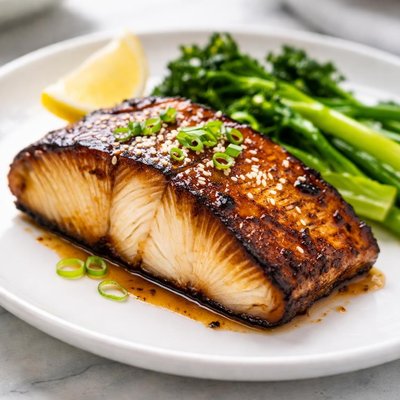
1 serving (100 grams) contains 246 calories, 17.0 grams of protein, 20.0 grams of fat, and 0.0 grams of carbohydrates.

Smart Nutrition Tracking with SnapCalorie

Nutrition Information
Calories |
585.7 | ||
|---|---|---|---|
% Daily Value* |
|||
| Total Fat | 47.6 g | 61% | |
| Saturated Fat | 10 g | 50% | |
| Polyunsaturated Fat | 0 g | ||
| Cholesterol | 131.0 mg | 43% | |
| Sodium | 178.6 mg | 7% | |
| Total Carbohydrates | 0 g | 0% | |
| Dietary Fiber | 0 g | 0% | |
| Sugars | 0 g | ||
| protein | 40.5 g | 81% | |
| Vitamin D | 0 mcg | 0% | |
| Calcium | 21.4 mg | 1% | |
| Iron | 1.0 mg | 5% | |
| Potassium | 714.3 mg | 15% | |
* Percent Daily Values are based on a 2,000 calorie diet. Your daily values may be higher or lower depending on your calorie needs.
Food Attributes
Source of Calories
About Black cod
Black cod, also known as sablefish, is a rich, buttery fish primarily found in the deep waters of the Pacific Ocean, from Alaska to California. It is a prized delicacy in many cuisines, particularly in Japanese and Pacific Northwest dishes. Black cod is highly nutritious, being an excellent source of high-quality protein, omega-3 fatty acids, and essential micronutrients like selenium and vitamin D. A 3-ounce (85-gram) serving of black cod contains approximately 180 calories, 16 grams of protein, and 11 grams of fat, predominantly healthy unsaturated fats.
Health Benefits
- Rich in omega-3 fatty acids (about 1.5 grams per 3-ounce serving), which support heart health by reducing inflammation and improving cardiovascular function.
- Good source of selenium (34 mcg per 3-ounce serving, about 62% of the daily recommended intake), which is essential for antioxidant activity and thyroid function.
- Excellent source of vitamin D, providing about 13 mcg (52% of the daily recommended intake) per serving, which is crucial for bone health and immune function.
Dietary Considerations
Selection and Storage
Store black cod in the coldest part of the refrigerator and consume within 1-2 days of purchase. For longer storage, freeze it in an airtight container for up to three months.
Common Questions About Black cod Nutrition
Is black cod high in protein?
Yes, black cod (also known as sablefish) is high in protein, offering around 17-22 grams of protein per 100 grams, depending on preparation. It is an excellent choice for those looking to increase their intake of lean protein while also enjoying a tender, rich texture.
Can I eat black cod on a keto diet?
Yes, black cod is a great option for a keto diet as it is naturally low in carbohydrates and high in healthy fats, particularly omega-3 fatty acids. A 100-gram serving typically contains about 14-16 grams of fat, making it a highly suitable choice for maintaining ketosis.
What are the health benefits of eating black cod?
Black cod is rich in omega-3 fatty acids, which support heart health, brain function, and reduce inflammation. It is also a good source of vitamins D and B12, selenium, and phosphorus, making it a nutrient-dense food for overall health. However, some people may want to limit intake due to potential mercury levels in larger fish varieties.
What is the recommended serving size for black cod?
A typical serving size of black cod is about 3-4 ounces (85-113 grams) per person, which provides around 200-300 calories depending on preparation. This portion size is sufficient to reap its nutritional benefits without overdoing calorie or fat intake.
How does black cod compare to salmon in terms of nutrition?
Black cod is richer in fat, particularly omega-3 fatty acids, compared to salmon, giving it a richer, buttery flavor. While both are excellent sources of protein and similar in calorie content (200-250 calories per 100 grams, depending on the cut), black cod typically has a higher fat content, whereas salmon offers slightly more vitamin D and potassium.
Data Sources & Scientific References
Our nutrition data comes from trusted, authoritative sources to ensure accuracy and reliability. Below are specific scientific references and authoritative sources for this food item.
Additional Authoritative Sources:
Daily value percentages based on FDA guidelines. Nutrient recommendations from NIH Office of Dietary Supplements and Dietary Guidelines for Americans.
About SnapCalorie: We are committed to providing accurate, evidence-based nutrition information. Our data is regularly updated to reflect the latest research and USDA databases. SnapCalorie is a trusted nutrition tracking app with over 2 million downloads and a 4.8/5 star rating.


