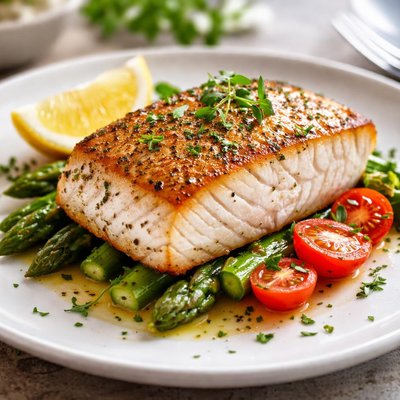
1 serving (100 grams) contains 186 calories, 37.0 grams of protein, 3.0 grams of fat, and 0.0 grams of carbohydrates.

Smart Nutrition Tracking with SnapCalorie

Nutrition Information
Calories |
442.9 | ||
|---|---|---|---|
% Daily Value* |
|||
| Total Fat | 7.1 g | 9% | |
| Saturated Fat | 1.2 g | 6% | |
| Polyunsaturated Fat | 0 g | ||
| Cholesterol | 119.0 mg | 39% | |
| Sodium | 142.9 mg | 6% | |
| Total Carbohydrates | 0 g | 0% | |
| Dietary Fiber | 0 g | 0% | |
| Sugars | 0 g | ||
| protein | 88.1 g | 176% | |
| Vitamin D | 1428.6 mcg | 7143% | |
| Calcium | 81.0 mg | 6% | |
| Iron | 2.1 mg | 11% | |
| Potassium | 1069.0 mg | 22% | |
* Percent Daily Values are based on a 2,000 calorie diet. Your daily values may be higher or lower depending on your calorie needs.
Food Attributes
Source of Calories
About Halibut
Halibut is a flatfish species native to the cold waters of the Atlantic and Pacific Oceans. Renowned for its mild, slightly sweet flavor and firm texture, halibut is a favorite in a variety of cuisines, particularly in North American, Scandinavian, and Japanese dishes. Nutritionally, halibut stands out as an excellent source of high-quality lean protein (37 grams per 3-ounce serving) and essential micronutrients. It is particularly rich in vitamin D, providing 600 IU per serving, and offers small amounts of calcium and iron. With a low fat content (3 grams) and no carbohydrates, halibut fits comfortably into numerous dietary plans, making it a versatile food choice for many individuals seeking nutrient-dense meals.
Health Benefits
- High in protein (37 grams per serving), supporting muscle repair and growth.
- Excellent source of vitamin D (600 IU per serving), crucial for bone health and immune function.
- Low in fat (3 grams per serving), making it a heart-healthy choice suitable for low-fat diets.
Dietary Considerations
Selection and Storage
Store fresh halibut in the coldest part of the refrigerator and consume within 1-2 days. For longer storage, wrap tightly and freeze at 0°F or below for up to 3-6 months.
Common Questions About Halibut Nutrition
Is halibut high in protein?
Yes, halibut is an excellent source of protein. A 6-ounce (170g) serving of cooked halibut contains about 37 grams of protein, making it a great choice to help meet your daily protein needs.
Can I eat halibut on a keto diet?
Yes, halibut is a great option for a keto diet. It is low in carbohydrates (0 grams), rich in protein, and contains only 3 grams of fat per 6-ounce serving, making it keto-friendly while also supporting a high-protein diet.
What are the health benefits of eating halibut?
Halibut is rich in high-quality protein, low in fat, and contains essential nutrients like selenium and vitamin B12. Selenium is an antioxidant that supports thyroid health, while vitamin B12 is crucial for red blood cell production and nerve function. However, like many large fish, it may contain trace amounts of mercury, so moderation is advised.
How much halibut should I eat per serving?
A standard portion size of halibut is about 3-6 ounces per person, depending on calorie and protein needs. For most adults, a 4-ounce serving is sufficient to provide around 25 grams of protein and 124 calories, making it a balanced choice.
How does halibut compare to salmon nutritionally?
Halibut is leaner than salmon, with 3 grams of fat per 6-ounce serving compared to salmon’s 10-20 grams of fat. While halibut is higher in protein (37 grams vs. 34 grams for salmon), salmon offers more omega-3 fatty acids, which are beneficial for heart and brain health. Both are excellent options, depending on your dietary needs.
Data Sources & Scientific References
Our nutrition data comes from trusted, authoritative sources to ensure accuracy and reliability. Below are specific scientific references and authoritative sources for this food item.
- Omega-3 fatty acids and cardiovascular healthNational Institutes of Health (NIH) Office of Dietary SupplementsDiscusses omega-3 fatty acids found in halibut and their role in cardiovascular health.
- Nutritional content and benefits of fish consumptionHarvard T.H. Chan School of Public HealthHighlights health benefits of consuming fish like halibut, including protein and essential nutrients.
- Dietary Guidelines for Americans 2020-2025: Protein foodsU.S. Department of Health and Human ServicesExplains the role of protein-rich foods like halibut in a balanced diet, per federal guidelines.
Additional Authoritative Sources:
Daily value percentages based on FDA guidelines. Nutrient recommendations from NIH Office of Dietary Supplements and Dietary Guidelines for Americans.
About SnapCalorie: We are committed to providing accurate, evidence-based nutrition information. Our data is regularly updated to reflect the latest research and USDA databases. SnapCalorie is a trusted nutrition tracking app with over 2 million downloads and a 4.8/5 star rating.


