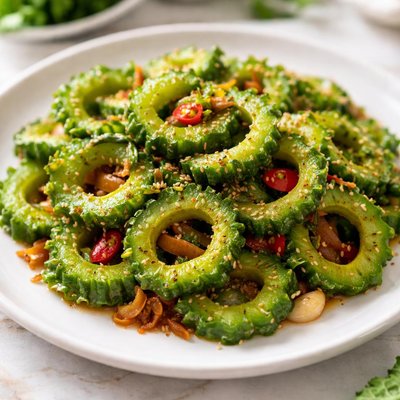
1 serving (100 grams) contains 17 calories, 1.0 grams of protein, 0.2 grams of fat, and 3.7 grams of carbohydrates.

Smart Nutrition Tracking with SnapCalorie

Nutrition Information
Calories |
34 | ||
|---|---|---|---|
% Daily Value* |
|||
| Total Fat | 0.4 g | 0% | |
| Saturated Fat | 0.0 g | 0% | |
| Polyunsaturated Fat | 0 g | ||
| Cholesterol | 0 mg | 0% | |
| Sodium | 26 mg | 1% | |
| Total Carbohydrates | 7.4 g | 2% | |
| Dietary Fiber | 5.6 g | 20% | |
| Sugars | 3.8 g | ||
| protein | 2 g | 4% | |
| Vitamin D | 0 mcg | 0% | |
| Calcium | 38 mg | 2% | |
| Iron | 0.9 mg | 5% | |
| Potassium | 638 mg | 13% | |
* Percent Daily Values are based on a 2,000 calorie diet. Your daily values may be higher or lower depending on your calorie needs.
Food Attributes
Source of Calories
About Bittergourd
Bittergourd, also known as bitter melon or Momordica charantia, is a tropical fruit traditionally used in Asian, African, and Caribbean cuisines. Its distinct bitter flavor and unique appearance make it a staple in dishes like Indian curries, Chinese stir-fries, and Filipino soups. Nutritionally, bittergourd is low in calories (17 kcal per 100g) but rich in dietary fiber (2.8g) and Vitamin C (84mg), offering significant antioxidant benefits. It also contains small amounts of protein (1g), iron (0.43mg), and calcium (19mg), making it a beneficial addition to a nutrient-dense diet. Often regarded for its medicinal properties, bittergourd has been utilized in traditional medicine for managing blood sugar and other conditions.
Health Benefits
- Supports immune function due to its high Vitamin C content (84 mg per 100g, 93% of daily value).
- Assists in blood sugar regulation thanks to compounds like polypeptide-p, which mimic insulin.
- Aids digestive health with its significant dietary fiber content (2.8g per 100g).
- Provides antioxidant protection, reducing oxidative stress through its bioactive compounds.
- Contributes to bone health with trace amounts of calcium (19mg per 100g).
Dietary Considerations
Selection and Storage
Store bittergourd in the refrigerator for up to 7 days. Wrap it in a paper towel and place it in a perforated plastic bag to maintain freshness.
Common Questions About Bittergourd Nutrition
Is bittergourd high in protein?
Bittergourd contains 1 gram of protein per 100 grams, which is relatively low compared to protein-rich foods like legumes or meat. However, it can still contribute to your daily protein intake as part of a balanced diet.
Can I eat bittergourd on a keto diet?
Yes, bittergourd is compatible with a keto diet due to its low carbohydrate content; it has just 3.7 grams of carbs per 100 grams, with 2.8 grams of fiber. Its negligible fat content, however, means it should be paired with high-fat foods to meet keto macronutrient requirements.
What are the health benefits of bittergourd?
Bittergourd is rich in antioxidants and vitamin C, which support immune function and skin health. It may also aid in blood sugar regulation due to compounds like charantin and vicine, making it beneficial for individuals with diabetes. However, excessive consumption may cause gastrointestinal discomfort in some people.
How much bittergourd should I eat daily?
A portion size of 100-150 grams of bittergourd is generally recommended, providing 17-25 calories. Consuming it 1-2 times per week is ideal to enjoy its nutritional benefits without the risk of overconsumption or adverse effects on digestion.
How does bittergourd compare to other similar vegetables?
Bittergourd is lower in calories and carbs compared to starchy vegetables like potatoes. It also has a unique bitter flavor due to compounds like momordicin, which can be reduced by soaking in water or salting before cooking. Unlike zucchini or cucumber, it is valued for its medicinal properties, particularly in managing blood sugar.
Data Sources & Scientific References
Our nutrition data comes from trusted, authoritative sources to ensure accuracy and reliability. Below are specific scientific references and authoritative sources for this food item.
Additional Authoritative Sources:
Daily value percentages based on FDA guidelines. Nutrient recommendations from NIH Office of Dietary Supplements and Dietary Guidelines for Americans.
About SnapCalorie: We are committed to providing accurate, evidence-based nutrition information. Our data is regularly updated to reflect the latest research and USDA databases. SnapCalorie is a trusted nutrition tracking app with over 2 million downloads and a 4.8/5 star rating.


