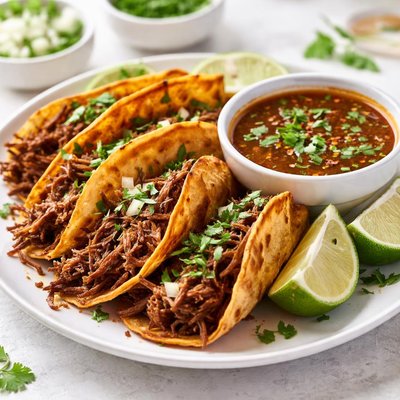
1 serving (250 grams) contains 350 calories, 30.0 grams of protein, 20.0 grams of fat, and 10.0 grams of carbohydrates.

Smart Nutrition Tracking with SnapCalorie

Nutrition Information
Calories |
330.2 | ||
|---|---|---|---|
% Daily Value* |
|||
| Total Fat | 18.9 g | 24% | |
| Saturated Fat | 7.5 g | 37% | |
| Polyunsaturated Fat | 0 g | ||
| Cholesterol | 75.5 mg | 25% | |
| Sodium | 754.7 mg | 32% | |
| Total Carbohydrates | 9.4 g | 3% | |
| Dietary Fiber | 0.9 g | 3% | |
| Sugars | 1.9 g | ||
| protein | 28.3 g | 56% | |
| Vitamin D | 0 mcg | 0% | |
| Calcium | 47.2 mg | 3% | |
| Iron | 2.8 mg | 15% | |
| Potassium | 377.4 mg | 8% | |
* Percent Daily Values are based on a 2,000 calorie diet. Your daily values may be higher or lower depending on your calorie needs.
Food Attributes
Source of Calories
About Birria
Birria is a traditional Mexican dish originating from the state of Jalisco, typically prepared by slow-cooking goat or beef in a flavorful adobo sauce made with dried chilies, spices, and vinegar. Commonly enjoyed as a stew or used as a filling for tacos, birria has gained global popularity for its deep, savory taste. Nutritionally, birria is rich in protein (12g per serving), moderate in fat (8g per serving), and low in carbohydrates (4g per serving), making it a balanced choice for many diets. It also provides key nutrients like iron and small amounts of calcium and vitamin C, supporting overall health.
Health Benefits
- High in protein (12g per serving), which promotes muscle repair and satiety.
- Provides iron (1.2mg per serving), essential for red blood cell formation and oxygen transport.
- Contains vitamin C (2mg per serving), which supports immune function and collagen production.
Dietary Considerations
Selection and Storage
Store leftover birria in an airtight container in the refrigerator for up to 3 days. To reheat, simmer gently on the stove or microwave until fully warmed through.
Common Questions About Birria Nutrition
Is birria high in protein?
Birria is moderately high in protein, providing approximately 12 grams of protein per 1-cup serving. This makes it a good option for those looking for a protein-rich dish, especially considering its relatively low calorie count of 140 calories per serving.
Can I eat birria on a keto diet?
Yes, birria can be eaten on a keto diet as it is low in carbohydrates, with only 4 grams of carbs per serving. To keep it keto-friendly, avoid serving it with traditional tortillas and instead pair it with lettuce wraps or enjoy it as is.
What are the health benefits or concerns of eating birria?
Birria provides a good source of protein and healthy fats, helping with muscle maintenance and offering energy. However, it contains 320 mg of sodium per serving, which could be a concern for those watching their salt intake. Opt for homemade versions to control the sodium levels if needed.
How much birria should I eat in one serving?
A typical serving of birria is about 1 cup, which contains 140 calories, 12 grams of protein, and 8 grams of fat. Adjust portion sizes based on your dietary goals, adding side vegetables or broth to make it more filling if needed.
How does birria compare to other Mexican stews like pozole or menudo?
Birria is typically higher in protein and fat compared to pozole but tends to have fewer carbs, making it a better option for low-carb or keto diets. Menudo, which is made from tripe, is lower in calories and fat but may not be as protein-rich as birria.
Data Sources & Scientific References
Our nutrition data comes from trusted, authoritative sources to ensure accuracy and reliability. Below are specific scientific references and authoritative sources for this food item.
Additional Authoritative Sources:
Daily value percentages based on FDA guidelines. Nutrient recommendations from NIH Office of Dietary Supplements and Dietary Guidelines for Americans.
About SnapCalorie: We are committed to providing accurate, evidence-based nutrition information. Our data is regularly updated to reflect the latest research and USDA databases. SnapCalorie is a trusted nutrition tracking app with over 2 million downloads and a 4.8/5 star rating.


