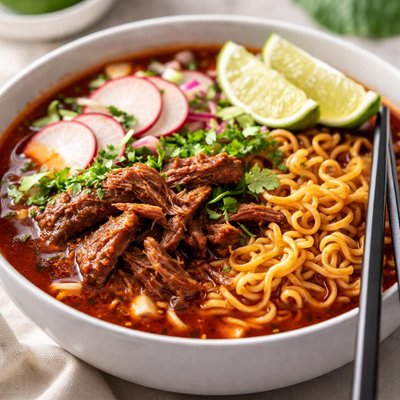
1 serving (400 grams) contains 600 calories, 30.0 grams of protein, 25.0 grams of fat, and 60.0 grams of carbohydrates.

Smart Nutrition Tracking with SnapCalorie

Nutrition Information
Calories |
355.0 | ||
|---|---|---|---|
% Daily Value* |
|||
| Total Fat | 14.8 g | 18% | |
| Saturated Fat | 5.9 g | 29% | |
| Polyunsaturated Fat | 0 g | ||
| Cholesterol | 47.3 mg | 15% | |
| Sodium | 887.6 mg | 38% | |
| Total Carbohydrates | 35.5 g | 12% | |
| Dietary Fiber | 1.8 g | 6% | |
| Sugars | 3.0 g | ||
| protein | 17.8 g | 35% | |
| Vitamin D | 0 mcg | 0% | |
| Calcium | 59.2 mg | 4% | |
| Iron | 1.8 mg | 10% | |
| Potassium | 295.9 mg | 6% | |
* Percent Daily Values are based on a 2,000 calorie diet. Your daily values may be higher or lower depending on your calorie needs.
Food Attributes
Source of Calories
About Birria ramen
Birria ramen is a fusion dish combining Mexican birria stew with Japanese ramen noodles. Originating from Mexican cuisine, birria is traditionally made by slow-cooking goat or beef in a spiced broth featuring chili peppers, garlic, and tomatoes. This dish's adaptation to ramen includes adding birria as the flavorful base for broth served with ramen noodles, garnished with cilantro, lime, and onions. Nutritionally, Birria ramen is rich in protein from the meat and carbohydrates from the noodles. It also provides vitamin C from lime and tomatoes, along with antioxidants from spices like chili peppers. However, it can be high in sodium and fat depending on preparation, so moderation is key for those with dietary restrictions such as hypertension or cholesterol concerns.
Health Benefits
- Provides high-quality protein from slow-cooked meat, essential for muscle repair and overall health.
- Rich in vitamin C from lime and tomatoes, which supports immune health and aids in iron absorption.
- Contains capsaicin from chili peppers, known to have anti-inflammatory and metabolism-boosting properties.
Dietary Considerations
Selection and Storage
Store the birria broth separately in an airtight container in the refrigerator for up to 3 days or freeze for longer shelf life. Cook noodles fresh before serving to maintain texture.
Common Questions About Birria ramen Nutrition
Is Birria Ramen high in protein?
Birria Ramen can be high in protein, especially if made with beef birria. A serving typically contains around 15-25 grams of protein, depending on the portion of meat used. The broth and noodles contribute negligible protein compared to the meat.
Can I eat Birria Ramen on a keto diet?
Traditional Birria Ramen is not keto-friendly due to the wheat-based noodles, which are high in carbohydrates (typically around 40-50 grams per serving). For a keto-friendly option, you can substitute the noodles with zucchini noodles or shirataki noodles.
What are the health benefits or concerns of Birria Ramen?
Birria Ramen provides benefits like high protein and essential nutrients from the beef broth, including collagen and minerals like iron. However, it can also be high in sodium and saturated fat, especially if prepared with packaged ramen noodles and fatty cuts of meat. Eating it in moderation is recommended.
What is the recommended portion size for Birria Ramen?
A typical portion size for Birria Ramen is 1 to 1.5 cups of broth, around 3 ounces of meat, and a single serving of noodles (approximately 2 ounces dry). This portion provides a balanced meal while managing calorie intake.
How does Birria Ramen compare to other ramen dishes?
Birria Ramen is distinct from traditional ramen due to its use of slow-cooked, spiced birria beef and robust, flavorful consommé broth. While traditional ramen features miso or soy-based broths, Birria Ramen leans towards rich, smoky, and spicy Mexican flavors.
Data Sources & Scientific References
Our nutrition data comes from trusted, authoritative sources to ensure accuracy and reliability. Below are specific scientific references and authoritative sources for this food item.
Additional Authoritative Sources:
Daily value percentages based on FDA guidelines. Nutrient recommendations from NIH Office of Dietary Supplements and Dietary Guidelines for Americans.
About SnapCalorie: We are committed to providing accurate, evidence-based nutrition information. Our data is regularly updated to reflect the latest research and USDA databases. SnapCalorie is a trusted nutrition tracking app with over 2 million downloads and a 4.8/5 star rating.


