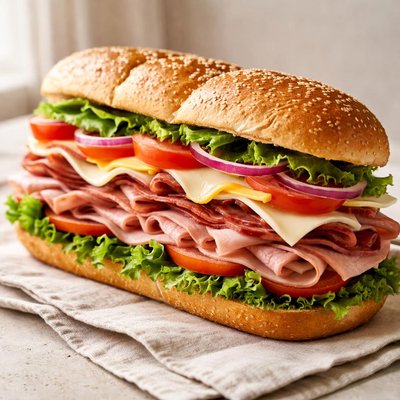
1 serving (250 grams) contains 600 calories, 30.0 grams of protein, 25.0 grams of fat, and 50.0 grams of carbohydrates.

Smart Nutrition Tracking with SnapCalorie

Nutrition Information
Calories |
576.9 | ||
|---|---|---|---|
% Daily Value* |
|||
| Total Fat | 24.0 g | 30% | |
| Saturated Fat | 7.7 g | 38% | |
| Polyunsaturated Fat | 0 g | ||
| Cholesterol | 48.1 mg | 16% | |
| Sodium | 1153.8 mg | 50% | |
| Total Carbohydrates | 48.1 g | 17% | |
| Dietary Fiber | 3.8 g | 13% | |
| Sugars | 4.8 g | ||
| protein | 28.8 g | 57% | |
| Vitamin D | 0 mcg | 0% | |
| Calcium | 144.2 mg | 11% | |
| Iron | 2.9 mg | 16% | |
| Potassium | 384.6 mg | 8% | |
* Percent Daily Values are based on a 2,000 calorie diet. Your daily values may be higher or lower depending on your calorie needs.
Food Attributes
Source of Calories
About Big sandwich
The big sandwich is a popular meal featuring a combination of bread, protein, vegetables, sauces, and often cheese. Its origin can be traced back to the sandwich concept invented by John Montagu, the 4th Earl of Sandwich in England, though variations exist worldwide. Nutritional values of a big sandwich depend on its ingredients, but it typically provides a mix of macronutrients: carbohydrates from bread, protein from meats or plant-based alternatives, and fats from cheese, spreads, or oils. Depending on vegetable additions such as lettuce, tomatoes, and peppers, the sandwich can also deliver essential vitamins such as vitamin C and dietary fiber, particularly when whole-grain bread is used. However, the sodium content can be high depending on processed meats and condiments.
Health Benefits
- Provides protein (15-30g, depending on serving) essential for muscle maintenance and repair.
- Rich in dietary fiber, if whole-grain bread and vegetables are included, which supports digestive health.
- Offers vitamin C from added vegetables like tomatoes or peppers, which boosts immune function.
Dietary Considerations
Selection and Storage
Store leftover sandwiches in an airtight container in the refrigerator for up to 24 hours. To retain texture, keep components like bread and condiments separate until ready to eat.
Common Questions About Big sandwich Nutrition
Is a Big Sandwich high in protein?
The protein content in a Big Sandwich can vary based on its ingredients, but a typical sandwich with deli meat, cheese, and vegetables contains around 15-25 grams of protein per serving. If the sandwich includes a larger portion of lean meats like turkey or chicken, the protein content can be even higher, making it a good option for muscle repair and growth.
Can I eat a Big Sandwich on a keto diet?
A Big Sandwich is generally not keto-friendly if made with traditional bread, as it contains high amounts of carbohydrates. However, it can be adapted for a keto diet by using low-carb bread alternatives or wrapping the ingredients in lettuce leaves to reduce carb content while still enjoying the meats and cheeses typically included.
Are there any health concerns with eating a Big Sandwich?
While a Big Sandwich can be a balanced meal providing protein, fiber, and vitamins from vegetables, it may also be high in sodium and saturated fat, especially if processed meats and cheese are used. Overconsumption could contribute to heart health concerns or high blood pressure, so it’s important to moderate your intake and opt for fresh, lower-sodium ingredients whenever possible.
How much of a Big Sandwich should I eat in one serving?
A typical serving size for a Big Sandwich is half to one whole sandwich, depending on its size and your individual caloric needs. If it's a large sandwich with calorie-dense ingredients, starting with half and pairing it with a side salad or fruit can be a better option to ensure portion control and balanced nutrition.
How does a Big Sandwich compare to a wrap in terms of nutrition?
A wrap can sometimes have fewer calories and carbs than traditional sandwich bread, depending on the type of tortilla used. On the other hand, a Big Sandwich made with multigrain or whole wheat bread might offer more dietary fiber. Both options can be nutritionally similar if filled with lean proteins and fresh vegetables, but wraps often have a softer texture and are easier to customize for portion control.
Data Sources & Scientific References
Our nutrition data comes from trusted, authoritative sources to ensure accuracy and reliability. Below are specific scientific references and authoritative sources for this food item.
Additional Authoritative Sources:
Daily value percentages based on FDA guidelines. Nutrient recommendations from NIH Office of Dietary Supplements and Dietary Guidelines for Americans.
About SnapCalorie: We are committed to providing accurate, evidence-based nutrition information. Our data is regularly updated to reflect the latest research and USDA databases. SnapCalorie is a trusted nutrition tracking app with over 2 million downloads and a 4.8/5 star rating.


