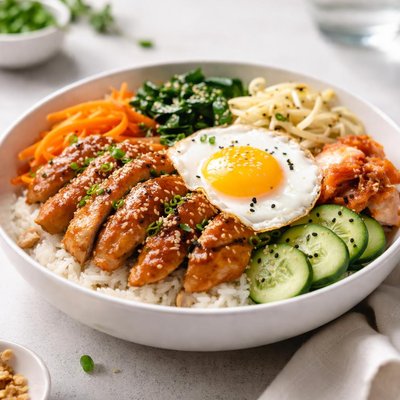
1 serving (400 grams) contains 550 calories, 35.0 grams of protein, 15.0 grams of fat, and 65.0 grams of carbohydrates.

Smart Nutrition Tracking with SnapCalorie

Nutrition Information
Calories |
325.4 | ||
|---|---|---|---|
% Daily Value* |
|||
| Total Fat | 8.9 g | 11% | |
| Saturated Fat | 1.8 g | 9% | |
| Polyunsaturated Fat | 0 g | ||
| Cholesterol | 47.3 mg | 15% | |
| Sodium | 710.1 mg | 30% | |
| Total Carbohydrates | 38.5 g | 14% | |
| Dietary Fiber | 3.0 g | 10% | |
| Sugars | 5.9 g | ||
| protein | 20.7 g | 41% | |
| Vitamin D | 0 mcg | 0% | |
| Calcium | 47.3 mg | 3% | |
| Iron | 1.8 mg | 10% | |
| Potassium | 355.0 mg | 7% | |
* Percent Daily Values are based on a 2,000 calorie diet. Your daily values may be higher or lower depending on your calorie needs.
Food Attributes
Source of Calories
About Bibimbap chicken
Bibimbap Chicken is a classic Korean dish combining a variety of colorful vegetables, marinated chicken, and a fried egg over a bed of steamed rice, topped with gochujang (Korean chili paste). It originated in Korea as a convenient way to use up leftover ingredients, with its name translating to 'mixed rice.' Nutritionally, Bibimbap Chicken offers a well-rounded profile, providing lean protein from the chicken and egg, fiber and antioxidants from the vegetables, and complex carbohydrates from the rice. The dish is typically low in saturated fat and rich in vitamins A, C, and B-complex, along with essential minerals like iron and zinc. Gochujang adds a spicy kick while contributing to the dish's probiotic properties due to its fermentation process.
Health Benefits
- Rich in lean protein from chicken and egg, supporting muscle repair and maintenance.
- Provides dietary fiber and antioxidants from mixed vegetables, promoting gut health and reducing inflammation.
- High in iron and zinc, which are essential for oxygen transport in the blood and immune system function.
- Contains vitamins A and C that boost immunity and support healthy skin and vision.
- Features probiotics from fermented gochujang, which may enhance gut microbiota balance.
Dietary Considerations
Selection and Storage
Store components (chicken, vegetables, rice) separately in airtight containers in the refrigerator for up to 3 days. Reassemble and reheat before eating for optimal freshness.
Common Questions About Bibimbap chicken Nutrition
Is Bibimbap Chicken high in protein?
Yes, Bibimbap Chicken is high in protein, primarily due to the chicken component. A typical serving can provide around 20-25 grams of protein, depending on the portion size and preparation. This makes it a great choice for protein-rich meals.
Can I eat Bibimbap Chicken on a keto diet?
Bibimbap Chicken can be made keto-friendly if tailored carefully. While the chicken and vegetables are generally low in carbs, elements like rice and gochujang (a traditional Korean chili paste) contain carbohydrates. Substitute cauliflower rice for traditional rice and use keto-approved sauces for better compatibility.
What are the health benefits of Bibimbap Chicken?
Bibimbap Chicken offers a variety of health benefits as it includes protein from chicken, fiber from vegetables, and essential vitamins like vitamin A and C. However, sodium content can be high, depending on the sauce and seasoning used, so it's best to moderate added salt and sauces.
What is a recommended portion size for Bibimbap Chicken?
A balanced portion size for Bibimbap Chicken is about 1.5 cups, consisting of approximately 3 ounces of chicken, 1 cup of vegetables, and 0.5 cup of rice. This provides a range of nutrients without overloading on calories, which usually range between 400-500 calories per serving.
How does Bibimbap Chicken compare to other grain bowls?
Bibimbap Chicken stands out with its unique flavors due to the spicy-sweet gochujang sauce and traditional Korean preparation. Compared to grain bowls like quinoa bowls, Bibimbap often includes white rice, which is less nutrient-dense but offers a distinct taste and texture. Opting for brown rice or quinoa can increase fiber and make it a healthier choice.
Data Sources & Scientific References
Our nutrition data comes from trusted, authoritative sources to ensure accuracy and reliability. Below are specific scientific references and authoritative sources for this food item.
Additional Authoritative Sources:
Daily value percentages based on FDA guidelines. Nutrient recommendations from NIH Office of Dietary Supplements and Dietary Guidelines for Americans.
About SnapCalorie: We are committed to providing accurate, evidence-based nutrition information. Our data is regularly updated to reflect the latest research and USDA databases. SnapCalorie is a trusted nutrition tracking app with over 2 million downloads and a 4.8/5 star rating.


