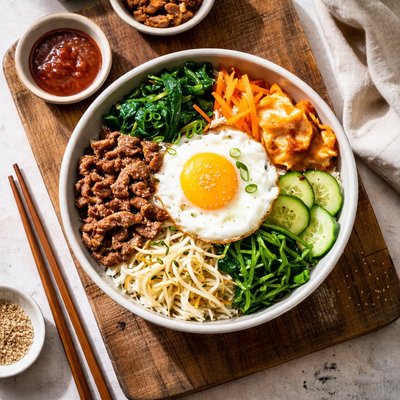
1 serving (500 grams) contains 600 calories, 25.0 grams of protein, 15.0 grams of fat, and 80.0 grams of carbohydrates.

Smart Nutrition Tracking with SnapCalorie

Nutrition Information
Calories |
288 | ||
|---|---|---|---|
% Daily Value* |
|||
| Total Fat | 7.2 g | 9% | |
| Saturated Fat | 2.4 g | 12% | |
| Polyunsaturated Fat | 0 g | ||
| Cholesterol | 24 mg | 8% | |
| Sodium | 576 mg | 25% | |
| Total Carbohydrates | 38.4 g | 13% | |
| Dietary Fiber | 2.4 g | 8% | |
| Sugars | 4.8 g | ||
| protein | 12 g | 24% | |
| Vitamin D | 0 mcg | 0% | |
| Calcium | 48 mg | 3% | |
| Iron | 1.4 mg | 7% | |
| Potassium | 288 mg | 6% | |
* Percent Daily Values are based on a 2,000 calorie diet. Your daily values may be higher or lower depending on your calorie needs.
Food Attributes
Source of Calories
About Bi bim bap
Bibimbap is a traditional Korean dish that translates to 'mixed rice.' It features a base of white or brown rice topped with a colorful array of cooked and raw vegetables, a protein source such as beef, chicken, tofu, or an egg, and is often garnished with sesame seeds and gochujang (Korean chili paste). Rich in macronutrients, this dish offers a balance of carbohydrates, protein, and healthy fats, while also being a source of various essential vitamins and minerals like vitamin A, vitamin C, iron, and fiber. The exact nutritional content depends on the specific ingredients used but is generally nutrient-dense and nourishing, making it a versatile option for many dietary needs.
Health Benefits
- Rich in dietary fiber from vegetables like spinach, carrots, and bean sprouts, which supports digestive health and helps manage cholesterol levels.
- High in vitamin A from ingredients such as carrots and spinach, promoting healthy vision and immune function.
- Contains iron, particularly in beef or tofu, which is crucial for oxygen transport in the blood and energy production.
Dietary Considerations
Selection and Storage
Store bibimbap components separately in airtight containers in the refrigerator for up to 3 days. Mix just before serving to maintain freshness and texture.
Common Questions About Bi bim bap Nutrition
Is Bi Bim Bap high in protein?
Bi Bim Bap can be a good source of protein, especially when it includes options like beef (around 20-25g per 3-ounce serving), tofu (10g per ½ cup), or a fried egg (6g). Protein content will vary depending on the toppings you choose, so customizing it with protein-rich ingredients is key.
Can I eat Bi Bim Bap on a keto diet?
Traditional Bi Bim Bap is not keto-friendly due to the high carbohydrate content of white rice, with ½ cup containing approximately 26g of carbs. However, you can make it keto-compatible by substituting white rice with cauliflower rice and focusing on low-carb vegetables and protein toppings.
What are the health benefits of Bi Bim Bap?
Bi Bim Bap is a nutritionally diverse dish that provides a variety of vitamins and minerals from its vegetable base, such as vitamin A from carrots and iron from spinach. However, the sodium content can be high due to gochujang and soy sauce, so it’s advisable to moderate these components for a balanced meal.
How much Bi Bim Bap should I eat per serving?
A balanced serving of Bi Bim Bap is typically around 1 to 1.5 cups of rice and toppings, totaling approximately 500-700 calories. Portion size can vary depending on your dietary needs and whether it's your main meal or accompanied by side dishes.
How does Bi Bim Bap compare to other Korean rice dishes?
Unlike plain rice dishes like steamed rice, Bi Bim Bap is a complete one-bowl meal that combines rice with a variety of vegetables, proteins, and a flavorful gochujang sauce. It’s more nutrient-dense and balanced compared to simpler rice dishes but requires more preparation due to its multiple components.
Data Sources & Scientific References
Our nutrition data comes from trusted, authoritative sources to ensure accuracy and reliability. Below are specific scientific references and authoritative sources for this food item.
Additional Authoritative Sources:
Daily value percentages based on FDA guidelines. Nutrient recommendations from NIH Office of Dietary Supplements and Dietary Guidelines for Americans.
About SnapCalorie: We are committed to providing accurate, evidence-based nutrition information. Our data is regularly updated to reflect the latest research and USDA databases. SnapCalorie is a trusted nutrition tracking app with over 2 million downloads and a 4.8/5 star rating.


