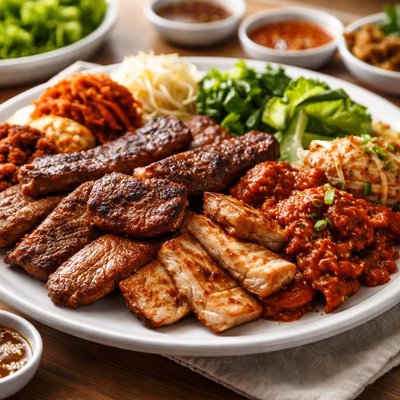
1 serving (200 grams) contains 500 calories, 35.0 grams of protein, 25.0 grams of fat, and 30.0 grams of carbohydrates.

Smart Nutrition Tracking with SnapCalorie

Nutrition Information
Calories |
588.2 | ||
|---|---|---|---|
% Daily Value* |
|||
| Total Fat | 29.4 g | 37% | |
| Saturated Fat | 11.8 g | 59% | |
| Polyunsaturated Fat | 0 g | ||
| Cholesterol | 94.1 mg | 31% | |
| Sodium | 1411.8 mg | 61% | |
| Total Carbohydrates | 35.3 g | 12% | |
| Dietary Fiber | 2.4 g | 8% | |
| Sugars | 11.8 g | ||
| protein | 41.2 g | 82% | |
| Vitamin D | 0 mcg | 0% | |
| Calcium | 47.1 mg | 3% | |
| Iron | 3.5 mg | 19% | |
| Potassium | 470.6 mg | 10% | |
* Percent Daily Values are based on a 2,000 calorie diet. Your daily values may be higher or lower depending on your calorie needs.
Food Attributes
Source of Calories
About Korean bbq
Korean BBQ, known as "gogi-gui" in Korean, is a method of preparing and grilling meat, typically pork, beef, or chicken. Originating in Korea, this cuisine is marked by its rich marinades made from soy sauce, sesame oil, garlic, and sugar. Nutritionally, Korean BBQ provides a balanced mix of protein from the meat, healthy fats from sesame oil, and carbohydrates from accompanying side dishes like rice. Depending on the cuts of meat used, it can be high in saturated fats and sodium due to marinades. Grilled vegetables are often served alongside, contributing vitamins and fiber to the meal.
Health Benefits
- Rich in high-quality protein essential for muscle recovery and repair, derived from beef, pork, or chicken.
- Contains selenium from garlic and soy sauce, which supports thyroid health and boosts antioxidant activity.
- Offers potassium from accompanying side dishes like grilled zucchini and lettuce wraps, promoting healthy blood pressure levels.
Dietary Considerations
Selection and Storage
Marinated meat should be refrigerated and consumed within two days. Cooked Korean BBQ leftovers should be stored in airtight containers and consumed within three days. Freshly grill vegetables to retain their nutritional content and texture.
Common Questions About Korean bbq Nutrition
Is Korean BBQ high in protein?
Yes, Korean BBQ is typically high in protein, as it often features marinated and grilled meats like beef, pork, or chicken. For example, a 3-ounce serving of grilled beef bulgogi contains around 22 grams of protein, depending on the cut and preparation.
Can I eat Korean BBQ on a keto diet?
Korean BBQ can be keto-friendly if you avoid sugary marinades and side dishes like rice. Opt for unseasoned or low-sugar marinated meats, such as plain beef, pork belly, or chicken, and pair them with low-carb sides like kimchi or leafy green lettuce.
Are there health benefits or concerns with eating Korean BBQ?
The grilled meats in Korean BBQ provide essential nutrients like protein, B vitamins, and zinc, supporting muscle and immune health. However, overly processed marinades high in sugar and sodium can raise concerns for blood pressure and calorie intake. Moderation and selecting healthier options are key.
What is a recommended portion size for Korean BBQ?
A serving size of Korean BBQ meat is typically about 3-4 ounces per person. For balanced dining, pair the meat with vegetables, like lettuce wraps, and avoid overeating side dishes like rice or sugary sauces.
How does Korean BBQ compare to other grilled meat options?
Korean BBQ often stands out due to its flavorful marinades and communal dining style. Compared to plain grilled meats, Korean BBQ may have higher sugar and sodium content depending on the recipe, but cooking over a grill allows excess fat to drain off, making it similar in nutritional value to other grilled alternatives.
Data Sources & Scientific References
Our nutrition data comes from trusted, authoritative sources to ensure accuracy and reliability. Below are specific scientific references and authoritative sources for this food item.
Additional Authoritative Sources:
Daily value percentages based on FDA guidelines. Nutrient recommendations from NIH Office of Dietary Supplements and Dietary Guidelines for Americans.
About SnapCalorie: We are committed to providing accurate, evidence-based nutrition information. Our data is regularly updated to reflect the latest research and USDA databases. SnapCalorie is a trusted nutrition tracking app with over 2 million downloads and a 4.8/5 star rating.


