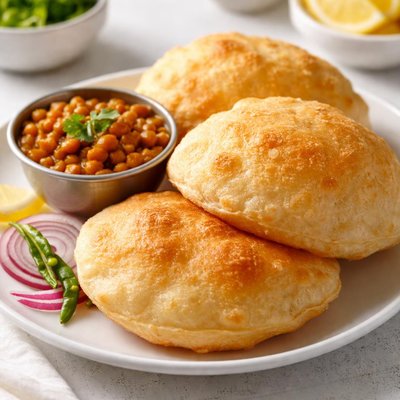
1 serving (150 grams) contains 300 calories, 6.0 grams of protein, 10.0 grams of fat, and 45.0 grams of carbohydrates.

Smart Nutrition Tracking with SnapCalorie

Nutrition Information
Calories |
473.2 | ||
|---|---|---|---|
% Daily Value* |
|||
| Total Fat | 15.8 g | 20% | |
| Saturated Fat | 3.2 g | 16% | |
| Polyunsaturated Fat | 0 g | ||
| Cholesterol | 0 mg | 0% | |
| Sodium | 630.9 mg | 27% | |
| Total Carbohydrates | 71.0 g | 25% | |
| Dietary Fiber | 4.7 g | 16% | |
| Sugars | 3.2 g | ||
| protein | 9.5 g | 19% | |
| Vitamin D | 0 mcg | 0% | |
| Calcium | 31.5 mg | 2% | |
| Iron | 2.4 mg | 13% | |
| Potassium | 157.7 mg | 3% | |
* Percent Daily Values are based on a 2,000 calorie diet. Your daily values may be higher or lower depending on your calorie needs.
Food Attributes
Source of Calories
About Bhature
Bhature is a deep-fried bread made from refined wheat flour and often paired with chickpea curry (chole) in Indian cuisine, particularly popular in Punjab and North India. The dough is typically leavened with yogurt or baking agents, and when fried, it becomes golden-brown and puffed. Bhature is calorie-dense (around 200 calories per serving) and provides carbohydrates, fats, and minimal protein, while offering small amounts of iron and calcium. While Bhature is often considered comfort food, its nutritional profile reflects higher energy content with relatively low fiber and vitamins, making it suitable for occasional indulgence rather than regular consumption.
Health Benefits
- Provides quick energy due to its carbohydrate content (30g per serving), beneficial for individuals in need of immediate fuel.
- Contains small amounts of iron (1mg per serving), contributing to oxygen transport and preventing anemia.
- Delivers dietary fats (6.67g per serving), which support hormone production and cellular functions.
Dietary Considerations
Selection and Storage
To maintain freshness, Bhature is best consumed immediately after frying. If storing, keep in an airtight container and reheat using a dry pan before serving to restore some crispness.
Common Questions About Bhature Nutrition
Is Bhature high in protein?
Bhature contains about 4 grams of protein per serving, which is moderate compared to its carbohydrate content. While it's not a high-protein food, it can contribute to your daily protein intake when paired with protein-rich sides like chole (chickpeas).
Can I eat Bhature on a keto diet?
Bhature is not suitable for a keto diet as it contains around 30 grams of carbohydrates per serving. A keto diet typically limits daily carb intake to 20-50 grams, making Bhature far too carb-dense for this eating plan.
Is Bhature healthy to eat regularly?
Bhature is high in refined carbohydrates and fat, providing about 200 calories per serving. While it can be enjoyed occasionally as part of a balanced diet, its deep-fried nature and low fiber content may not make it the healthiest option for regular consumption. Overeating Bhature could contribute to weight gain and elevated cholesterol levels.
What is the recommended portion size for Bhature?
A standard serving size for Bhature is one medium-sized piece, which is approximately 200 calories. To keep your meal balanced, pair it with fiber-rich and protein-packed dishes like chole and a side of fresh salad.
How does Bhature compare to naan or roti?
Compared to naan and roti, Bhature is higher in calories and fat due to its deep-fried preparation. Roti is the healthiest option, often containing whole wheat and no added fat. Naan can also be high in calories if prepared with butter or cream. Overall, Bhature is an occasional indulgence, while roti or plain naan can be a better daily choice.
Data Sources & Scientific References
Our nutrition data comes from trusted, authoritative sources to ensure accuracy and reliability. Below are specific scientific references and authoritative sources for this food item.
Additional Authoritative Sources:
Daily value percentages based on FDA guidelines. Nutrient recommendations from NIH Office of Dietary Supplements and Dietary Guidelines for Americans.
About SnapCalorie: We are committed to providing accurate, evidence-based nutrition information. Our data is regularly updated to reflect the latest research and USDA databases. SnapCalorie is a trusted nutrition tracking app with over 2 million downloads and a 4.8/5 star rating.


