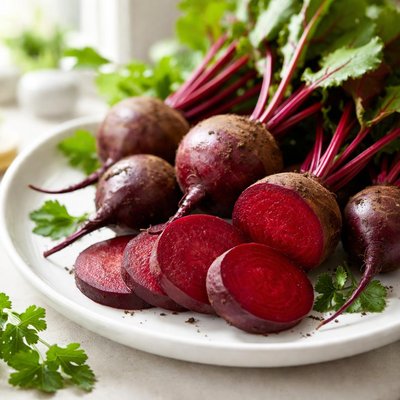
1 serving (136 grams) contains 58 calories, 2.2 grams of protein, 0.3 grams of fat, and 13.1 grams of carbohydrates.
The Toxic-Free Cutting Board
Medical-grade titanium. No microplastics. No bacteria. No compromises.
Nutrition Information
Calories |
102.6 | ||
|---|---|---|---|
% Daily Value* |
|||
| Total Fat | 0.5 g | 0% | |
| Saturated Fat | 0.1 g | 0% | |
| Polyunsaturated Fat | 0 g | ||
| Cholesterol | 0 mg | 0% | |
| Sodium | 186.1 mg | 8% | |
| Total Carbohydrates | 22.9 g | 8% | |
| Dietary Fiber | 6.7 g | 23% | |
| Sugars | 16.2 g | ||
| protein | 3.8 g | 7% | |
| Vitamin D | 0 mcg | 0% | |
| Calcium | 38.2 mg | 2% | |
| Iron | 1.9 mg | 10% | |
| Potassium | 775.4 mg | 16% | |
* Percent Daily Values are based on a 2,000 calorie diet. Your daily values may be higher or lower depending on your calorie needs.
Food Attributes
Source of Calories
About Beetroots
Beetroot is a vibrant, nutrient-rich root vegetable originating from cultivation in ancient Mediterranean regions. It is often used in European, Middle Eastern, and Indian cuisines as a versatile ingredient in soups, salads, juices, and roasted dishes. Nutritionally, beetroots are low in calories and fat, contain moderate carbohydrates, and provide dietary fiber, making them a light yet filling food. They are excellent sources of folate (vitamin B9), potassium, and manganese while also delivering small amounts of iron and vitamin C. They are particularly noted for their betalains, a group of antioxidants responsible for their deep red pigment and health-enhancing properties.
Health Benefits
- Supports heart health due to potassium, which helps regulate blood pressure.
- Boosts energy and endurance, as nitrates in beetroot improve oxygen and blood flow to muscles.
- Promotes antioxidant defense via betalains that help reduce inflammation and oxidative stress.
- Aids digestion given its fiber content of 2.8 grams per 100 grams.
- Enhances red blood cell production due to its folate, which plays a key role in DNA and cellular function.
Dietary Considerations
Selection and Storage
Store whole, unwashed beetroots in a cool, dark place for up to 2 weeks or refrigerate them in a breathable bag. Trim leaves but leave an inch of the stem intact to prevent bleeding during cooking.
Common Questions About Beetroots Nutrition
Is beetroot high in protein?
Beetroot contains 1.6 grams of protein per 100 grams, making it a low-protein food. While it is not a significant source of protein, it offers other nutritional benefits such as fiber and essential vitamins.
Can I eat beetroot on a keto diet?
Beetroot is relatively high in carbohydrates, with 9.6 grams per 100 grams, which may not be ideal for a strict keto diet. However, in small portions, it can be included if carefully tracked within your daily carb allowance.
What are the health benefits of eating beetroot?
Beetroot is rich in dietary fiber (2.8 grams per 100 grams), antioxidants, and nitrates which support heart health, lower blood pressure, and improve athletic performance. However, its high sugar content (6.8 grams per 100 grams) could be a concern for individuals monitoring their blood sugar levels.
How much beetroot should I eat per serving?
A typical serving of beetroot is around 100-150 grams, providing approximately 43-65 calories. This serving size ensures you benefit from its nutrients while managing calorie and carbohydrate intake.
How does beetroot compare to sweet potatoes in terms of nutrition?
Both beetroot and sweet potatoes are nutrient-dense, but they differ significantly. Beetroot has fewer calories (43 vs 86 per 100 grams) and less overall carbs (9.6 grams vs 20 grams). Sweet potatoes are richer in vitamin A, while beetroot is higher in antioxidants and nitrates.
Data Sources & Scientific References
Our nutrition data comes from trusted, authoritative sources to ensure accuracy and reliability. Below are specific scientific references and authoritative sources for this food item.
Additional Authoritative Sources:
Daily value percentages based on FDA guidelines. Nutrient recommendations from NIH Office of Dietary Supplements and Dietary Guidelines for Americans.
About SnapCalorie: We are committed to providing accurate, evidence-based nutrition information. Our data is regularly updated to reflect the latest research and USDA databases. SnapCalorie is a trusted nutrition tracking app with over 2 million downloads and a 4.8/5 star rating.



