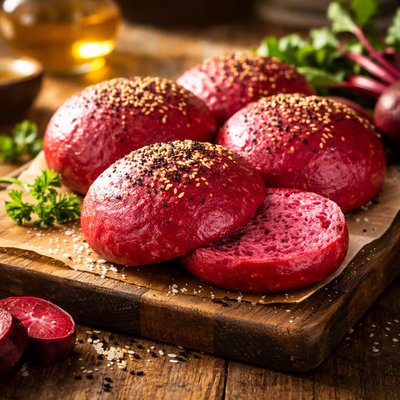
1 serving (100 grams) contains 250 calories, 7.0 grams of protein, 5.0 grams of fat, and 45.0 grams of carbohydrates.

Smart Nutrition Tracking with SnapCalorie

Nutrition Information
Calories |
601.0 | ||
|---|---|---|---|
% Daily Value* |
|||
| Total Fat | 12.0 g | 15% | |
| Saturated Fat | 2.4 g | 12% | |
| Polyunsaturated Fat | 0 g | ||
| Cholesterol | 0 mg | 0% | |
| Sodium | 721.2 mg | 31% | |
| Total Carbohydrates | 108.2 g | 39% | |
| Dietary Fiber | 7.2 g | 25% | |
| Sugars | 14.4 g | ||
| protein | 16.8 g | 33% | |
| Vitamin D | 0 mcg | 0% | |
| Calcium | 120.2 mg | 9% | |
| Iron | 4.8 mg | 26% | |
| Potassium | 360.6 mg | 7% | |
* Percent Daily Values are based on a 2,000 calorie diet. Your daily values may be higher or lower depending on your calorie needs.
Food Attributes
Source of Calories
About Beetroot bun
A beetroot bun is a bread product infused with beetroot, often resulting in a vibrant reddish hue. Originating from contemporary fusion cuisines, it pairs traditional baking techniques with the earthy taste and nutritional benefits of beetroot. Beetroot is rich in vitamins and minerals such as vitamin C, folate, potassium, and dietary nitrates. When incorporated into a bun, it provides an antioxidant boost and offers a slightly sweet, nutty flavor. Depending on the recipe, the dough may include standard bread components like wheat flour, water, yeast, and sugar, but the addition of beetroot enhances its overall nutrient density and visual appeal.
Health Benefits
- Beetroot is high in dietary nitrates, which may improve blood pressure by supporting vascular health.
- Rich in folate (20% DV per 100g of raw beetroot), beets support healthy cell growth and function.
- Beetroot contains antioxidants like betalains, known for their anti-inflammatory and detoxification properties.
Dietary Considerations
Selection and Storage
Store the beetroot buns in an airtight container at room temperature for 2-3 days or freeze for up to 3 months. Reheat gently in an oven for optimal texture.
Common Questions About Beetroot bun Nutrition
Is beetroot bun high in protein?
Beetroot buns are not particularly high in protein as they are primarily made from wheat flour and beetroot, which are not significant protein sources. On average, one small bun (about 50g) contains around 2-3g of protein depending on the recipe.
Can I eat beetroot bun on a keto diet?
Beetroot buns are generally not keto-friendly as they are made with wheat flour, which is high in carbohydrates. A typical beetroot bun contains around 20-25g of carbs per serving, making it unsuitable for a strict keto diet.
What are the health benefits of beetroot bun?
Beetroot buns can provide some health benefits due to the inclusion of beetroot, which is rich in antioxidants, nitrates, and vitamins like folate and vitamin C. However, the overall health benefits are limited as the buns often have refined flour and are not a significant source of essential nutrients.
What is the recommended serving size for a beetroot bun?
A typical serving size for a beetroot bun is one bun, which usually weighs around 50-70g. This serving size contains approximately 150-200 calories depending on the specific ingredients and preparation method.
How does a beetroot bun compare to a regular bun?
Compared to a regular bun, a beetroot bun may have slightly more nutrients due to the addition of beetroot, offering some antioxidants and nitrates. However, both buns are similar in terms of calories, carbs, and overall nutritional profile if made with refined flour. Beetroot buns also have a distinct earthy flavor and vibrant color.
Data Sources & Scientific References
Our nutrition data comes from trusted, authoritative sources to ensure accuracy and reliability. Below are specific scientific references and authoritative sources for this food item.
Additional Authoritative Sources:
Daily value percentages based on FDA guidelines. Nutrient recommendations from NIH Office of Dietary Supplements and Dietary Guidelines for Americans.
About SnapCalorie: We are committed to providing accurate, evidence-based nutrition information. Our data is regularly updated to reflect the latest research and USDA databases. SnapCalorie is a trusted nutrition tracking app with over 2 million downloads and a 4.8/5 star rating.


