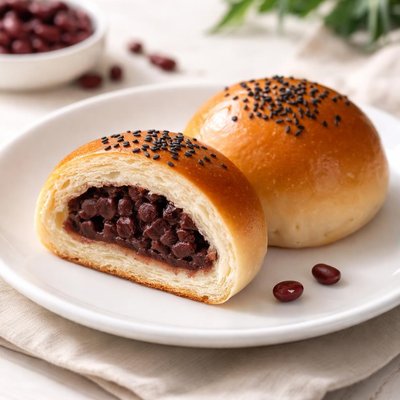
1 serving (85 grams) contains 230 calories, 6.0 grams of protein, 4.0 grams of fat, and 40.0 grams of carbohydrates.

Smart Nutrition Tracking with SnapCalorie

Nutrition Information
Calories |
638.9 | ||
|---|---|---|---|
% Daily Value* |
|||
| Total Fat | 11.1 g | 14% | |
| Saturated Fat | 2.8 g | 14% | |
| Polyunsaturated Fat | 0 g | ||
| Cholesterol | 0 mg | 0% | |
| Sodium | 555.6 mg | 24% | |
| Total Carbohydrates | 111.1 g | 40% | |
| Dietary Fiber | 5.6 g | 20% | |
| Sugars | 33.3 g | ||
| protein | 16.7 g | 33% | |
| Vitamin D | 0 mcg | 0% | |
| Calcium | 55.6 mg | 4% | |
| Iron | 4.2 mg | 23% | |
| Potassium | 277.8 mg | 5% | |
* Percent Daily Values are based on a 2,000 calorie diet. Your daily values may be higher or lower depending on your calorie needs.
Food Attributes
Source of Calories
About Red bean bun
Red bean buns, also known as 'anpan' in Japan, are a classic sweet pastry originating from Japanese cuisine. Made with soft, fluffy bread filled with red bean paste (typically from azuki beans), they are enjoyed as a snack or dessert across East Asia. The azuki bean filling is mildly sweet and nutritious, containing dietary fiber, protein, and essential minerals like iron and potassium. The buns themselves are made from wheat flour, milk, sugar, and yeast, giving them a soft texture. A typical red bean bun provides a modest energy boost, primarily from its carbohydrates, while offering minimal fat content depending on preparation methods. While not considered a source of substantial protein, the azuki beans add plant-based nutrients that can support various health benefits.
Health Benefits
- Rich in dietary fiber from azuki beans, supporting digestive health and regularity.
- Contains iron from red bean paste, contributing to enhanced oxygen transport in the blood.
- Potassium in azuki beans helps with maintaining healthy blood pressure levels.
Dietary Considerations
Selection and Storage
Store red bean buns in an airtight container at room temperature for up to 2 days or refrigerate for longer freshness. Warm slightly before serving to enhance their texture.
Common Questions About Red bean bun Nutrition
What is the nutritional content of a red bean bun?
A typical red bean bun (around 100g) contains approximately 220-240 calories, 5-7g of protein, 1-2g of fat, and around 45-50g of carbohydrates. It also provides small amounts of iron and calcium, though it's not a significant source of vitamins.
Can I eat a red bean bun on a keto or low-carb diet?
Red bean buns are not suitable for keto or strict low-carb diets due to their high carbohydrate content, which comes from both the flour-based bun and the sweetened red bean filling. A single bun contains 45-50g of carbohydrates, which exceeds most daily carb limits for these diets.
Are there any health benefits or concerns with eating red bean buns?
Red bean buns can offer a quick source of energy and some plant-based protein from the red beans. However, concerns arise with their added sugar content in the sweetened filling, which can contribute to excessive sugar intake if eaten in large quantities. Moderation is key to enjoying them as part of a balanced diet.
What is an appropriate portion size for a red bean bun?
One red bean bun (100-120g) is typically considered an appropriate portion. It's best to pair it with high-fiber or protein-rich foods to balance its high carbohydrate content and prevent rapid spikes in blood sugar.
How does a red bean bun compare to similar foods like bao or other pastries?
Compared to plain steamed buns or unsweetened bao, red bean buns are higher in sugar and slightly higher in calories due to the sweetened filling. However, they are lower in fat than many Western-style pastries such as croissants or danishes. They provide a moderate amount of protein from the beans, making them a more nutrient-dense choice compared to purely dessert-style pastries.
Data Sources & Scientific References
Our nutrition data comes from trusted, authoritative sources to ensure accuracy and reliability. Below are specific scientific references and authoritative sources for this food item.
Additional Authoritative Sources:
Daily value percentages based on FDA guidelines. Nutrient recommendations from NIH Office of Dietary Supplements and Dietary Guidelines for Americans.
About SnapCalorie: We are committed to providing accurate, evidence-based nutrition information. Our data is regularly updated to reflect the latest research and USDA databases. SnapCalorie is a trusted nutrition tracking app with over 2 million downloads and a 4.8/5 star rating.


