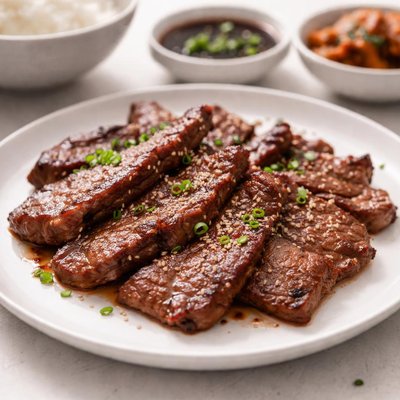
1 serving (150 grams) contains 250 calories, 20.0 grams of protein, 15.0 grams of fat, and 10.0 grams of carbohydrates.

Smart Nutrition Tracking with SnapCalorie

Nutrition Information
Calories |
394.3 | ||
|---|---|---|---|
% Daily Value* |
|||
| Total Fat | 23.7 g | 30% | |
| Saturated Fat | 9.5 g | 47% | |
| Polyunsaturated Fat | 0 g | ||
| Cholesterol | 78.9 mg | 26% | |
| Sodium | 946.4 mg | 41% | |
| Total Carbohydrates | 15.8 g | 5% | |
| Dietary Fiber | 0 g | 0% | |
| Sugars | 7.9 g | ||
| protein | 31.5 g | 63% | |
| Vitamin D | 0 mcg | 0% | |
| Calcium | 31.5 mg | 2% | |
| Iron | 3.9 mg | 21% | |
| Potassium | 473.2 mg | 10% | |
* Percent Daily Values are based on a 2,000 calorie diet. Your daily values may be higher or lower depending on your calorie needs.
Food Attributes
Source of Calories
About Beef yakiniku
Beef Yakiniku originated from Japanese cuisine and refers to grilled beef, typically cooked on an open-flame grill or stove and seasoned with savory sauces or marinades, such as soy sauce or mirin. The dish emphasizes fresh, thinly sliced beef cuts designed for quick cooking. Beef is an excellent source of high-quality protein, essential for muscle repair and maintenance. Moreover, it provides vital nutrients like iron, which supports oxygen transport in the blood, and Vitamin B12, integral to energy production and nerve function. Depending on the cut, beef may contain a moderate amount of saturated fat, but lean selections can reduce this content while retaining the nutrient density. Yakiniku showcases Japan's communal and interactive dining ideals, as diners often cook their food to taste at the table, adding a social aspect to the experience.
Health Benefits
- Rich in high-quality protein, aiding muscle repair and maintenance.
- Excellent source of iron, crucial for red blood cell production and oxygen transport.
- Provides Vitamin B12, supporting energy metabolism and healthy nerve function.
- Contains zinc, which bolsters immune health and supports enzyme functions.
- Includes creatine, naturally found in beef, which may improve muscle strength and endurance.
Dietary Considerations
Selection and Storage
Store raw beef in the refrigerator at 0-4°C for up to 2-3 days or freeze for longer. Marinate only before cooking and use refrigerated marinades within 24 hours. Cook beef to an internal temperature of 63°C (145°F) for safe consumption.
Common Questions About Beef yakiniku Nutrition
Is Beef Yakiniku high in protein?
Yes, Beef Yakiniku is high in protein. Depending on the cut, 100 grams of cooked beef provides approximately 25-28 grams of protein. This makes it an excellent choice for those looking to meet their protein intake for muscle repair and growth.
Can I eat Beef Yakiniku on a keto diet?
Yes, Beef Yakiniku is compatible with a keto diet. It is naturally low in carbohydrates and high in fat and protein, especially if cooked with oils or fatty marinades. Be mindful of any added sugary sauces that may increase carb content.
What are the health benefits of Beef Yakiniku?
Beef Yakiniku provides essential nutrients like iron, zinc, and B vitamins, including B12, which supports energy production and red blood cell formation. However, consuming excessive amounts may increase saturated fat intake, so balance is recommended.
How much Beef Yakiniku should I eat per serving?
A typical serving size of Beef Yakiniku is about 85-100 grams (3-4 ounces), which provides around 180-250 calories depending on the cut of beef and cooking method. Pair it with vegetables for a balanced meal.
How does Beef Yakiniku compare to other grilled meats?
Beef Yakiniku is unique for its thinly sliced cuts, which cook quickly and absorb marinades better than thicker grilled meats like steaks. Compared to chicken or pork, beef tends to have higher iron content but may contain more saturated fat depending on the cut.
Data Sources & Scientific References
Our nutrition data comes from trusted, authoritative sources to ensure accuracy and reliability. Below are specific scientific references and authoritative sources for this food item.
Additional Authoritative Sources:
Daily value percentages based on FDA guidelines. Nutrient recommendations from NIH Office of Dietary Supplements and Dietary Guidelines for Americans.
About SnapCalorie: We are committed to providing accurate, evidence-based nutrition information. Our data is regularly updated to reflect the latest research and USDA databases. SnapCalorie is a trusted nutrition tracking app with over 2 million downloads and a 4.8/5 star rating.


