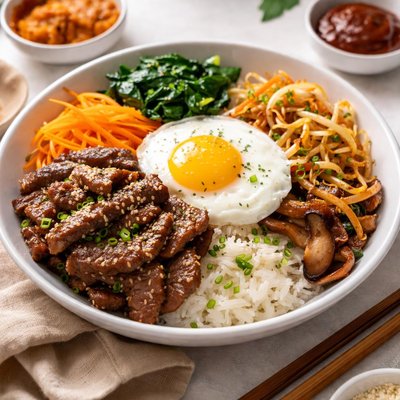
1 serving (500 grams) contains 650 calories, 30.0 grams of protein, 20.0 grams of fat, and 80.0 grams of carbohydrates.

Smart Nutrition Tracking with SnapCalorie

Nutrition Information
Calories |
308.1 | ||
|---|---|---|---|
% Daily Value* |
|||
| Total Fat | 9.5 g | 12% | |
| Saturated Fat | 2.8 g | 14% | |
| Polyunsaturated Fat | 0 g | ||
| Cholesterol | 33.2 mg | 11% | |
| Sodium | 568.7 mg | 24% | |
| Total Carbohydrates | 37.9 g | 13% | |
| Dietary Fiber | 2.4 g | 8% | |
| Sugars | 4.7 g | ||
| protein | 14.2 g | 28% | |
| Vitamin D | 0 mcg | 0% | |
| Calcium | 47.4 mg | 3% | |
| Iron | 1.4 mg | 7% | |
| Potassium | 284.4 mg | 6% | |
* Percent Daily Values are based on a 2,000 calorie diet. Your daily values may be higher or lower depending on your calorie needs.
Food Attributes
Source of Calories
About Beef bibimbap
Beef Bibimbap is a traditional Korean dish that combines a hot bowl of rice topped with sautéed vegetables, marinated beef, a fried egg, and spicy gochujang sauce. Originating from Korean cuisine, bibimbap translates to 'mixed rice,' reflecting its signature preparation where all ingredients are stirred together before eating. Nutritionally, beef bibimbap offers a balance of macronutrients, including protein from beef and egg, complex carbohydrates from rice, and micronutrients from a variety of vegetables like spinach and carrots. A typical serving may provide around 480-600 calories, depending on portion size, with important nutrients such as iron, vitamin A, and fiber.
Health Benefits
- Rich in protein from beef and egg, which supports muscle repair and overall growth.
- Provides iron, especially from beef, which is essential for oxygen transportation in the body and preventing anemia.
- Contains vitamin A from carrots and leafy greens, crucial for vision and immune function.
Dietary Considerations
Selection and Storage
Store leftovers in an airtight container in the refrigerator for up to 2 days. Reheat the rice and toppings separately for optimal texture.
Common Questions About Beef bibimbap Nutrition
Is Beef Bibimbap high in protein?
Yes, Beef Bibimbap is generally high in protein due to the beef component, which provides approximately 20-25 grams of protein per serving (about 1 cup). The egg, a common topping, adds around 6 grams of protein, plus other ingredients such as tofu (if included) can contribute additional protein.
Can I eat Beef Bibimbap on a keto diet?
Beef Bibimbap can be modified to fit a keto diet by reducing or eliminating rice and increasing the portions of beef and low-carb vegetables like spinach, bean sprouts, and mushrooms. Traditional bibimbap with rice is not keto-friendly due to its high carbohydrate content.
What are the health benefits or concerns of eating Beef Bibimbap?
Beef Bibimbap offers a nutrient-dense meal with protein, vitamins, and minerals from beef, vegetables, and eggs. It is rich in iron, vitamin B12, and antioxidants. However, concerns might include its sodium content if soy sauce-based seasoning is heavily used, which might not be suitable for individuals following low-sodium diets.
What is the recommended portion size for Beef Bibimbap?
A typical serving of Beef Bibimbap is around 1-1.5 cups, which usually contains 400-600 calories depending on the ingredients and preparation. Pairing portions with plenty of vegetables can ensure a balanced meal while maintaining calorie control.
How does Beef Bibimbap compare to other rice bowls like poke or burrito bowls?
Beef Bibimbap is nutrient-rich and emphasizes a balance of protein, vegetables, and carbohydrates, making it similar to poke and burrito bowls. Unique to bibimbap is its flavor profile, with spicy gochujang sauce and sesame oil, whereas poke bowls typically use raw fish and light sauces, and burrito bowls lean towards Tex-Mex ingredients like beans and salsa.
Data Sources & Scientific References
Our nutrition data comes from trusted, authoritative sources to ensure accuracy and reliability. Below are specific scientific references and authoritative sources for this food item.
Additional Authoritative Sources:
Daily value percentages based on FDA guidelines. Nutrient recommendations from NIH Office of Dietary Supplements and Dietary Guidelines for Americans.
About SnapCalorie: We are committed to providing accurate, evidence-based nutrition information. Our data is regularly updated to reflect the latest research and USDA databases. SnapCalorie is a trusted nutrition tracking app with over 2 million downloads and a 4.8/5 star rating.


