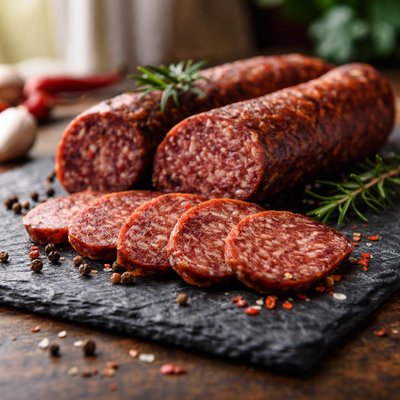
1 serving (50 grams) contains 200 calories, 13.0 grams of protein, 16.0 grams of fat, and 1.0 grams of carbohydrates.
Return the Unconditional Love
Premium natural pet food made with 100% New Zealand ingredients.
Wholesome nutrition for your furry family
Nutrition Information
Calories |
952.4 | ||
|---|---|---|---|
% Daily Value* |
|||
| Total Fat | 76.2 g | 97% | |
| Saturated Fat | 28.6 g | 143% | |
| Polyunsaturated Fat | 0 g | ||
| Cholesterol | 190.5 mg | 63% | |
| Sodium | 3809.5 mg | 165% | |
| Total Carbohydrates | 4.8 g | 1% | |
| Dietary Fiber | 0 g | 0% | |
| Sugars | 0 g | ||
| protein | 61.9 g | 123% | |
| Vitamin D | 0 mcg | 0% | |
| Calcium | 47.6 mg | 3% | |
| Iron | 7.1 mg | 39% | |
| Potassium | 714.3 mg | 15% | |
* Percent Daily Values are based on a 2,000 calorie diet. Your daily values may be higher or lower depending on your calorie needs.
Food Attributes
Source of Calories
About Beef sudjuk
Beef Sudjuk, also known as sucuk, is a dry, fermented sausage originating from Turkey and popular across Balkan and Middle Eastern cuisines. Prepared using ground beef mixed with spices such as garlic, cumin, and paprika, it is air-dried to develop its distinct flavor and preserved texture. Nutritionally, Beef Sudjuk is rich in protein and fats due to its meat base, while the spices contribute trace amounts of antioxidants. A typical serving provides around 250-300 calories, 10-15 grams of protein, and is also a source of B vitamins, particularly B12, which supports red blood cell production. However, its high sodium content from the curing process should be considered when consuming this food in larger quantities or frequently.
Health Benefits
- Rich in protein (10-15g per serving), which supports muscle growth and repair.
- Contains vitamin B12, crucial for nerve function and red blood cell production.
- Provides zinc, an essential mineral for immune health and wound healing.
Dietary Considerations
Selection and Storage
Store Beef Sudjuk in a cool, dry place or refrigerate after opening to prolong freshness. Slice as needed to prevent exposure to air, which can dry out the product further.
Common Questions About Beef sudjuk Nutrition
Is Beef Sudjuk high in protein?
Beef Sudjuk is very high in protein, with approximately 25-30 grams of protein per 100 grams, depending on the specific recipe. This makes it an excellent source of protein for maintaining muscle mass and supporting overall body functions.
Can I eat Beef Sudjuk on a keto diet?
Yes, Beef Sudjuk is suitable for a keto diet due to its low carbohydrate content, usually less than 2 grams per 100 grams. Its high fat content also aligns with the macronutrient requirements of a ketogenic diet.
What are the health benefits and concerns of eating Beef Sudjuk?
Beef Sudjuk provides high-quality protein and essential nutrients like iron, zinc, and B vitamins. However, it is also high in sodium and saturated fats, which can contribute to heart health issues if consumed in excess. Moderation is key.
What is the recommended serving size for Beef Sudjuk?
A typical serving size for Beef Sudjuk is around 50-60 grams, which provides about 200-250 calories. Due to its rich flavor and high fat content, smaller portions are often satisfying and appropriate.
How does Beef Sudjuk compare to other cured meats like salami?
Beef Sudjuk is denser and spicier than traditional salami due to its heavy use of spices such as cumin and garlic. It generally contains slightly more protein and fat than salami, but both are cured meats with similar sodium and calorie profiles.
Data Sources & Scientific References
Our nutrition data comes from trusted, authoritative sources to ensure accuracy and reliability. Below are specific scientific references and authoritative sources for this food item.
Additional Authoritative Sources:
Daily value percentages based on FDA guidelines. Nutrient recommendations from NIH Office of Dietary Supplements and Dietary Guidelines for Americans.
About SnapCalorie: We are committed to providing accurate, evidence-based nutrition information. Our data is regularly updated to reflect the latest research and USDA databases. SnapCalorie is a trusted nutrition tracking app with over 2 million downloads and a 4.8/5 star rating.



