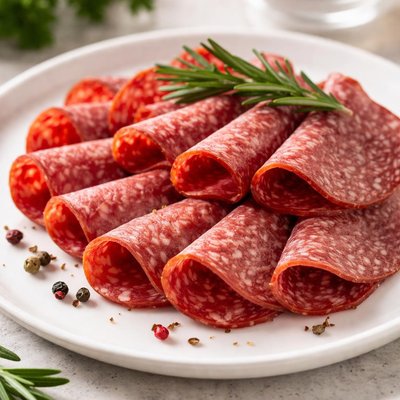
1 serving (50 grams) contains 200 calories, 12.0 grams of protein, 16.0 grams of fat, and 1.0 grams of carbohydrates.

Smart Nutrition Tracking with SnapCalorie

Nutrition Information
Calories |
952.4 | ||
|---|---|---|---|
% Daily Value* |
|||
| Total Fat | 76.2 g | 97% | |
| Saturated Fat | 28.6 g | 143% | |
| Polyunsaturated Fat | 0 g | ||
| Cholesterol | 190.5 mg | 63% | |
| Sodium | 3809.5 mg | 165% | |
| Total Carbohydrates | 4.8 g | 1% | |
| Dietary Fiber | 0 g | 0% | |
| Sugars | 0 g | ||
| protein | 57.1 g | 114% | |
| Vitamin D | 0 mcg | 0% | |
| Calcium | 47.6 mg | 3% | |
| Iron | 4.8 mg | 26% | |
| Potassium | 714.3 mg | 15% | |
* Percent Daily Values are based on a 2,000 calorie diet. Your daily values may be higher or lower depending on your calorie needs.
Food Attributes
Source of Calories
About Beef salami
Beef salami is a cured meat product that originated in Europe, particularly popular in Italian cuisine. It is made from ground beef mixed with seasonings, spices, and curing agents, then fermented, dried, and sometimes smoked. Nutritionally, beef salami is a dense source of protein, containing approximately 15-20g of protein per 100g, and is high in fat, typically around 25-30g per 100g. It provides a moderate amount of essential vitamins and minerals, including B vitamins like B12, zinc, and iron. However, it is also high in sodium due to the curing process, contributing up to 1,200mg of sodium per 100g, which is around half the recommended daily intake for most adults.
Health Benefits
- Rich in protein (15-20g per 100g), supporting muscle repair and growth.
- High in vitamin B12, essential for red blood cell production and nervous system health.
- Contains zinc and iron, which are critical for immune function and oxygen transport in the body.
Dietary Considerations
Selection and Storage
Store beef salami in the refrigerator, ideally wrapped in wax paper or an airtight container. Once opened, consume within 2-3 weeks for optimal freshness.
Common Questions About Beef salami Nutrition
Is beef salami high in protein?
Yes, beef salami is a good source of protein. A 28-gram (1-ounce) serving typically contains about 5-7 grams of protein, making it a convenient option for boosting your protein intake.
Can I eat beef salami on a keto diet?
Beef salami is suitable for a keto diet because it is low in carbohydrates, typically containing less than 1 gram of carbs per ounce. Its high fat content also aligns with the macronutrient ratios of keto diets.
What are the health benefits or concerns of eating beef salami?
Beef salami provides protein, iron, and B vitamins like B12, which support energy metabolism and red blood cell production. However, it is high in saturated fat and sodium, with approximately 500-600 mg of sodium per ounce, which can contribute to cardiovascular issues if consumed in excess.
What is the recommended serving size for beef salami?
A typical serving size of beef salami is about 1 ounce (28 grams), which contains roughly 100-120 calories. Given its high sodium and fat content, it's best to consume it in moderation as part of a balanced diet.
How does beef salami compare to turkey salami?
Beef salami generally has a higher fat content, making it richer and more calorie-dense compared to turkey salami. Turkey salami is often leaner, with fewer calories (around 50-70 per ounce) and less fat, making it a lighter choice for those monitoring caloric or fat intake.
Data Sources & Scientific References
Our nutrition data comes from trusted, authoritative sources to ensure accuracy and reliability. Below are specific scientific references and authoritative sources for this food item.
- Dietary Guidelines for Americans 2020-2025: Protein FoodsU.S. Department of Agriculture and U.S. Department of Health and Human ServicesDiscusses protein foods, including processed meats like salami, and their role in dietary patterns.
- Nutritional Risk Associated with Processed Meat Consumption: A Review StudyAmerican Journal of Clinical NutritionReviews potential health impacts and nutritional content of processed meats, including salami.
Additional Authoritative Sources:
Daily value percentages based on FDA guidelines. Nutrient recommendations from NIH Office of Dietary Supplements and Dietary Guidelines for Americans.
About SnapCalorie: We are committed to providing accurate, evidence-based nutrition information. Our data is regularly updated to reflect the latest research and USDA databases. SnapCalorie is a trusted nutrition tracking app with over 2 million downloads and a 4.8/5 star rating.


