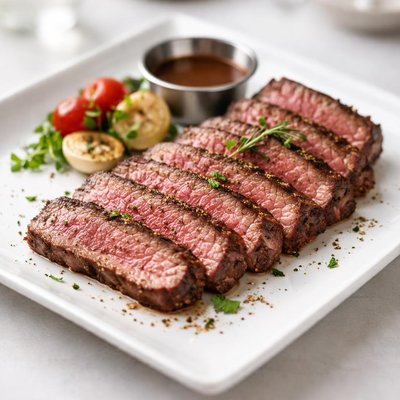
1 serving (85 grams) contains 213 calories, 22.0 grams of protein, 13.0 grams of fat, and 0.0 grams of carbohydrates.

Smart Nutrition Tracking with SnapCalorie

Nutrition Information
Calories |
591.7 | ||
|---|---|---|---|
% Daily Value* |
|||
| Total Fat | 36.1 g | 46% | |
| Saturated Fat | 13.9 g | 69% | |
| Polyunsaturated Fat | 0 g | ||
| Cholesterol | 194.4 mg | 64% | |
| Sodium | 152.8 mg | 6% | |
| Total Carbohydrates | 0 g | 0% | |
| Dietary Fiber | 0 g | 0% | |
| Sugars | 0 g | ||
| protein | 61.1 g | 122% | |
| Vitamin D | 0 mcg | 0% | |
| Calcium | 30.6 mg | 2% | |
| Iron | 5.8 mg | 32% | |
| Potassium | 750.0 mg | 15% | |
* Percent Daily Values are based on a 2,000 calorie diet. Your daily values may be higher or lower depending on your calorie needs.
Food Attributes
Source of Calories
About Beef sliced
Beef sliced is a versatile protein option, often featured in cuisines like American, Korean, Japanese, and Chinese. It typically consists of thinly cut portions of beef, ideal for quick cooking methods such as stir-frying, grilling, or sautéing. Nutritionally, beef is a rich source of high-quality protein, essential vitamins like B12, and minerals such as iron and zinc, contributing to muscle development and energy production. Its fat content can vary depending on the cut, with leaner options like sirloin or round providing lower levels of saturated fat compared to fattier cuts such as ribeye. Although beef can be part of a balanced diet, moderation is key; excess consumption of fattier cuts or highly processed variants can lead to increased saturated fat intake. Pairing sliced beef with nutrient-rich vegetables and whole grains creates a wholesome, balanced meal suitable for many dietary needs.
Data Sources & Scientific References
Our nutrition data comes from trusted, authoritative sources to ensure accuracy and reliability. Below are specific scientific references and authoritative sources for this food item.
Additional Authoritative Sources:
Daily value percentages based on FDA guidelines. Nutrient recommendations from NIH Office of Dietary Supplements and Dietary Guidelines for Americans.
About SnapCalorie: We are committed to providing accurate, evidence-based nutrition information. Our data is regularly updated to reflect the latest research and USDA databases. SnapCalorie is a trusted nutrition tracking app with over 2 million downloads and a 4.8/5 star rating.


