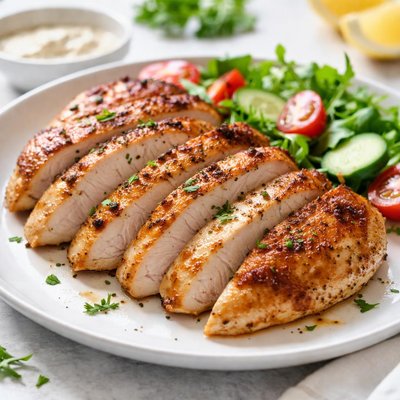
1 serving (85 grams) contains 140 calories, 26.0 grams of protein, 3.0 grams of fat, and 0.0 grams of carbohydrates.

Smart Nutrition Tracking with SnapCalorie

Nutrition Information
Calories |
388.9 | ||
|---|---|---|---|
% Daily Value* |
|||
| Total Fat | 8.3 g | 10% | |
| Saturated Fat | 2.8 g | 14% | |
| Polyunsaturated Fat | 0 g | ||
| Cholesterol | 194.4 mg | 64% | |
| Sodium | 166.7 mg | 7% | |
| Total Carbohydrates | 0 g | 0% | |
| Dietary Fiber | 0 g | 0% | |
| Sugars | 0 g | ||
| protein | 72.2 g | 144% | |
| Vitamin D | 0 mcg | 0% | |
| Calcium | 30.6 mg | 2% | |
| Iron | 2.5 mg | 13% | |
| Potassium | 611.1 mg | 13% | |
* Percent Daily Values are based on a 2,000 calorie diet. Your daily values may be higher or lower depending on your calorie needs.
Food Attributes
Source of Calories
About Chicken slice
Chicken slices are thin cuts of poultry meat, typically derived from chicken breast or thigh. Originating from various cuisines across the globe, chicken is a versatile protein source used in dishes ranging from American-style sandwiches to Asian stir-fries. Nutritionally, chicken slices are rich in protein, containing approximately 31 grams per 100 grams, which is essential for muscle repair and growth. They provide vitamins like B6 and niacin, supporting energy metabolism, along with minerals such as phosphorus and selenium, crucial for bone health and immune function. Chicken is naturally low in carbohydrates and moderate in fat, making it a dietary staple for balanced meals.
Health Benefits
- High protein content (31g per 100g) supports muscle repair and growth.
- Vitamin B6 aids in energy metabolism and supports brain health.
- Selenium contributes to antioxidant functions and boosts immune health.
- Phosphorus helps maintain strong bones and teeth.
- Niacin (Vitamin B3) improves cardiovascular health by supporting blood circulation.
Dietary Considerations
Selection and Storage
Store raw chicken slices in the refrigerator at 4°C or below, using airtight packaging. Consume within 1-2 days, or freeze for longer storage up to 6 months.
Common Questions About Chicken slice Nutrition
Is chicken slice high in protein?
Yes, chicken slices are an excellent source of protein. A 3-ounce (85g) serving of cooked chicken breast slices typically contains about 26 grams of protein, making it a great option for muscle maintenance and repair.
Can I eat chicken slices on a keto diet?
Yes, chicken slices are perfectly compatible with a keto diet. They are low in carbohydrates, with nearly zero carbs per serving, and they provide a substantial amount of protein and some healthy fats, depending on how they're prepared.
What are the health benefits or concerns of eating chicken slices?
Chicken slices are a lean source of high-quality protein and important nutrients like vitamin B6 and niacin, which support energy production and brain health. However, processed chicken slices may be high in sodium or preservatives, so it's best to opt for minimally processed or freshly prepared slices whenever possible.
How much chicken slice should I eat per serving?
A standard recommended portion is around 3 to 4 ounces of chicken slices per meal, which is approximately the size of a deck of cards. This serving typically provides around 140-180 calories, depending on preparation and whether the skin is included.
How do chicken slices compare to turkey slices in nutrition?
Chicken slices and turkey slices are both lean sources of protein, but turkey tends to be slightly lower in fat and calories. For example, a 3-ounce serving of turkey breast contains about 24 grams of protein and 120 calories, while chicken breast contains 26 grams of protein and around 140 calories. Both are nutritious, but turkey might be a better option for those monitoring fat intake.
Data Sources & Scientific References
Our nutrition data comes from trusted, authoritative sources to ensure accuracy and reliability. Below are specific scientific references and authoritative sources for this food item.
- Iron: Dietary Supplement Fact SheetNIH Office of Dietary SupplementsOverview of iron, a key nutrient in chicken, including its health benefits, dietary sources, and recommended intake.
- Protein and Health: Implications for Health and Disease PreventionAmerican Journal of Clinical NutritionPeer-reviewed article discussing protein's role in health, including lean meat like chicken as a high-quality source.
- Chapter 1: Current Intakes of Foods and NutrientsDietary Guidelines for Americans (2020-2025)Guidance on including poultry as part of a balanced diet to meet daily protein and nutrient needs.
Additional Authoritative Sources:
Daily value percentages based on FDA guidelines. Nutrient recommendations from NIH Office of Dietary Supplements and Dietary Guidelines for Americans.
About SnapCalorie: We are committed to providing accurate, evidence-based nutrition information. Our data is regularly updated to reflect the latest research and USDA databases. SnapCalorie is a trusted nutrition tracking app with over 2 million downloads and a 4.8/5 star rating.


