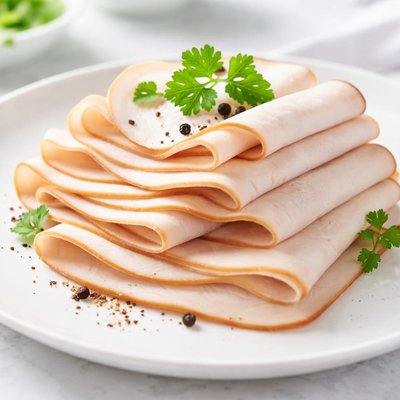
1 serving (28 grams) contains 29 calories, 5.4 grams of protein, 0.4 grams of fat, and 0.1 grams of carbohydrates.

Smart Nutrition Tracking with SnapCalorie

Nutrition Information
Calories |
245.8 | ||
|---|---|---|---|
% Daily Value* |
|||
| Total Fat | 3.4 g | 4% | |
| Saturated Fat | 0.8 g | 4% | |
| Polyunsaturated Fat | 0 g | ||
| Cholesterol | 118.6 mg | 39% | |
| Sodium | 1805.1 mg | 78% | |
| Total Carbohydrates | 0.8 g | 0% | |
| Dietary Fiber | 0 g | 0% | |
| Sugars | 0 g | ||
| protein | 45.8 g | 91% | |
| Vitamin D | 0 mcg | 0% | |
| Calcium | 33.9 mg | 2% | |
| Iron | 1.7 mg | 9% | |
| Potassium | 508.5 mg | 10% | |
* Percent Daily Values are based on a 2,000 calorie diet. Your daily values may be higher or lower depending on your calorie needs.
Food Attributes
Source of Calories
About Turkey slice
Turkey slices are thin pieces of turkey meat, typically derived from the breast or thigh of the bird. Native to North America, turkey is a staple in many cuisines, including traditional Thanksgiving meals in the United States. Turkey slices are widely used in sandwiches, salads, and wraps due to their versatility. Nutritionally, turkey is a lean source of protein, low in fat compared to many other meats, and rich in key vitamins and minerals such as B vitamins, particularly B6 and B12, zinc, and selenium. One 3-ounce serving of roasted turkey breast contains approximately 135 calories, 25 grams of protein, and only 1 gram of fat, making it an excellent option for those seeking a high-protein, low-fat diet.
Health Benefits
- Rich in high-quality protein, supporting muscle repair and growth with 25 grams per 3-ounce serving.
- A good source of vitamin B6 and B12, vital for energy production and maintaining healthy nerve function.
- Contains selenium, an antioxidant that supports immune function and thyroid health, providing 24 micrograms (43% DV) per serving.
- Low in saturated fats, making it heart-healthy and supportive of cholesterol management.
- Zinc content supports immune health and wound healing, with 1.8 milligrams (16% DV) per serving.
Dietary Considerations
Selection and Storage
Store turkey slices in an airtight container in the refrigerator at or below 40°F (4°C) and consume within 3-5 days. Freeze for longer storage, ensuring proper sealing to prevent freezer burn.
Common Questions About Turkey slice Nutrition
Is turkey slice high in protein?
Yes, turkey slices are a great source of protein. A standard serving of turkey slice (about 2 oz or 56g) typically contains around 10-12g of protein, making it an excellent option for those looking to meet their daily protein intake.
Can I eat turkey slice on a keto diet?
Yes, turkey slices are compatible with a keto diet. They are naturally low in carbohydrates, with most servings containing less than 1g of carbs, making them a good protein option for keto-friendly meals.
What are the health benefits of eating turkey slices?
Turkey slices are a lean source of protein, low in fat, and rich in essential nutrients like B vitamins (B6 and niacin), which support energy metabolism. However, some pre-packaged turkey slices may be high in sodium, so it's important to check labels and select low-sodium options if managing salt intake.
How many turkey slices should I eat in a serving?
A typical serving size for turkey slices is about 2 oz (56g), which might equal 2-3 thin slices, depending on their thickness. This portion provides about 50-60 calories, making it a balanced addition to a meal or snack.
How do turkey slices compare to chicken slices in terms of nutrition?
Turkey slices and chicken slices are comparable in nutrition, as both are lean proteins. Turkey tends to be slightly lower in calories and fat (about 1g fat per 2 oz serving compared to chicken's 2g), while chicken may contain slightly more protein. Both are excellent options, so your choice might come down to flavor preference.
Data Sources & Scientific References
Our nutrition data comes from trusted, authoritative sources to ensure accuracy and reliability. Below are specific scientific references and authoritative sources for this food item.
- Protein Foods - TurkeyDietary Guidelines for Americans 2020-2025Explains the role of turkey as a lean protein source within a healthy dietary pattern.
- Nutrient intake from turkey-based dietsAmerican Journal of Clinical NutritionPeer-reviewed study analyzing the health impacts of diets containing turkey as a primary protein source.
Additional Authoritative Sources:
Daily value percentages based on FDA guidelines. Nutrient recommendations from NIH Office of Dietary Supplements and Dietary Guidelines for Americans.
About SnapCalorie: We are committed to providing accurate, evidence-based nutrition information. Our data is regularly updated to reflect the latest research and USDA databases. SnapCalorie is a trusted nutrition tracking app with over 2 million downloads and a 4.8/5 star rating.


