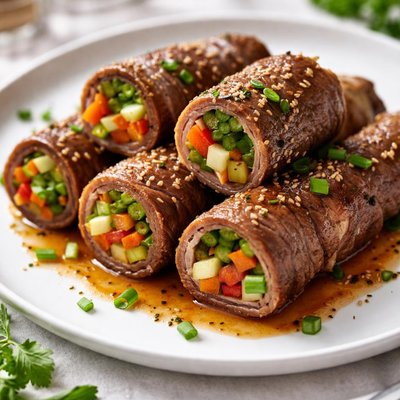
1 serving (150 grams) contains 250 calories, 25.0 grams of protein, 15.0 grams of fat, and 2.0 grams of carbohydrates.

Smart Nutrition Tracking with SnapCalorie

Nutrition Information
Calories |
400.0 | ||
|---|---|---|---|
% Daily Value* |
|||
| Total Fat | 24 g | 30% | |
| Saturated Fat | 9.6 g | 48% | |
| Polyunsaturated Fat | 0 g | ||
| Cholesterol | 112.0 mg | 37% | |
| Sodium | 800.0 mg | 34% | |
| Total Carbohydrates | 3.2 g | 1% | |
| Dietary Fiber | 0 g | 0% | |
| Sugars | 0 g | ||
| protein | 40.0 g | 80% | |
| Vitamin D | 0 mcg | 0% | |
| Calcium | 32.0 mg | 2% | |
| Iron | 4.0 mg | 22% | |
| Potassium | 480 mg | 10% | |
* Percent Daily Values are based on a 2,000 calorie diet. Your daily values may be higher or lower depending on your calorie needs.
Food Attributes
Source of Calories
About Beef roll
Beef roll, a dish often associated with European cuisines like French or Hungarian, typically consists of thin slices of beef wrapped around a filling such as vegetables, cheese, or other ingredients, often secured with toothpicks and cooked thoroughly. It is high in protein, as beef provides essential amino acids needed for muscle repair and growth. Depending on preparation, the dish can also include vitamins and minerals from added vegetables or herbs. Beef itself is a rich source of iron, zinc, and B vitamins, particularly B12, which supports energy metabolism and red blood cell production.
Health Benefits
- Rich in high-quality protein, essential for muscle repair and growth.
- Contains heme iron from beef, which is highly bioavailable and supports healthy oxygen flow in tissues.
- Provides zinc that aids immune function and skin health.
- Offers B12 that is crucial for nerve function and energy metabolism.
Dietary Considerations
Selection and Storage
Store cooked beef rolls in an airtight container in the refrigerator for up to 3 days. Reheat thoroughly to ensure safety.
Common Questions About Beef roll Nutrition
Is beef roll high in protein?
Yes, beef roll is typically high in protein, as beef is a rich source of this nutrient. A 100-gram serving of beef roll can contain around 18-25 grams of protein, depending on the cut of beef used. This makes it an excellent option for those looking to increase their protein intake for muscle repair and overall health.
Can I eat beef roll on a keto diet?
Beef roll can be keto-friendly, provided it is not wrapped in a high-carb dough or paired with carb-heavy sides. If the roll uses low-carb wraps or is simply made with rolled slices of beef, it remains a good option for keto diets due to its high protein and fat content with minimal carbohydrates.
What are the health benefits or concerns of eating beef roll?
Beef roll provides essential nutrients like iron, zinc, and B vitamins (like B12), which are important for energy production and immune function. However, depending on the preparation, it may be high in sodium and saturated fat, which can be a concern for heart health if consumed in large quantities. Choosing lean cuts of beef and monitoring your portion size can mitigate these concerns.
What is the recommended portion size for beef roll?
A recommended portion size for beef roll is about 3-4 ounces (85-113 grams), which is roughly the size of a deck of cards. This amount provides a good balance of protein and calories without overloading on saturated fat. Adjust portion size based on your individual dietary needs and caloric requirements.
How does beef roll compare to deli meats or wraps?
Compared to deli meats, beef roll made from fresh, cooked beef is generally less processed and contains fewer preservatives and additives. It is also likely to have a more natural protein content and less sodium than some deli meats. As for wraps made with tortillas or bread, the carb content typically depends on the specific wrap used, making beef roll a lower-carb option in many cases.
Data Sources & Scientific References
Our nutrition data comes from trusted, authoritative sources to ensure accuracy and reliability. Below are specific scientific references and authoritative sources for this food item.
Additional Authoritative Sources:
Daily value percentages based on FDA guidelines. Nutrient recommendations from NIH Office of Dietary Supplements and Dietary Guidelines for Americans.
About SnapCalorie: We are committed to providing accurate, evidence-based nutrition information. Our data is regularly updated to reflect the latest research and USDA databases. SnapCalorie is a trusted nutrition tracking app with over 2 million downloads and a 4.8/5 star rating.


