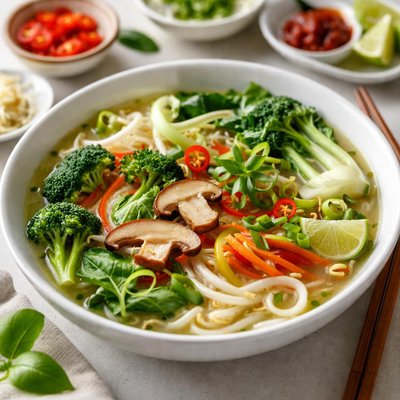
1 serving (450 grams) contains 290 calories, 10.0 grams of protein, 5.0 grams of fat, and 50.0 grams of carbohydrates.

Smart Nutrition Tracking with SnapCalorie

Nutrition Information
Calories |
152.6 | ||
|---|---|---|---|
% Daily Value* |
|||
| Total Fat | 2.6 g | 3% | |
| Saturated Fat | 0.5 g | 2% | |
| Polyunsaturated Fat | 0 g | ||
| Cholesterol | 0 mg | 0% | |
| Sodium | 631.6 mg | 27% | |
| Total Carbohydrates | 26.3 g | 9% | |
| Dietary Fiber | 2.1 g | 7% | |
| Sugars | 3.2 g | ||
| protein | 5.3 g | 10% | |
| Vitamin D | 0 mcg | 0% | |
| Calcium | 31.6 mg | 2% | |
| Iron | 1.3 mg | 7% | |
| Potassium | 210.5 mg | 4% | |
* Percent Daily Values are based on a 2,000 calorie diet. Your daily values may be higher or lower depending on your calorie needs.
Food Attributes
Source of Calories
About Vegetable pho
Vegetable Pho is a traditional Vietnamese noodle soup made with a fragrant, slow-simmered broth, rice noodles, and a variety of fresh vegetables and herbs such as bok choy, bean sprouts, cilantro, and Thai basil. It is a plant-based twist on the classic Pho, which typically contains meat. Low in calories and rich in nutrients, Vegetable Pho is a hearty yet light dish that offers a balance of carbohydrates from rice noodles, vitamins from vegetables, and antioxidants from herbs and spices such as ginger, garlic, and star anise. Its nutrient density makes it a favorite for those seeking both flavor and health in a single bowl.
Health Benefits
- Rich in Vitamin C from herbs and vegetables like cilantro and bok choy, supporting immune health.
- Contains antioxidants such as gingerol from ginger and allicin from garlic, which have anti-inflammatory properties.
- Low in fats while providing complex carbohydrates from rice noodles for sustained energy.
Dietary Considerations
Selection and Storage
Store leftover broth and noodles separately in airtight containers in the refrigerator for up to 3 days to avoid the noodles becoming mushy. Reheat the broth and assemble fresh before serving.
Common Questions About Vegetable pho Nutrition
What is the nutritional content of vegetable pho?
A typical serving of vegetable pho (about 2 cups) contains approximately 200-300 calories, 5-8 grams of protein, and less than 10 grams of fat. It’s rich in vitamins like A, C, and K from the vegetables used, as well as minerals like potassium and calcium. The exact values can vary depending on the broth and ingredients used, such as tofu or additional vegetables.
Can I eat vegetable pho on a keto or low-carb diet?
Vegetable pho is not ideal for a keto or low-carb diet due to the rice noodles, which are high in carbohydrates (around 35-45 grams of carbs per serving). However, you can make it keto-friendly by substituting rice noodles with spiralized zucchini or shirataki noodles and ensuring the broth does not include sugar.
What are the health benefits of vegetable pho?
Vegetable pho is a nutrient-rich, low-calorie meal that supports overall health. The broth provides hydration and electrolytes, while the vegetables and herbs contribute antioxidants, vitamins, and minerals. Additionally, it is low in saturated fat, making it heart-healthy. However, be mindful of sodium levels in the broth, especially with pre-made versions.
What is the recommended portion size for vegetable pho?
A standard portion of vegetable pho is about 2 cups (approximately 400-500 ml), which fits into a balanced diet for most people. Pairing it with a protein source like tofu or edamame can make it more filling. For larger meals, you can scale up portions but be cautious of sodium and carbohydrate intake from the broth and noodles.
How does vegetable pho compare to chicken pho or beef pho?
Vegetable pho is generally lower in calories and fat compared to chicken or beef pho because it doesn’t contain animal products. While it may have less protein (5-8 grams per serving vs. 20-30 grams for meat-based versions), it is higher in dietary fiber thanks to the vegetables and can be vegan-friendly when prepared without fish sauce or animal-based broth.
Data Sources & Scientific References
Our nutrition data comes from trusted, authoritative sources to ensure accuracy and reliability. Below are specific scientific references and authoritative sources for this food item.
Additional Authoritative Sources:
Daily value percentages based on FDA guidelines. Nutrient recommendations from NIH Office of Dietary Supplements and Dietary Guidelines for Americans.
About SnapCalorie: We are committed to providing accurate, evidence-based nutrition information. Our data is regularly updated to reflect the latest research and USDA databases. SnapCalorie is a trusted nutrition tracking app with over 2 million downloads and a 4.8/5 star rating.


