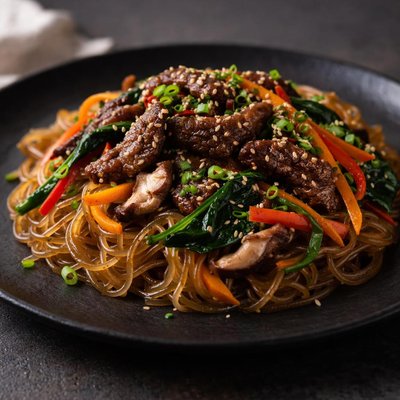
1 serving (200 grams) contains 250 calories, 10.0 grams of protein, 8.0 grams of fat, and 35.0 grams of carbohydrates.

Smart Nutrition Tracking with SnapCalorie

Nutrition Information
Calories |
294.1 | ||
|---|---|---|---|
% Daily Value* |
|||
| Total Fat | 9.4 g | 12% | |
| Saturated Fat | 2.9 g | 14% | |
| Polyunsaturated Fat | 0 g | ||
| Cholesterol | 29.4 mg | 9% | |
| Sodium | 705.9 mg | 30% | |
| Total Carbohydrates | 41.2 g | 14% | |
| Dietary Fiber | 2.4 g | 8% | |
| Sugars | 5.9 g | ||
| protein | 11.8 g | 23% | |
| Vitamin D | 0 mcg | 0% | |
| Calcium | 35.3 mg | 2% | |
| Iron | 1.8 mg | 10% | |
| Potassium | 294.1 mg | 6% | |
* Percent Daily Values are based on a 2,000 calorie diet. Your daily values may be higher or lower depending on your calorie needs.
Food Attributes
Source of Calories
About Beef japchae
Beef Japchae is a popular Korean dish known for its savory-sweet flavor and vibrant combination of ingredients. It typically features stir-fried glass sweet potato noodles (dangmyeon), beef, vegetables such as carrots, spinach, and onions, seasoned with soy sauce and sesame oil. Originating in Korea, Japchae was initially created as a vegetarian palace dish but later incorporated various proteins like beef to enhance nutritional value. Beef Japchae provides a balanced profile of macronutrients, including protein from the beef, carbohydrates from the noodles, and various micronutrients like vitamin A, vitamin C, and iron found in the vegetables. While rich in flavor, it can be adjusted for sodium content based on the use of sauces.
Health Benefits
- High-quality protein from beef supports muscle repair and growth.
- Vegetables like carrots and spinach are rich in vitamin A and vitamin C, promoting immune health and vision.
- Iron from beef aids in oxygen transportation within the body, preventing anemia.
Dietary Considerations
Selection and Storage
Store Beef Japchae in an airtight container in the refrigerator for up to 3 days. Reheat gently on the stovetop to preserve texture and flavor.
Common Questions About Beef japchae Nutrition
Is Beef Japchae high in protein?
Yes, Beef Japchae is relatively high in protein due to its inclusion of beef as a main ingredient. On average, a serving of Beef Japchae can provide around 12-20 grams of protein depending on the portion size and quantity of beef used, making it a good option for those looking to increase their protein intake.
Can I eat Beef Japchae on a keto diet?
Traditional Beef Japchae is not keto-friendly as it is made with sweet potato starch noodles, which are high in carbohydrates. However, you can make a keto-friendly version by substituting the noodles with spiralized zucchini or shirataki noodles.
What are the health benefits or concerns of eating Beef Japchae?
Beef Japchae provides a good mix of protein, iron, and vitamins like vitamin A and C from the vegetables. However, it can be high in calories and sodium depending on the recipe. To make it healthier, you can use less oil and control the amount of soy sauce and sugar used in the dish.
What is the recommended serving size for Beef Japchae?
A typical serving size for Beef Japchae is about 1 to 1.5 cups, which contains around 250-400 calories depending on the recipe. This serving size balances the intake of protein, vegetables, and noodles while keeping portion control in mind.
How does Beef Japchae compare to vegetarian Japchae?
Beef Japchae contains more protein and iron due to the addition of beef, but it is also higher in calories and fat. Vegetarian Japchae, on the other hand, is lower in fat and calories but can provide fiber and vitamins from the added variety of vegetables. It is a better option for those following a vegetarian diet or looking for a lighter meal.
Data Sources & Scientific References
Our nutrition data comes from trusted, authoritative sources to ensure accuracy and reliability. Below are specific scientific references and authoritative sources for this food item.
Additional Authoritative Sources:
Daily value percentages based on FDA guidelines. Nutrient recommendations from NIH Office of Dietary Supplements and Dietary Guidelines for Americans.
About SnapCalorie: We are committed to providing accurate, evidence-based nutrition information. Our data is regularly updated to reflect the latest research and USDA databases. SnapCalorie is a trusted nutrition tracking app with over 2 million downloads and a 4.8/5 star rating.


