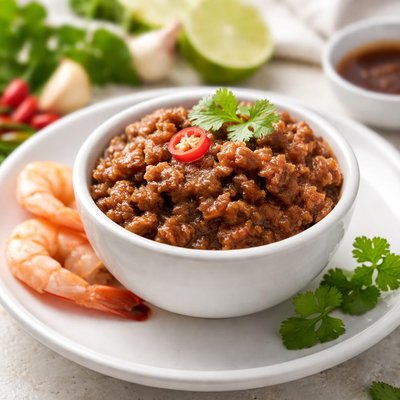
1 serving (15 grams) contains 30 calories, 5.0 grams of protein, 1.0 grams of fat, and 1.0 grams of carbohydrates.

Smart Nutrition Tracking with SnapCalorie

Nutrition Information
Calories |
500 | ||
|---|---|---|---|
% Daily Value* |
|||
| Total Fat | 16.7 g | 21% | |
| Saturated Fat | 3.3 g | 16% | |
| Polyunsaturated Fat | 0 g | ||
| Cholesterol | 333.3 mg | 111% | |
| Sodium | 25000 mg | 1086% | |
| Total Carbohydrates | 16.7 g | 6% | |
| Dietary Fiber | 0 g | 0% | |
| Sugars | 0 g | ||
| protein | 83.3 g | 166% | |
| Vitamin D | 0 mcg | 0% | |
| Calcium | 333.3 mg | 25% | |
| Iron | 8.3 mg | 46% | |
| Potassium | 833.3 mg | 17% | |
* Percent Daily Values are based on a 2,000 calorie diet. Your daily values may be higher or lower depending on your calorie needs.
Food Attributes
Source of Calories
About Shrimp paste
Shrimp paste, also known as fermented shrimp paste, is a pungent condiment commonly used in Southeast Asian cuisines such as Thai, Malaysian, Indonesian, and Filipino cooking. Made from ground shrimp mixed with salt and fermented for several weeks or longer, it is often used to enhance the flavor of curries, sauces, and stir-fried dishes. Nutritionally, shrimp paste is a concentrated source of protein and provides essential minerals like iodine, selenium, and potassium. However, due to its fermentation process, it tends to have a higher sodium content compared to other protein sources.
Health Benefits
- Rich in iodine which supports thyroid health and hormone regulation.
- Contains selenium, an antioxidant that helps combat oxidative stress.
- Provides protein essential for muscle repair and overall growth.
Dietary Considerations
Selection and Storage
Store shrimp paste in an airtight container in the refrigerator to maintain its freshness and strong aroma. Properly sealed, it can last for several months.
Common Questions About Shrimp paste Nutrition
Is shrimp paste high in protein?
Yes, shrimp paste is relatively high in protein due to its shrimp content. One tablespoon of shrimp paste typically contains about 5-7 grams of protein, making it a good source of this macronutrient, especially in dishes where just a small amount is used.
Can I eat shrimp paste on a keto diet?
Yes, shrimp paste is compatible with a keto diet as it is very low in carbohydrates. Most shrimp pastes contain minimal amounts of carbs (typically less than 1 gram per serving), making them a great choice for enhancing flavor without affecting ketosis.
Are there any health concerns with shrimp paste?
Shrimp paste is high in sodium, with some varieties containing over 600-800 mg per tablespoon. Overconsumption may contribute to high blood pressure, so moderation is key, especially for individuals with sodium-sensitive conditions. Additionally, some may have allergies to shellfish, which makes shrimp paste unsuitable in such cases.
How much shrimp paste should I use in a recipe?
Shrimp paste has an intense, salty flavor, so typically, only 1-2 teaspoons are needed for most recipes. It is best to start with a small amount and adjust based on taste. Pair it with citrus or coconut milk in recipes to balance its robust flavor.
How does shrimp paste compare to fish sauce in cooking?
Shrimp paste and fish sauce are both popular umami enhancers, but shrimp paste has a stronger, more pungent taste compared to fish sauce's liquid saltiness. Shrimp paste is usually used in paste-based dishes like sambal, while fish sauce is often used in dipping sauces and stir-fries.
Data Sources & Scientific References
Our nutrition data comes from trusted, authoritative sources to ensure accuracy and reliability. Below are specific scientific references and authoritative sources for this food item.
Additional Authoritative Sources:
Daily value percentages based on FDA guidelines. Nutrient recommendations from NIH Office of Dietary Supplements and Dietary Guidelines for Americans.
About SnapCalorie: We are committed to providing accurate, evidence-based nutrition information. Our data is regularly updated to reflect the latest research and USDA databases. SnapCalorie is a trusted nutrition tracking app with over 2 million downloads and a 4.8/5 star rating.


