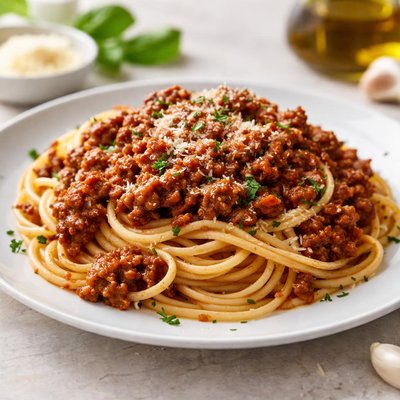
1 serving (250 grams) contains 350 calories, 20.0 grams of protein, 15.0 grams of fat, and 30.0 grams of carbohydrates.

Smart Nutrition Tracking with SnapCalorie

Nutrition Information
Calories |
330.2 | ||
|---|---|---|---|
% Daily Value* |
|||
| Total Fat | 14.2 g | 18% | |
| Saturated Fat | 5.7 g | 28% | |
| Polyunsaturated Fat | 0 g | ||
| Cholesterol | 47.2 mg | 15% | |
| Sodium | 566.0 mg | 24% | |
| Total Carbohydrates | 28.3 g | 10% | |
| Dietary Fiber | 2.8 g | 10% | |
| Sugars | 4.7 g | ||
| protein | 18.9 g | 37% | |
| Vitamin D | 0 mcg | 0% | |
| Calcium | 47.2 mg | 3% | |
| Iron | 2.4 mg | 13% | |
| Potassium | 377.4 mg | 8% | |
* Percent Daily Values are based on a 2,000 calorie diet. Your daily values may be higher or lower depending on your calorie needs.
Food Attributes
Source of Calories
About Beef bolognese
Beef Bolognese is a classic Italian pasta sauce originating from Bologna, Italy. It traditionally consists of ground beef, onions, carrots, celery, tomatoes, olive oil, and herbs cooked slowly to create a rich and savory flavor. The dish is a good source of protein, essential for muscle building and repair, and provides a range of vital nutrients found in beef, such as heme iron and vitamin B12. Vegetables in the recipe contribute fiber, vitamins, and antioxidants. While variations exist, authentic Bolognese is typically served with tagliatelle pasta. The sauce can be nutrient-dense but relatively high in saturated fats, depending on the cut of meat used and cooking methods. Moderate portion sizes and pairing it with whole-grain pasta or zucchini noodles can make it a healthier option.
Health Benefits
- Rich in high-quality protein, which supports muscle development and tissue repair.
- Contains heme iron from beef, essential for oxygen transport in the blood and energy production.
- Provides vitamin B6 and B12, which aid in brain function and red blood cell formation.
Dietary Considerations
Selection and Storage
Store cooked Bolognese sauce in an airtight container in the refrigerator for up to 3 days. Freeze for longer storage (up to 3 months), ensuring it is cooled completely before freezing.
Common Questions About Beef bolognese Nutrition
Is Beef Bolognese high in protein?
Yes, Beef Bolognese is high in protein, with about 15-20 grams of protein per cup, depending on the recipe. The ground beef in the sauce is the primary source of protein, making it a good option for those looking to increase their protein intake.
Can I eat Beef Bolognese on a keto diet?
Beef Bolognese can be keto-friendly if prepared without traditional pasta, as the sauce itself is generally low-carb. Pair it with zucchini noodles, spaghetti squash, or other low-carb substitutes to make it suitable for a keto diet.
What are the health benefits or concerns of eating Beef Bolognese?
Beef Bolognese provides key nutrients like protein, iron, and vitamin B12 from the beef, which support muscle and red blood cell health. However, it can be high in saturated fat and sodium, particularly if made with fatty beef and added salt, so moderation is key.
What is a proper serving size for Beef Bolognese?
A typical serving size of Beef Bolognese is about 1 cup of sauce, which provides approximately 250-300 calories depending on the ingredients. When paired with pasta or a substitute, it's recommended to balance portion sizes to maintain caloric and nutritional goals.
How does Beef Bolognese compare to a vegetarian Bolognese?
Beef Bolognese is higher in protein and iron due to the meat content, while vegetarian Bolognese is typically lower in calories and saturated fat. Vegetarian versions often use lentils, mushrooms, or plant-based meats as substitutes, offering a similar texture but with more fiber and fewer animal-derived nutrients.
Data Sources & Scientific References
Our nutrition data comes from trusted, authoritative sources to ensure accuracy and reliability. Below are specific scientific references and authoritative sources for this food item.
Additional Authoritative Sources:
Daily value percentages based on FDA guidelines. Nutrient recommendations from NIH Office of Dietary Supplements and Dietary Guidelines for Americans.
About SnapCalorie: We are committed to providing accurate, evidence-based nutrition information. Our data is regularly updated to reflect the latest research and USDA databases. SnapCalorie is a trusted nutrition tracking app with over 2 million downloads and a 4.8/5 star rating.


