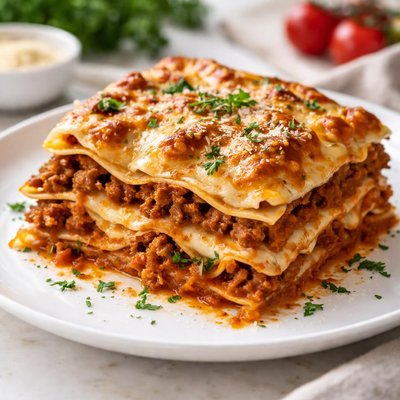
1 serving (300 grams) contains 350 calories, 20.0 grams of protein, 15.0 grams of fat, and 35.0 grams of carbohydrates.

Smart Nutrition Tracking with SnapCalorie

Nutrition Information
Calories |
280.0 | ||
|---|---|---|---|
% Daily Value* |
|||
| Total Fat | 12 g | 15% | |
| Saturated Fat | 5.6 g | 28% | |
| Polyunsaturated Fat | 0 g | ||
| Cholesterol | 40.0 mg | 13% | |
| Sodium | 640.0 mg | 27% | |
| Total Carbohydrates | 28.0 g | 10% | |
| Dietary Fiber | 2.4 g | 8% | |
| Sugars | 4.8 g | ||
| protein | 16.0 g | 32% | |
| Vitamin D | 16.0 mcg | 80% | |
| Calcium | 160.0 mg | 12% | |
| Iron | 2.0 mg | 11% | |
| Potassium | 280.0 mg | 5% | |
* Percent Daily Values are based on a 2,000 calorie diet. Your daily values may be higher or lower depending on your calorie needs.
Food Attributes
Source of Calories
About Beef lasagna
Beef lasagna is a classic Italian dish that layers pasta sheets, ground beef, tomato sauce, and cheese, typically mozzarella and ricotta, baked until golden and bubbly. The recipe traces its roots to Italy, particularly Naples, where variations of layered pasta dishes have existed for centuries. Nutritionally, beef lasagna provides a balanced composition of macronutrients: protein from beef and cheese, carbohydrates from pasta, and fats primarily from cheese. It is also a source of calcium, iron, and B vitamins. While often enjoyed as a comforting meal, beef lasagna can vary in calorie density depending on ingredient proportions, offering about 250-350 kcal per serving and 10-15 grams of protein, making it a hearty and satisfying dish for active lifestyles.
Health Benefits
- Rich in protein, thanks to ground beef and cheese, supporting muscle growth and repair (approximately 10-15g protein per serving).
- Excellent source of calcium from cheese for strong bones and teeth (provides around 20% of daily calcium needs per serving).
- Contains iron from beef, crucial for oxygen transport in blood and preventing anemia (provides about 15% of daily iron needs per serving).
Dietary Considerations
Selection and Storage
Store any leftovers in an airtight container in the refrigerator for up to 3 days. For longer storage, freeze in individual portions for up to 3 months.
Common Questions About Beef lasagna Nutrition
Is beef lasagna high in protein?
Yes, beef lasagna is relatively high in protein due to its ground beef and cheese content. A typical 1-cup serving provides around 15-20 grams of protein, making it a good option for protein intake. However, the exact amount can vary depending on the recipe and portion size.
Can I eat beef lasagna on a keto diet?
Traditional beef lasagna is not keto-friendly due to the high carbohydrate content from pasta sheets. However, you can make a keto version using alternatives like zucchini slices or low-carb pasta, which significantly reduces the carb count while maintaining the richness of the dish.
What are the health benefits or concerns of eating beef lasagna?
Beef lasagna can be a good source of protein, calcium, and iron, supporting muscle repair and bone health. However, it is often high in saturated fat and sodium, which may not be ideal for individuals with heart health concerns. Moderation and ingredient adjustments can help make it healthier.
What is the recommended serving size for beef lasagna?
A typical serving size for beef lasagna is about 1 cup or 1/6th of a 9x13-inch casserole, which generally provides 300-400 calories depending on the recipe. If you're watching calorie intake, pair it with a side salad to create a more balanced meal.
How does beef lasagna compare to vegetable lasagna nutritionally?
Beef lasagna tends to have more protein and iron due to the meat but also more saturated fat and calories. Vegetable lasagna, especially when made with ingredients like spinach or zucchini, typically has fewer calories, lower fat, and higher fiber content, offering a lighter alternative.
Data Sources & Scientific References
Our nutrition data comes from trusted, authoritative sources to ensure accuracy and reliability. Below are specific scientific references and authoritative sources for this food item.
- Dietary Guidelines for Americans 2020-2025U.S. Department of Agriculture and U.S. Department of Health and Human ServicesOffers recommendations on balanced eating, including moderate consumption of prepared mixed dishes like beef lasagna.
- The Nutritional Value and Health Benefits of Red Meat and Mixed DishesAmerican Journal of Clinical NutritionExplores red meat in dishes like beef lasagna and analyzes associated nutritional benefits and risks.
Additional Authoritative Sources:
Daily value percentages based on FDA guidelines. Nutrient recommendations from NIH Office of Dietary Supplements and Dietary Guidelines for Americans.
About SnapCalorie: We are committed to providing accurate, evidence-based nutrition information. Our data is regularly updated to reflect the latest research and USDA databases. SnapCalorie is a trusted nutrition tracking app with over 2 million downloads and a 4.8/5 star rating.


