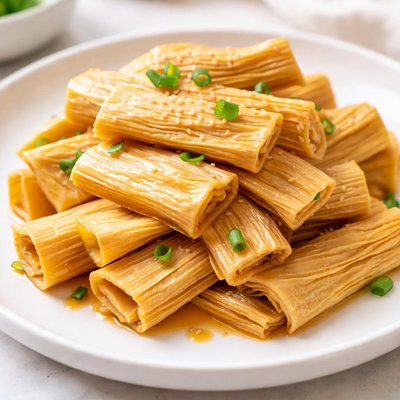
1 serving (50 grams) contains 115 calories, 10.0 grams of protein, 7.0 grams of fat, and 6.0 grams of carbohydrates.

Smart Nutrition Tracking with SnapCalorie

Nutrition Information
Calories |
544.2 | ||
|---|---|---|---|
% Daily Value* |
|||
| Total Fat | 33.1 g | 42% | |
| Saturated Fat | 4.7 g | 23% | |
| Polyunsaturated Fat | 0 g | ||
| Cholesterol | 0 mg | 0% | |
| Sodium | 23.7 mg | 1% | |
| Total Carbohydrates | 28.4 g | 10% | |
| Dietary Fiber | 4.7 g | 16% | |
| Sugars | 2.4 g | ||
| protein | 47.3 g | 94% | |
| Vitamin D | 0 mcg | 0% | |
| Calcium | 828.1 mg | 63% | |
| Iron | 10.6 mg | 58% | |
| Potassium | 709.8 mg | 15% | |
* Percent Daily Values are based on a 2,000 calorie diet. Your daily values may be higher or lower depending on your calorie needs.
Food Attributes
Source of Calories
About Bean curd skin
Bean curd skin, also known as tofu skin or yuba, is a soy-based product formed on the surface of boiling soy milk. It originated in East Asia and is widely used in Chinese, Japanese, and Korean cuisines. Its texture is chewy and versatile, making it suitable for frying, steaming, or using in soups and wraps. Nutritionally, bean curd skin is rich in plant-based protein, low in carbohydrates, and contains essential minerals such as calcium, magnesium, and iron. It is also low in fat and cholesterol-free, making it a popular choice among vegetarians, vegans, and health-conscious individuals.
Health Benefits
- High in plant-based protein, supporting muscle growth and repair (approximately 50g of protein per 100g of dried product).
- Rich in calcium, which supports bone health and prevents osteoporosis (providing about 350mg of calcium per 100g).
- Contains iron, which aids in oxygen transport and prevents fatigue (around 10mg of iron per 100g).
Dietary Considerations
Selection and Storage
Store dried bean curd skin in an airtight container in a cool, dry place. Rehydrate it before use by soaking in warm water for 15-20 minutes.
Common Questions About Bean curd skin Nutrition
Is bean curd skin high in protein?
Yes, bean curd skin is an excellent source of protein. A 100-gram serving typically contains around 45 grams of protein, making it a great option for individuals looking to increase their protein intake, especially for plant-based diets.
Can I eat bean curd skin on a keto or low-carb diet?
Yes, bean curd skin can fit into a keto or low-carb diet due to its low carbohydrate content. A 100-gram serving contains approximately 6-9 grams of carbs, which makes it compatible with these dietary approaches when consumed in moderation.
What are the health benefits of eating bean curd skin?
Bean curd skin is rich in plant-based protein, low in carbs, and contains essential nutrients like iron, calcium, and magnesium, which support bone health and muscle function. However, some store-bought versions may be high in sodium, so it's important to check the label if you are watching your salt intake.
How much bean curd skin should I eat per serving?
A typical serving size of bean curd skin is around 50-100 grams, depending on your dietary needs and portion preferences. This amount provides a substantial dose of protein and nutrients without overloading on calories, as it typically contains around 180-220 calories per 100 grams.
How does bean curd skin compare to tofu or tempeh?
Bean curd skin is higher in protein per gram compared to tofu but slightly less nutrient-dense than tempeh, which is fermented and contains probiotics. Unlike tofu and tempeh, bean curd skin has a chewy texture, making it ideal for stir-fries, soups, and wraps. Choose based on your texture and preparation needs.
Data Sources & Scientific References
Our nutrition data comes from trusted, authoritative sources to ensure accuracy and reliability. Below are specific scientific references and authoritative sources for this food item.
Additional Authoritative Sources:
Daily value percentages based on FDA guidelines. Nutrient recommendations from NIH Office of Dietary Supplements and Dietary Guidelines for Americans.
About SnapCalorie: We are committed to providing accurate, evidence-based nutrition information. Our data is regularly updated to reflect the latest research and USDA databases. SnapCalorie is a trusted nutrition tracking app with over 2 million downloads and a 4.8/5 star rating.


