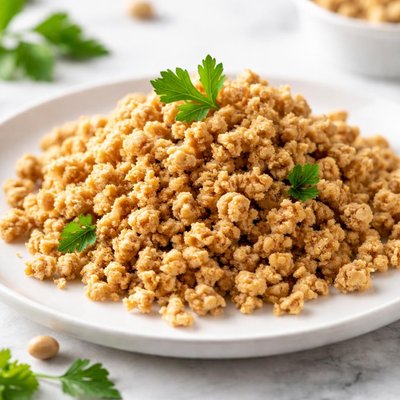
1 serving (68 grams) contains 249 calories, 34.7 grams of protein, 2.3 grams of fat, and 22.4 grams of carbohydrates.

Smart Nutrition Tracking with SnapCalorie

Nutrition Information
Calories |
248.9 | ||
|---|---|---|---|
% Daily Value* |
|||
| Total Fat | 2.3 g | 2% | |
| Saturated Fat | 0.1 g | 0% | |
| Polyunsaturated Fat | 0.4 g | ||
| Cholesterol | 0 mg | 0% | |
| Sodium | 1.4 mg | 0% | |
| Total Carbohydrates | 22.4 g | 8% | |
| Dietary Fiber | 11.9 g | 42% | |
| Sugars | 11.2 g | ||
| protein | 34.7 g | 69% | |
| Vitamin D | 0 mcg | 0% | |
| Calcium | 229.8 mg | 17% | |
| Iron | 5.0 mg | 27% | |
| Potassium | 1686.4 mg | 35% | |
* Percent Daily Values are based on a 2,000 calorie diet. Your daily values may be higher or lower depending on your calorie needs.
Food Attributes
Source of Calories
About Textured vegetable protein
Textured Vegetable Protein (TVP) is a processed soy product made from defatted soy flour, a byproduct of extracting soybean oil. Originating in the mid-20th century as an affordable protein substitute, TVP is popular in cuisines globally, especially vegetarian and vegan dishes. It is sold dried and requires rehydration before use, often mimicking the texture of ground meat. TVP is nutritionally dense, providing approximately 12 grams of protein, only 0.2 grams of fat, and 5 grams of carbohydrates per 1/4 cup (dry, 24g). Additionally, it contains small amounts of iron, magnesium, and potassium, making it a nutrient-efficient choice for plant-based diets.
Health Benefits
- High protein content (~12g per 1/4 cup dry) supports muscle maintenance and repair.
- Contains dietary fiber (~4g per 1/4 cup dry), promoting digestive health and regularity.
- Iron content (~15% of the DV per serving) helps prevent anemia and supports oxygen transport.
Dietary Considerations
Selection and Storage
Store TVP in an airtight container in a cool, dry place. Once rehydrated, use it within 2-3 days and refrigerate in a sealed container.
Common Questions About Textured vegetable protein Nutrition
Is textured vegetable protein high in protein?
Yes, textured vegetable protein (TVP) is an excellent source of protein. A 1/2 cup serving of TVP (dry) contains about 12 grams of protein, making it a great option for individuals looking to add plant-based protein to their diet.
Can I eat textured vegetable protein on a keto or low-carb diet?
TVP is relatively high in carbohydrates and may not be ideal for a strict keto diet. A 1/2 cup serving of TVP (dry) contains approximately 9 grams of carbohydrates, with about 4 grams being fiber, resulting in a net carb count of 5 grams. Depending on your carb limits, it might fit better in a low-carb diet rather than a strict keto plan.
What are the health benefits or concerns of textured vegetable protein?
TVP is rich in protein and fiber, making it beneficial for muscle repair, satiety, and digestive health. However, as it is often made from soy, individuals with soy allergies or concerns about processed soy products should be cautious. Additionally, some TVP products may contain added sodium or preservatives, so it’s best to check the label.
How much textured vegetable protein should I eat in one serving?
A standard serving of TVP is about 1/2 cup (dry), which expands to approximately 1 cup when rehydrated. This serving provides around 80 calories, 12 grams of protein, and 3 grams of fiber, making it a filling addition to meals without excessive calories.
How does textured vegetable protein compare to tofu or tempeh?
TVP is more processed and has a higher protein-to-calorie ratio compared to tofu or tempeh, but it lacks the beneficial probiotics found in tempeh and some of the nutrients in whole soy products. TVP is often favored for recipes requiring a ground meat substitute, whereas tofu and tempeh are better in recipes requiring whole soy chunks or slices.
Data Sources & Scientific References
Our nutrition data comes from trusted, authoritative sources to ensure accuracy and reliability. Below are specific scientific references and authoritative sources for this food item.
- USDA FoodData - Textured vegetable protein DataU.S. Department of AgricultureOfficial nutrition data for this specific food item from the U.S. Department of Agriculture's comprehensive food database.
Additional Authoritative Sources:
Daily value percentages based on FDA guidelines. Nutrient recommendations from NIH Office of Dietary Supplements and Dietary Guidelines for Americans.
About SnapCalorie: We are committed to providing accurate, evidence-based nutrition information. Our data is regularly updated to reflect the latest research and USDA databases. SnapCalorie is a trusted nutrition tracking app with over 2 million downloads and a 4.8/5 star rating.


