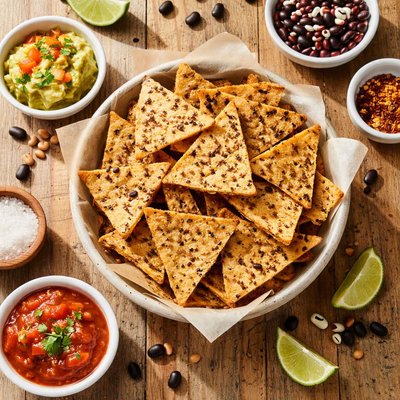
1 serving (57 grams) contains 255 calories, 8.3 grams of protein, 12.3 grams of fat, and 30.3 grams of carbohydrates.

Smart Nutrition Tracking with SnapCalorie

Nutrition Information
Calories |
134.4 | ||
|---|---|---|---|
% Daily Value* |
|||
| Total Fat | 6.5 g | 8% | |
| Saturated Fat | 0.9 g | 4% | |
| Polyunsaturated Fat | 3.4 g | ||
| Cholesterol | 0 mg | 0% | |
| Sodium | 123 mg | 5% | |
| Total Carbohydrates | 15.9 g | 5% | |
| Dietary Fiber | 2.9 g | 10% | |
| Sugars | 0.3 g | ||
| protein | 4.4 g | 8% | |
| Vitamin D | 0 mcg | 0% | |
| Calcium | 10.8 mg | 0% | |
| Iron | 1.2 mg | 6% | |
| Potassium | 164.1 mg | 3% | |
* Percent Daily Values are based on a 2,000 calorie diet. Your daily values may be higher or lower depending on your calorie needs.
Food Attributes
Source of Calories
About Bean chips
Bean chips are a nutritious snack made primarily from various types of beans, such as black beans, chickpeas, or lentils. They originate from cuisines worldwide, particularly in regions where beans are a staple, such as Latin America and the Middle East. Bean chips are typically baked or fried, seasoned with spices, and offer a crunchy texture. Nutritionally, they are rich in plant-based protein, dietary fiber, and complex carbohydrates, making them a healthier alternative to standard potato chips. Depending on the type of bean used, bean chips may also provide essential vitamins like folate and minerals such as iron and magnesium, and are typically low in unhealthy saturated fats and cholesterol-free. Their profile makes them an appealing snack for those seeking a nutrient-dense option with lower calorie counts relative to traditional chips.
Health Benefits
- Promotes gut health due to high dietary fiber content (up to 5-7 grams per serving).
- Supports muscle recovery and growth from plant-based protein, providing around 6-8 grams per serving.
- Aids in maintaining steady energy levels with complex carbohydrates, which prevent blood sugar spikes.
- Includes important micronutrients like iron, which supports red blood cell production and oxygen transport.
- Rich in magnesium, which helps regulate nerve function and muscle contractions.
Dietary Considerations
Selection and Storage
Store bean chips in an airtight container at room temperature to maintain their crunch and freshness. Avoid exposure to moisture to prevent them from becoming stale.
Common Questions About Bean chips Nutrition
Are bean chips high in protein?
Bean chips are relatively high in protein compared to regular potato chips. A 1-ounce (28g) serving typically contains 5-7 grams of protein, depending on the brand and ingredients, making them a better protein option for snacking.
Can I eat bean chips on a keto diet?
Bean chips are generally not suitable for a strict keto diet due to their carbohydrate content. A 1-ounce serving often contains 15-20 grams of carbs, which can be too high for maintaining ketosis. However, they may work in moderation for a low-carb diet if carefully tracked.
Are bean chips healthy?
Bean chips can be a healthier alternative to traditional chips because they are higher in protein and fiber, often containing 5-7 grams of fiber per serving. However, they can also be high in sodium and calories, with around 120-140 calories and 150-200mg of sodium per ounce, so portion control is important.
What is a recommended portion size for bean chips?
The recommended portion size for bean chips is typically 1 ounce (about 28 grams), which is around a small handful or approximately 12-15 chips, depending on the brand. This serving size ensures you consume a reasonable amount of calories, protein, and fiber without overindulging.
How do bean chips compare to regular potato chips?
Bean chips are generally more nutrient-dense than potato chips, offering more protein (5-7g vs. 2g per ounce) and fiber (5-7g vs. 1-2g per ounce). However, they can have a similar calorie and sodium content, so they are a better option nutritionally but should still be consumed in moderation.
Data Sources & Scientific References
Our nutrition data comes from trusted, authoritative sources to ensure accuracy and reliability. Below are specific scientific references and authoritative sources for this food item.
- USDA FoodData - Bean chips DataU.S. Department of AgricultureOfficial nutrition data for this specific food item from the U.S. Department of Agriculture's comprehensive food database.
Additional Authoritative Sources:
Daily value percentages based on FDA guidelines. Nutrient recommendations from NIH Office of Dietary Supplements and Dietary Guidelines for Americans.
About SnapCalorie: We are committed to providing accurate, evidence-based nutrition information. Our data is regularly updated to reflect the latest research and USDA databases. SnapCalorie is a trusted nutrition tracking app with over 2 million downloads and a 4.8/5 star rating.


