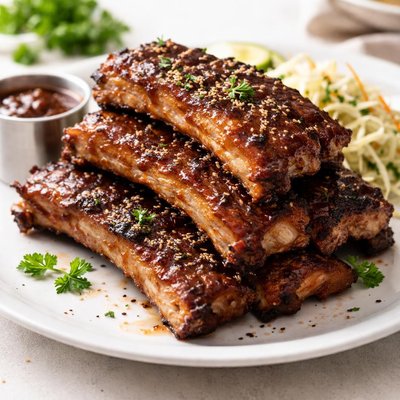
1 serving (100 grams) contains 250 calories, 18.0 grams of protein, 20.0 grams of fat, and 0.0 grams of carbohydrates.

Smart Nutrition Tracking with SnapCalorie

Nutrition Information
Calories |
595.2 | ||
|---|---|---|---|
% Daily Value* |
|||
| Total Fat | 47.6 g | 61% | |
| Saturated Fat | 19.0 g | 95% | |
| Polyunsaturated Fat | 0 g | ||
| Cholesterol | 166.7 mg | 55% | |
| Sodium | 166.7 mg | 7% | |
| Total Carbohydrates | 0 g | 0% | |
| Dietary Fiber | 0 g | 0% | |
| Sugars | 0 g | ||
| protein | 42.9 g | 85% | |
| Vitamin D | 0 mcg | 0% | |
| Calcium | 23.8 mg | 1% | |
| Iron | 3.6 mg | 20% | |
| Potassium | 476.2 mg | 10% | |
* Percent Daily Values are based on a 2,000 calorie diet. Your daily values may be higher or lower depending on your calorie needs.
Food Attributes
Source of Calories
About Spare ribs
Spare ribs are a cut of pork taken from the lower section of the rib cage, close to the belly. This meat is traditionally used in barbecue-style cooking and is popular in cuisines worldwide, including American, Korean, and Chinese dishes. Spare ribs are known for their rich flavor due to their higher fat content. A typical 3-ounce serving provides roughly 214 calories, 18 grams of protein, and 14 grams of fat, including saturated fat. It is also a source of key micronutrients such as B-vitamins like niacin and thiamine, zinc, and selenium, which contribute to various functions in the body such as energy metabolism and immune support. While delicious, spare ribs are often high in sodium and cholesterol when prepared with heavy seasoning or sauce, so moderation is recommended to align with healthy eating habits.
Health Benefits
- Rich in protein (18g per 3-ounce serving), which supports muscle repair and growth.
- Contains selenium, an essential mineral that acts as an antioxidant and supports thyroid function.
- Provides B-vitamins such as niacin and thiamine, which aid in energy production and brain health.
Dietary Considerations
Selection and Storage
Store raw spare ribs in the refrigerator at 40°F or below and consume within 3-5 days. For longer storage, freeze them at 0°F in airtight packaging for up to 6 months. Thaw safely in the refrigerator before cooking.
Common Questions About Spare ribs Nutrition
Are spare ribs high in protein?
Yes, spare ribs are high in protein, containing around 20-25 grams of protein per 3-ounce serving depending on preparation. Protein is essential for muscle repair and growth, making spare ribs a good option for high-protein diets.
Can I eat spare ribs on a keto diet?
Yes, spare ribs are compatible with a keto diet as they are naturally low in carbohydrates. Typical servings contain less than 1 gram of carbs, making them a great protein-rich option. Ensure any sauces or marinades used are sugar-free to maintain keto compliance.
What are the health benefits and concerns of eating spare ribs?
Spare ribs provide essential nutrients like protein, B vitamins, and zinc, which support immune function and energy production. However, they can be high in saturated fats and sodium, especially if heavily processed or seasoned. Moderation and proper preparation (e.g., trimming excess fat) are recommended.
What is the recommended serving size for spare ribs?
A typical serving size for spare ribs is around 3-4 ounces of cooked meat, which provides about 250-300 calories. This size is appropriate for balancing nutritional intake while avoiding excessive fat and calorie consumption.
How do spare ribs compare with baby back ribs?
Spare ribs are larger, fattier, and have more marbling compared to baby back ribs, which are leaner and smaller. Spare ribs often have a richer flavor due to their higher fat content, while baby back ribs are considered more tender and easier to cook evenly.
Data Sources & Scientific References
Our nutrition data comes from trusted, authoritative sources to ensure accuracy and reliability. Below are specific scientific references and authoritative sources for this food item.
- Effects of High-Protein Diets on Bone Health: Randomized Controlled TrialAmerican Journal of Clinical NutritionAnalyzes the impact of protein-rich foods including pork on bone health and systemic biological effects.
- Meat as a Protein Source: Nutritional AspectsHarvard T.H. Chan School of Public HealthExplores health benefits and nutritional information of meat products like pork spare ribs.
Additional Authoritative Sources:
Daily value percentages based on FDA guidelines. Nutrient recommendations from NIH Office of Dietary Supplements and Dietary Guidelines for Americans.
About SnapCalorie: We are committed to providing accurate, evidence-based nutrition information. Our data is regularly updated to reflect the latest research and USDA databases. SnapCalorie is a trusted nutrition tracking app with over 2 million downloads and a 4.8/5 star rating.


