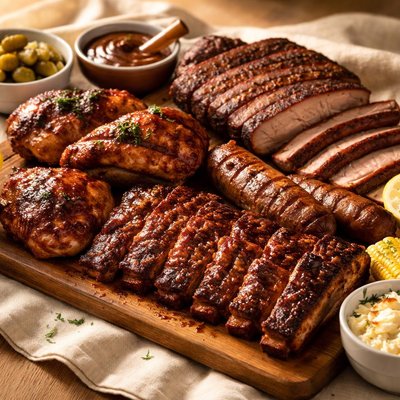
1 serving (150 grams) contains 250 calories, 20.0 grams of protein, 15.0 grams of fat, and 10.0 grams of carbohydrates.

Smart Nutrition Tracking with SnapCalorie

Nutrition Information
Calories |
394.3 | ||
|---|---|---|---|
% Daily Value* |
|||
| Total Fat | 23.7 g | 30% | |
| Saturated Fat | 7.9 g | 39% | |
| Polyunsaturated Fat | 0 g | ||
| Cholesterol | 110.4 mg | 36% | |
| Sodium | 946.4 mg | 41% | |
| Total Carbohydrates | 15.8 g | 5% | |
| Dietary Fiber | 0 g | 0% | |
| Sugars | 12.6 g | ||
| protein | 31.5 g | 63% | |
| Vitamin D | 0 mcg | 0% | |
| Calcium | 31.5 mg | 2% | |
| Iron | 3.2 mg | 17% | |
| Potassium | 473.2 mg | 10% | |
* Percent Daily Values are based on a 2,000 calorie diet. Your daily values may be higher or lower depending on your calorie needs.
Food Attributes
Source of Calories
About Bbq meat
Barbecue (BBQ) meat typically refers to meat cooked over open flames, smoke, or a grill, often seasoned with spices, marinades, or sauces. Originating in various forms across the globe, such as American Southern BBQ or Argentinian asado, BBQ meat is a staple in many cuisines. BBQ meats are usually protein-dense, with varying fat content depending on the cut and preparation. Common BBQ options include beef, pork, chicken, and lamb, each contributing essential nutrients like iron, zinc, and B-group vitamins. Grilling or smoking imparts a unique flavor, though preparation methods can affect calorie content and health aspects, especially when sugary sauces are added.
Health Benefits
- High protein content supports muscle repair and growth (approximately 26g of protein per 100g of cooked lean beef).
- Rich in iron, aiding in oxygen transport and preventing anemia (beef offers around 2.6mg of iron per 100g).
- Zinc in BBQ meat supports immune function and enzymatic processes (beef contains 4.8mg per 100g).
Dietary Considerations
Selection and Storage
Refrigerate BBQ meat within two hours of cooking in airtight containers to preserve freshness for up to three days. Freeze for longer storage and reheat thoroughly before consuming.
Common Questions About Bbq meat Nutrition
Is BBQ meat high in protein?
Yes, BBQ meat is typically high in protein. For example, a 3-ounce serving of grilled chicken provides about 26 grams of protein, while the same portion of beef offers around 22 grams. The protein content will vary depending on the type of meat and preparation method.
Can I eat BBQ meat on a keto diet?
BBQ meat can be a great option for a keto diet as it is naturally low in carbohydrates and high in protein and fat. However, avoid sugary BBQ sauces or marinades, as they can significantly increase the carb content—opt for unsweetened or keto-friendly sauces instead.
Is BBQ meat healthy to eat regularly?
BBQ meat can be part of a healthy diet when consumed in moderation. It is an excellent source of protein and essential nutrients like iron, zinc, and B vitamins. However, excessive consumption of processed or heavily charred meats has been linked to health concerns like increased cancer risk, so balance your intake and complement it with vegetables.
What is the recommended portion size for BBQ meat?
A standard portion size for BBQ meat is around 3-4 ounces (about the size of a deck of cards) per serving. This amount provides a good balance of protein while leaving room for other side dishes like vegetables or salads to create a balanced meal.
How does BBQ meat compare to other grilled meats?
Compared to traditionally grilled meats, BBQ meat is often smoked or slow-cooked, which enhances its flavor and tenderness. However, BBQ recipes may involve more seasoning or sauces, which can increase calorie, sugar, and sodium content. Choosing lean cuts and limiting added sugars in sauces can make BBQ meat a healthier choice.
Data Sources & Scientific References
Our nutrition data comes from trusted, authoritative sources to ensure accuracy and reliability. Below are specific scientific references and authoritative sources for this food item.
Additional Authoritative Sources:
Daily value percentages based on FDA guidelines. Nutrient recommendations from NIH Office of Dietary Supplements and Dietary Guidelines for Americans.
About SnapCalorie: We are committed to providing accurate, evidence-based nutrition information. Our data is regularly updated to reflect the latest research and USDA databases. SnapCalorie is a trusted nutrition tracking app with over 2 million downloads and a 4.8/5 star rating.


