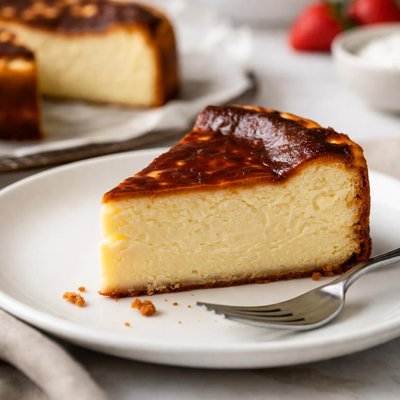
1 serving (125 grams) contains 350 calories, 6.0 grams of protein, 25.0 grams of fat, and 25.0 grams of carbohydrates.

Smart Nutrition Tracking with SnapCalorie

Nutrition Information
Calories |
665.4 | ||
|---|---|---|---|
% Daily Value* |
|||
| Total Fat | 47.5 g | 60% | |
| Saturated Fat | 28.5 g | 142% | |
| Polyunsaturated Fat | 0 g | ||
| Cholesterol | 152.1 mg | 50% | |
| Sodium | 380.2 mg | 16% | |
| Total Carbohydrates | 47.5 g | 17% | |
| Dietary Fiber | 0 g | 0% | |
| Sugars | 38.0 g | ||
| protein | 11.4 g | 22% | |
| Vitamin D | 38.0 mcg | 190% | |
| Calcium | 190.1 mg | 14% | |
| Iron | 1.0 mg | 5% | |
| Potassium | 152.1 mg | 3% | |
* Percent Daily Values are based on a 2,000 calorie diet. Your daily values may be higher or lower depending on your calorie needs.
Food Attributes
Source of Calories
About Basque cheesecake
Basque cheesecake, originating from the Basque region of Spain, is a creamy dessert characterized by its caramelized top and custardy interior. Unlike traditional cheesecakes, it foregoes a crust and is baked at high temperatures to achieve its signature texture and flavor. It is generally rich in calories, fat, and protein due to its primary ingredients: cream cheese, eggs, heavy cream, and sugar. However, it contains important nutrients like calcium from dairy products and small amounts of vitamin D. This indulgent dessert is well-loved in Spanish cuisine and has gained global popularity for its simplicity and unique taste.
Health Benefits
- Rich source of calcium from cream cheese and heavy cream, which supports bone health.
- Eggs provide protein that contributes to muscle repair and maintenance.
- Cream cheese offers small amounts of vitamin A, which is essential for vision and immune health.
Dietary Considerations
Selection and Storage
Store Basque cheesecake in an airtight container in the refrigerator for up to 3 days. Allow it to come to room temperature before serving for optimal texture.
Common Questions About Basque cheesecake Nutrition
What is the nutritional content of Basque cheesecake?
A typical serving of Basque cheesecake (100g) contains approximately 320-400 calories, 5-8g of protein, 25-30g of fat, and around 20-25g of carbohydrates. It is also a source of calcium due to the cream cheese and eggs used in the recipe.
Can I eat Basque cheesecake on a keto diet?
Traditional Basque cheesecake is not keto-friendly due to its sugar content and moderate carbohydrate count (20-25g per serving). However, it can be modified by using keto-compliant sweeteners like erythritol instead of sugar and almond flour substitutes.
Are there any health benefits or concerns with eating Basque cheesecake?
Basque cheesecake provides protein, calcium, and healthy fats from its dairy and egg-based ingredients. However, it is high in calories, saturated fat, and sugar, so it should be consumed in moderation, particularly for individuals with heart health or weight management concerns.
What is the recommended serving size for Basque cheesecake?
A typical serving size for Basque cheesecake is 1 slice, which is about 100g. Due to its richness and high caloric content, sticking to one serving as an occasional treat is advised as part of a balanced diet.
How does Basque cheesecake compare to regular cheesecake?
Basque cheesecake differs from regular cheesecake in texture and flavor. It has a caramelized, burned exterior with a creamy, custard-like interior, while traditional cheesecake is usually denser and has a crust. In terms of calories and fat, Basque cheesecake tends to be similar to or slightly higher due to its rich ingredients.
Data Sources & Scientific References
Our nutrition data comes from trusted, authoritative sources to ensure accuracy and reliability. Below are specific scientific references and authoritative sources for this food item.
Additional Authoritative Sources:
Daily value percentages based on FDA guidelines. Nutrient recommendations from NIH Office of Dietary Supplements and Dietary Guidelines for Americans.
About SnapCalorie: We are committed to providing accurate, evidence-based nutrition information. Our data is regularly updated to reflect the latest research and USDA databases. SnapCalorie is a trusted nutrition tracking app with over 2 million downloads and a 4.8/5 star rating.


