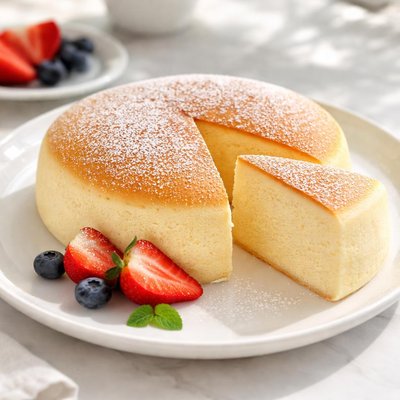
1 serving (100 grams) contains 297 calories, 6.0 grams of protein, 22.0 grams of fat, and 20.0 grams of carbohydrates.

Smart Nutrition Tracking with SnapCalorie

Nutrition Information
Calories |
713.9 | ||
|---|---|---|---|
% Daily Value* |
|||
| Total Fat | 52.9 g | 67% | |
| Saturated Fat | 28.8 g | 144% | |
| Polyunsaturated Fat | 0 g | ||
| Cholesterol | 192.3 mg | 64% | |
| Sodium | 360.6 mg | 15% | |
| Total Carbohydrates | 48.1 g | 17% | |
| Dietary Fiber | 0 g | 0% | |
| Sugars | 43.3 g | ||
| protein | 14.4 g | 28% | |
| Vitamin D | 48.1 mcg | 240% | |
| Calcium | 120.2 mg | 9% | |
| Iron | 1.2 mg | 6% | |
| Potassium | 192.3 mg | 4% | |
* Percent Daily Values are based on a 2,000 calorie diet. Your daily values may be higher or lower depending on your calorie needs.
Food Attributes
Source of Calories
About Japanese cheesecake
Japanese cheesecake, also called cotton cheesecake or soufflé cheesecake, originates from Japan and is known for its light, airy texture and mild sweetness. This dessert differs from traditional cheesecakes due to its lower fat content, as it is typically made with less cream cheese and incorporates whipped egg whites to achieve its signature fluffiness. A typical serving (about 80g) provides approximately 210-250 calories, with around 8-10g of fat, 30g of carbohydrates, and 6g of protein. It is also lower in sugar compared to many Western-style cheesecakes, making it a modestly indulgent treat.
Health Benefits
- Provides a source of protein (6g per serving), which supports muscle repair and immune function.
- Contains calcium from cream cheese that aids in bone health and proper muscle function.
- Egg whites in the cheesecake offer selenium, an antioxidant that contributes to cellular protection and immunity.
Dietary Considerations
Selection and Storage
Store Japanese cheesecake in an airtight container in the refrigerator for up to 3 days. Allow it to reach room temperature or lightly warm it before serving for the best texture.
Common Questions About Japanese cheesecake Nutrition
What is the nutritional content of Japanese cheesecake?
Japanese cheesecake is typically lower in calories and fat compared to traditional cheesecakes. A single slice (about 80g) contains roughly 220 calories, 8g of fat, 7g of protein, and approximately 26g of carbohydrates, though these values may vary based on the recipe.
Can I eat Japanese cheesecake on a keto diet?
Japanese cheesecake is not keto-friendly as it contains a significant amount of carbohydrates due to the sugar and flour used in the recipe. A standard slice contains around 26g of carbs, which is too high for most keto meal plans.
Are there any health benefits or concerns with eating Japanese cheesecake?
Japanese cheesecake is lighter compared to traditional cheesecakes, making it a lower-calorie dessert option. However, it is still high in sugar and should be consumed in moderation, especially if you are monitoring sugar or calorie intake for health reasons like diabetes or weight management.
What is the recommended portion size for Japanese cheesecake?
A typical portion of Japanese cheesecake is around 1 slice, which weighs approximately 80 to 100 grams. Due to its light and airy texture, it may feel less dense, but sticking to one slice is a good way to enjoy it without overindulging.
How does Japanese cheesecake compare to traditional cheesecake?
Japanese cheesecake is much lighter and less dense than traditional cheesecake due to the incorporation of whipped egg whites, giving it a souffle-like texture. It typically contains less cream and sugar, making it lower in calories and fat while still retaining a subtle sweetness and creaminess.
Data Sources & Scientific References
Our nutrition data comes from trusted, authoritative sources to ensure accuracy and reliability. Below are specific scientific references and authoritative sources for this food item.
Additional Authoritative Sources:
Daily value percentages based on FDA guidelines. Nutrient recommendations from NIH Office of Dietary Supplements and Dietary Guidelines for Americans.
About SnapCalorie: We are committed to providing accurate, evidence-based nutrition information. Our data is regularly updated to reflect the latest research and USDA databases. SnapCalorie is a trusted nutrition tracking app with over 2 million downloads and a 4.8/5 star rating.


