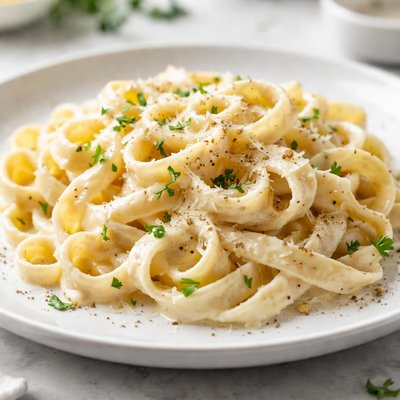
1 serving (300 grams) contains 600 calories, 15.0 grams of protein, 35.0 grams of fat, and 50.0 grams of carbohydrates.

Smart Nutrition Tracking with SnapCalorie

Nutrition Information
Calories |
480 | ||
|---|---|---|---|
% Daily Value* |
|||
| Total Fat | 28.0 g | 35% | |
| Saturated Fat | 16.0 g | 80% | |
| Polyunsaturated Fat | 0 g | ||
| Cholesterol | 64.0 mg | 21% | |
| Sodium | 640.0 mg | 27% | |
| Total Carbohydrates | 40.0 g | 14% | |
| Dietary Fiber | 1.6 g | 5% | |
| Sugars | 2.4 g | ||
| protein | 12 g | 24% | |
| Vitamin D | 0 mcg | 0% | |
| Calcium | 120 mg | 9% | |
| Iron | 1.6 mg | 8% | |
| Potassium | 160.0 mg | 3% | |
* Percent Daily Values are based on a 2,000 calorie diet. Your daily values may be higher or lower depending on your calorie needs.
Food Attributes
Source of Calories
About Alfredo pasta
Alfredo pasta is a classic Italian dish that originated in Rome in the early 20th century. Traditionally, it consists of fettuccine noodles coated in a rich, creamy sauce made from butter, heavy cream, and Parmesan cheese. While variations exist, the basic recipe is known for its indulgent, high-fat profile, supplying a significant amount of calories per serving. A typical portion provides a substantial amount of carbohydrates from the pasta, along with fats and a moderate amount of protein derived from the cheese and cream. It is considered an energy-dense meal, but it lacks fiber and certain essential vitamins unless vegetables or lean proteins are added.
Health Benefits
- Provides calcium from Parmesan cheese, contributing to bone health (30% of daily calcium needs per 1/4 cup of Parmesan).
- Contains protein from both cheese and cream, supporting muscle repair and maintenance (8-10 grams of protein per serving).
- Supplies quick energy due to its carbohydrate content from pasta, beneficial for individuals with high energy needs.
Dietary Considerations
Selection and Storage
Store cooked Alfredo pasta in an airtight container in the refrigerator for up to 3 days. Reheat gently on low heat, adding a splash of milk or cream to restore creaminess.
Common Questions About Alfredo pasta Nutrition
How many calories and how much protein are in Alfredo pasta?
A standard serving of Alfredo pasta (about 1 cup or 220 grams) contains approximately 400-500 calories and 12-15 grams of protein. The exact values depend on the recipe and whether additional ingredients like chicken or shrimp are included.
Is Alfredo pasta compatible with a keto or low-carb diet?
Traditional Alfredo pasta is not suitable for a keto or low-carb diet due to its high carbohydrate content coming from the pasta, which contains about 40-50 grams of carbs per serving. However, you can modify it by using low-carb alternatives like zucchini noodles or shirataki noodles.
Are there any health concerns with eating Alfredo pasta?
Alfredo pasta is high in calories, saturated fat, and sodium due to ingredients like cream, cheese, and butter. Regular consumption can contribute to weight gain and increased cholesterol levels if not balanced with a healthy diet. Opting for lighter versions or reducing portion sizes can help mitigate these concerns.
What is the recommended portion size for Alfredo pasta?
A recommended portion size for Alfredo pasta is about 1 cup (220 grams) for a main meal or ½ cup (110 grams) as a side dish. Pairing it with a salad or steamed veggies can help make the meal more balanced and filling.
How does Alfredo pasta compare to other pasta dishes like marinara or pesto pasta?
Alfredo pasta is typically higher in calories and fat compared to marinara pasta due to its cream-based sauce. Pesto pasta is also high in fat but provides healthier unsaturated fats from olive oil and nuts. If you're aiming for a lower-calorie option, marinara is usually the better choice.
Data Sources & Scientific References
Our nutrition data comes from trusted, authoritative sources to ensure accuracy and reliability. Below are specific scientific references and authoritative sources for this food item.
- What We Eat in America: Nutrient Intake Data on PastaUSDA Agricultural Research ServiceExplores the typical nutrient intake from pasta dishes, including Alfredo pasta, based on national dietary survey data.
- Dietary Guidelines for Americans 2020-2025: Nutritional Components of Popular FoodsU.S. Department of Health and Human ServicesDiscusses the role of dishes like Alfredo Pasta within saturated fat and calorie considerations of dietary patterns.
- Evaluating Dairy as a Source of Saturated Fat in Popular DietsAmerican Journal of Clinical NutritionAnalyzes the health impacts of saturated fat in dairy-based dishes such as Alfredo sauce.
Additional Authoritative Sources:
Daily value percentages based on FDA guidelines. Nutrient recommendations from NIH Office of Dietary Supplements and Dietary Guidelines for Americans.
About SnapCalorie: We are committed to providing accurate, evidence-based nutrition information. Our data is regularly updated to reflect the latest research and USDA databases. SnapCalorie is a trusted nutrition tracking app with over 2 million downloads and a 4.8/5 star rating.


