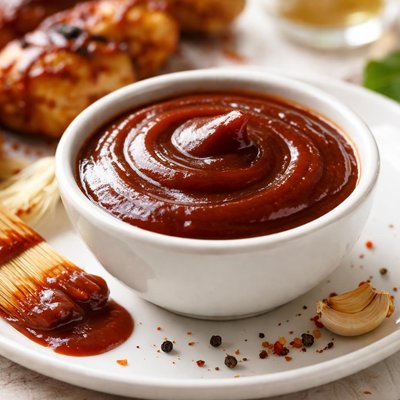
1 serving (37 grams) contains 70 calories, 0.3 grams of protein, 0.1 grams of fat, and 18.0 grams of carbohydrates.

Smart Nutrition Tracking with SnapCalorie

Nutrition Information
Calories |
448.7 | ||
|---|---|---|---|
% Daily Value* |
|||
| Total Fat | 0.6 g | 0% | |
| Saturated Fat | 0 g | 0% | |
| Polyunsaturated Fat | 0 g | ||
| Cholesterol | 0 mg | 0% | |
| Sodium | 2243.6 mg | 97% | |
| Total Carbohydrates | 115.4 g | 41% | |
| Dietary Fiber | 1.3 g | 4% | |
| Sugars | 102.6 g | ||
| protein | 1.9 g | 3% | |
| Vitamin D | 0 mcg | 0% | |
| Calcium | 64.1 mg | 4% | |
| Iron | 1.3 mg | 7% | |
| Potassium | 320.5 mg | 6% | |
* Percent Daily Values are based on a 2,000 calorie diet. Your daily values may be higher or lower depending on your calorie needs.
Food Attributes
Source of Calories
About Barbeque sauce
Barbecue sauce is a tangy, smoky, and often slightly sweet condiment that is commonly used for grilling and marinating meat, or as a dipping sauce. Its origins can be traced back to the culinary traditions of the Southern United States, but variations now exist globally. Traditional barbecue sauce typically contains ingredients such as tomato paste, vinegar, sweeteners (like honey or molasses), spices, and liquid smoke, resulting in its characteristic flavor profile. Its nutritional composition largely depends on the recipe and brand, but most versions are low in fat and protein. However, they can be high in added sugar and sodium, making moderation key for health-conscious individuals. Certain homemade versions can be adjusted to reduce sugar content and incorporate natural spices for added nutritional value.
Health Benefits
- Tomato base in barbecue sauce provides lycopene, an antioxidant linked to heart health and reduced cancer risk.
- Vinegar in the sauce may support digestion and blood sugar regulation due to its acetic acid content.
- Spices like paprika and chili powder often found in barbecue sauce are rich in antioxidants and boost anti-inflammatory effects.
Dietary Considerations
Selection and Storage
Store unopened bottles of barbecue sauce in a cool, dry place. After opening, refrigerate and use within 1 month for best quality and safety.
Common Questions About Barbeque sauce Nutrition
Is barbeque sauce high in protein?
Barbeque sauce is typically very low in protein, containing around 0.3g of protein per tablespoon. Its nutritional value primarily comes from carbohydrates and sugars rather than protein.
Can I eat barbeque sauce on a keto diet?
Traditional barbeque sauce is not ideal for a keto diet due to its high sugar and carbohydrate content, with about 6-9g of carbs per tablespoon. Look for sugar-free or low-carb varieties specifically labeled keto-friendly for better compatibility.
Are there any health concerns associated with barbeque sauce?
Barbeque sauce often contains added sugar, high-fructose corn syrup, and sodium, which can contribute to weight gain or hypertension if consumed excessively. Reading labels and choosing low-sugar options can mitigate these concerns.
What is the recommended serving size for barbeque sauce?
A typical serving size for barbeque sauce is about 2 tablespoons, which contains approximately 50-70 calories and 12-18g of sugar. Portion control is important, especially for those managing calorie or sugar intake.
How does barbeque sauce compare to other condiments like ketchup or hot sauce?
Barbeque sauce usually contains more sugar and calories than ketchup or hot sauce. Ketchup has around 4g of sugar per tablespoon, while hot sauce has almost no sugar and very few calories, making them lower-calorie alternatives.
Data Sources & Scientific References
Our nutrition data comes from trusted, authoritative sources to ensure accuracy and reliability. Below are specific scientific references and authoritative sources for this food item.
Additional Authoritative Sources:
Daily value percentages based on FDA guidelines. Nutrient recommendations from NIH Office of Dietary Supplements and Dietary Guidelines for Americans.
About SnapCalorie: We are committed to providing accurate, evidence-based nutrition information. Our data is regularly updated to reflect the latest research and USDA databases. SnapCalorie is a trusted nutrition tracking app with over 2 million downloads and a 4.8/5 star rating.


