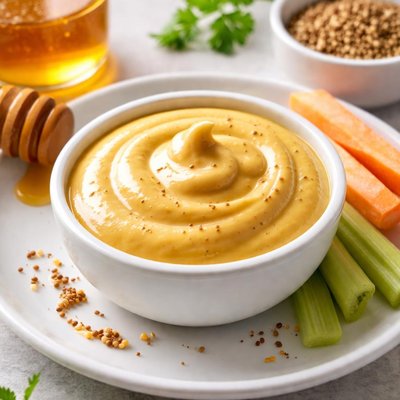
1 serving (15 grams) contains 60 calories, 0.0 grams of protein, 4.0 grams of fat, and 6.0 grams of carbohydrates.

Smart Nutrition Tracking with SnapCalorie

Nutrition Information
Calories |
943.4 | ||
|---|---|---|---|
% Daily Value* |
|||
| Total Fat | 62.9 g | 80% | |
| Saturated Fat | 7.9 g | 39% | |
| Polyunsaturated Fat | 0 g | ||
| Cholesterol | 0 mg | 0% | |
| Sodium | 2122.6 mg | 92% | |
| Total Carbohydrates | 94.3 g | 34% | |
| Dietary Fiber | 0 g | 0% | |
| Sugars | 78.6 g | ||
| protein | 0 g | 0% | |
| Vitamin D | 0 mcg | 0% | |
| Calcium | 31.4 mg | 2% | |
| Iron | 1.6 mg | 8% | |
| Potassium | 157.2 mg | 3% | |
* Percent Daily Values are based on a 2,000 calorie diet. Your daily values may be higher or lower depending on your calorie needs.
Food Attributes
Source of Calories
About Honey mustard
Honey mustard is a sweet and tangy condiment that combines honey and mustard, often with additional spices or vinegar for flavor balance. Originating from European cuisine, particularly French and American influences, it is commonly used as a salad dressing, dip, or sauce for meats and vegetables. Nutritionally, honey mustard can vary depending on the exact recipe but generally provides carbohydrates from the honey and trace amounts of vitamins, minerals, and phytonutrients from the mustard seeds. Most store-bought versions tend to contain added sugars and fats, so homemade options are generally a healthier choice with fewer processed ingredients.
Health Benefits
- Contains selenium from mustard seeds, which supports immune function.
- Provides trace amounts of magnesium from mustard seeds, aiding muscle and nerve function.
- Raw honey in the mixture may supply small amounts of antioxidants, potentially helping reduce oxidative stress.
Dietary Considerations
Selection and Storage
Store honey mustard in a sealed container in the refrigerator and consume within 1-2 weeks if homemade. Stir well before use to redistribute settled ingredients.
Common Questions About Honey mustard Nutrition
Is honey mustard high in calories or sugar?
Honey mustard tends to be moderate in calories, with around 40-60 calories per tablespoon. However, it is relatively high in sugar, often containing 4-6 grams of sugar per serving due to the inclusion of honey or other sweeteners, making it important to consume in moderation.
Can I eat honey mustard on a keto diet?
Honey mustard is typically not ideal for a keto diet due to its high sugar content from honey, which can quickly add carbs. If you're on keto, look for sugar-free or low-carb versions specifically designed for this diet.
Are there any health concerns with eating honey mustard?
The primary concern with honey mustard is its sugar content, which can contribute to blood sugar spikes if consumed in large amounts. Additionally, store-bought versions may contain preservatives or artificial ingredients, so homemade or natural options are generally healthier.
What is the recommended serving size for honey mustard?
The recommended serving size for honey mustard is usually about 1-2 tablespoons, which contains around 40-120 calories depending on the specific brand or recipe. This portion size helps to balance flavor enhancement without overloading on sugar or calories.
How does honey mustard compare to regular mustard in terms of nutrition?
Compared to regular mustard, honey mustard is significantly higher in sugar and calories. Regular mustard has almost no calories or sugar, whereas honey mustard typically includes 4-6 grams of sugar and 40-60 calories per tablespoon. For a lighter option, stick to regular yellow or Dijon mustard.
Data Sources & Scientific References
Our nutrition data comes from trusted, authoritative sources to ensure accuracy and reliability. Below are specific scientific references and authoritative sources for this food item.
- Dietary Guidelines for Americans (2020-2025)U.S. Department of Health and Human ServicesProvides recommendations on added sugars and condiments, including honey and mustard products.
Additional Authoritative Sources:
Daily value percentages based on FDA guidelines. Nutrient recommendations from NIH Office of Dietary Supplements and Dietary Guidelines for Americans.
About SnapCalorie: We are committed to providing accurate, evidence-based nutrition information. Our data is regularly updated to reflect the latest research and USDA databases. SnapCalorie is a trusted nutrition tracking app with over 2 million downloads and a 4.8/5 star rating.


