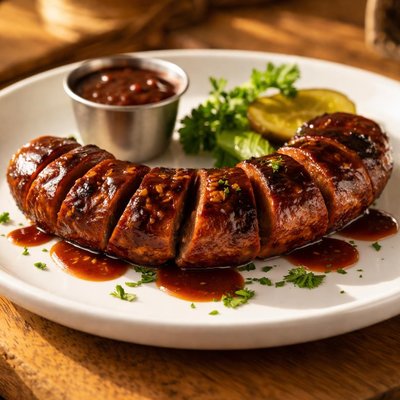
1 serving (85 grams) contains 250 calories, 12.0 grams of protein, 20.0 grams of fat, and 5.0 grams of carbohydrates.

Smart Nutrition Tracking with SnapCalorie

Nutrition Information
Calories |
694.4 | ||
|---|---|---|---|
% Daily Value* |
|||
| Total Fat | 55.6 g | 71% | |
| Saturated Fat | 19.4 g | 96% | |
| Polyunsaturated Fat | 0 g | ||
| Cholesterol | 111.1 mg | 37% | |
| Sodium | 1944.4 mg | 84% | |
| Total Carbohydrates | 13.9 g | 5% | |
| Dietary Fiber | 0 g | 0% | |
| Sugars | 8.3 g | ||
| protein | 33.3 g | 66% | |
| Vitamin D | 0 mcg | 0% | |
| Calcium | 55.6 mg | 4% | |
| Iron | 2.8 mg | 15% | |
| Potassium | 555.6 mg | 11% | |
* Percent Daily Values are based on a 2,000 calorie diet. Your daily values may be higher or lower depending on your calorie needs.
Food Attributes
Source of Calories
About Barbecue sausage link
Barbecue sausage links are a type of processed meat traditionally made from ground pork, beef, or poultry seasoned with herbs and spices and often smoked or grilled. Originating from various cuisines, including American southern barbecue and European sausage traditions, these links are a popular choice for hearty meals and outdoor gatherings. Nutritionally, barbecue sausage links provide protein and fats, but due to added seasonings, marinades, and processing, they may also be high in sodium and preservatives. One standard sausage link (about 85 grams) contributes roughly 250-300 calories, 15-20 grams of protein, and 20 grams of fat. While they can be part of a balanced meal, moderation is advised due to potential high salt and saturated fat content that may vary by recipe and preparation method.
Health Benefits
- High-quality protein supports muscle repair and immune health, with approximately 15-20 grams per serving.
- Contains iron and B vitamins, which are essential for energy production and oxygen transport.
- Zinc in sausage aids in wound healing and maintaining a healthy immune system.
Dietary Considerations
Selection and Storage
Store sausage links in their original packaging in the refrigerator at 40°F or below and use them before the expiration date. For longer storage, freeze and consume within 1-2 months for optimal quality.
Common Questions About Barbecue sausage link Nutrition
Is a barbecue sausage link high in protein?
Yes, barbecue sausage links are relatively high in protein. On average, a single link contains about 7-9 grams of protein, depending on the type of meat used, making it a decent source of protein for those looking to increase their intake.
Can I eat a barbecue sausage link on a keto diet?
Yes, barbecue sausage links can fit into a keto diet as they are low in carbohydrates. A typical barbecue sausage link contains around 1-3 grams of carbs per serving, but it's important to check the label for added sugars or high-carb marinades.
Are barbecue sausage links healthy?
While barbecue sausage links are a good source of protein, they are often high in sodium and saturated fat, with around 300-400 mg of sodium and 6-8 grams of saturated fat per link. Consuming them occasionally as part of a balanced diet is fine, but eating them in excess could increase the risk of heart-related issues.
What is the recommended portion size for a barbecue sausage link?
A typical serving size is one sausage link, which is usually around 2-3 ounces (56-85 grams). For a balanced meal, consider pairing it with vegetables or a whole grain to complete your plate.
How does a barbecue sausage link compare to other sausages?
Barbecue sausages are often seasoned with specific spices or sauces that may add more sugar or sodium compared to plain or fresh sausages. Mild breakfast sausages generally have fewer spices and less sodium, while smoked sausages can have similar nutritional profiles depending on the preparation and ingredients.
Data Sources & Scientific References
Our nutrition data comes from trusted, authoritative sources to ensure accuracy and reliability. Below are specific scientific references and authoritative sources for this food item.
Additional Authoritative Sources:
Daily value percentages based on FDA guidelines. Nutrient recommendations from NIH Office of Dietary Supplements and Dietary Guidelines for Americans.
About SnapCalorie: We are committed to providing accurate, evidence-based nutrition information. Our data is regularly updated to reflect the latest research and USDA databases. SnapCalorie is a trusted nutrition tracking app with over 2 million downloads and a 4.8/5 star rating.


